

PCB Material Selection From Application Requirements to Specific Grades
For FR-4, high-speed, high-frequency, flexible, and heat-dissipating materials, first confirm the electrical, thermal, and structural requirements, and then determine the board type, laminate, and supply conditions.
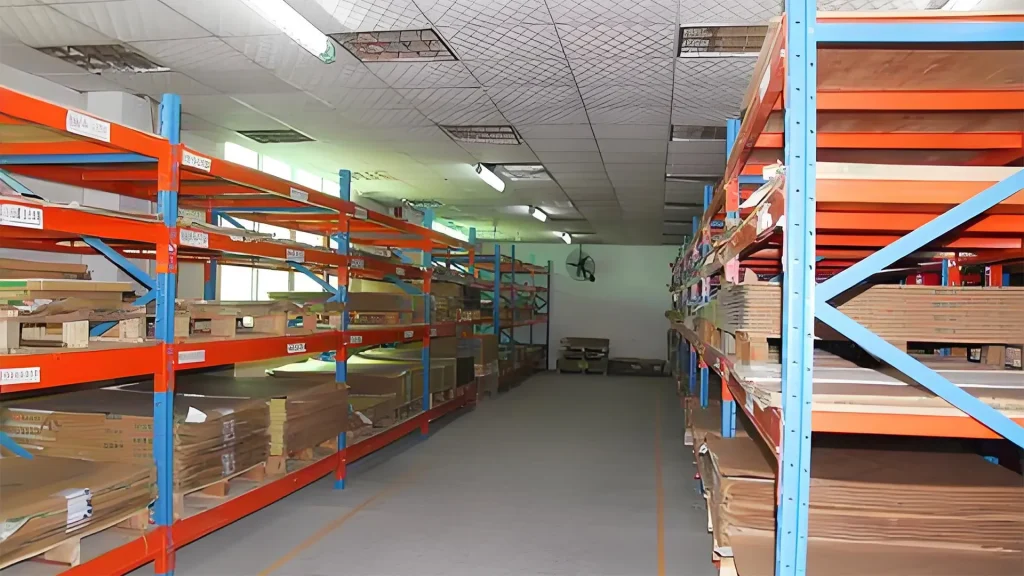
Sheet specifications and inventory are confirmed on a project-by-project basis
01 / Application Selection
First, identify your focus, then screen the material.
Material categories may overlap: high Tg, halogen-free, and low loss are requirements across different dimensions; it is not appropriate to treat any single metric as a complete material grade.
01 / FR-4 Series
General-Purpose Rigid Circuit Boards
Based on the number of layers, board thickness, copper thickness, soldering conditions, and cost, further confirm the material grade and processing compatibility.
02 / High Tg / High-Temperature-Resistant Resin Systems
Higher thermal reliability requirements
When evaluating performance based on operating temperature, number of welds, thermal expansion, and heat resistance test results, one should not rely solely on Tg.
03 / Low-Loss Materials
High-Speed Digital Links
Select materials and copper foil based on data rate, rise time, trace length, loss budget, and impedance requirements.
04 / High-Frequency Laminated Board
RF and Microwave Circuits
Pay attention to the operating frequency band, design Dk, Df, thickness tolerances, and temperature stability, and verify the test conditions.
05 / Flexible Copper-Clad Laminate / PI Material
Bending and Compact Assembly
Distinguish between static and dynamic bending, and verify the copper foil, adhesive layer, cover film, bending radius, and service life requirements.
06 / Metal-based or specialized heat dissipation structures
Power and Thermal Management
Evaluate the heat transfer path, material thickness, dielectric breakdown voltage, and assembly interface simultaneously, rather than simply comparing thermal conductivities.
02 / Key Metrics
The parameters are meaningful, provided that the comparison conditions are consistent.
- Tg · Glass Transition Temperature
- Used to describe the transition characteristics of a resin system; not to be confused with the long-term allowable operating temperature.
- Td / T260 / T288
- When evaluating materials in terms of thermal decomposition or heat resistance under specified conditions, refer to the original manufacturer’s test methods.
- Dk · Dielectric Constant
- Related to signal propagation and impedance design; distinguish between test values and design values, and specify the frequency, method, and structure.
- Df · Loss Factor
- Used to evaluate dielectric loss; actual link loss is also affected by factors such as the roughness, geometry, and length of the copper foil.
- CTE · Coefficient of Thermal Expansion
- Focus on orientation and temperature ranges, particularly the compatibility of multilayer boards and hole structures under thermal cycling.
- Thermal Conductivity and Insulation
- Thermal conductivity, dielectric thickness, and dielectric strength should be evaluated together; materials that can withstand high temperatures are not automatically considered to be highly thermally conductive.
Please refer to the specific grade, thickness, copper foil, and the manufacturer’s datasheet. There is no single universal Tg, Dk, or Df value for materials of this type.
03 / Model Index
Search for candidate grades by material system
The following is a compilation of the original models listed on this page, with corrections made to some names and classifications to help clarify requirements when requesting a quote. Inclusion in the index does not imply real-time availability, nor does it imply that different grades are directly interchangeable.
FR-4 and High Tg Series
General-purpose rigid sheets and candidate materials meeting thermal performance requirements; specific grades are to be confirmed based on the manufacturer’s specifications.
High-Speed / Low-Loss Series
Confirm these along with the loss budget, laminate, glass fiber structure, and copper foil type.
RF / Microwave Series
When evaluated based on the complete model number and target frequency band, some products have different suffixes and specification versions.
Flexible Copper-Clad Laminates and Films
Copper-clad laminates, base films, and compatible adhesives are supplied in different forms; please specify the complete structure when requesting a quote.
Halogen-Free Material Candidates
Halogen-free requirements must be verified separately in accordance with applicable standards, test certificates, and other material properties.
High-Temperature-Resistant and Specialty Materials
Arlon 85N is a high-temperature-resistant polyimide laminate system; for other specialized grades, please refer to the manufacturer’s documentation to confirm their intended applications and supply specifications.
Metal substrates, ceramics, and packaging substrate materials must be evaluated based on their specific structures; do not directly apply the specification ranges for ceramics, PTFE, and epoxy-glass-fiber materials to these materials.
04 / Brands and Resources
Confirm the brand and the specific model
The sheet metal brands featured on this page include the following manufacturers. For project supply, please verify the complete grade, thickness, copper foil type, material certification, and lead time.








Brand labels are provided for material identification; actual material supply and applicable specifications are subject to project confirmation results.
05 / Selection and Substitutes
Before changing the license plate number, check these four items first
01
Are the electrical specifications compatible?
Verify the test conditions, impedance, and loss targets for Dk and Df; reconfirm the stack-up and line widths after any material changes.
02
Do the thermal and mechanical properties meet the requirements?
Compare Tg, CTE, heat resistance, moisture absorption, and dimensional stability, and make a determination based on welding requirements and the operating environment.
03
Are the machining structures compatible?
Confirm the specifications for core boards, prepregs, copper foil, lamination, and hole-drilling conditions; do not assume that materials are interchangeable based solely on identical board thickness.
04
Are the project requirements permitted?
Verify customer-specified materials, certifications, and bill of materials (BOM) restrictions; confirm alternative solutions in writing before arranging production.
06 / Frequently Asked Questions
Common Questions About Material Selection
Is FR-4 a fixed grade?
No. FR-4 generally refers to a class of flame-retardant epoxy-glass fiber materials; the specific resin system, thermal properties, electrical properties, and processing conditions vary by grade. Manufacturing documents should specify the actual grade or clearly state the permitted material requirements.
Does a higher Tg mean the material is better?
This should be determined based on project requirements. Tg is merely one indicator; other factors such as thermal expansion, heat resistance, moisture absorption, electrical properties, and process compatibility must also be considered. Tg should not be used directly as the upper limit for long-term operating temperatures.
Why do we see different Dk values for the same material?
Measurement frequency, testing methods, resin content, and material structure can all affect the values. Some original manufacturers also provide a design Dk for circuit design, so you should verify the data source and intended use.
Can high-frequency materials be used interchangeably with high-speed materials?
While the applications of some materials may overlap, the selection criteria differ. RF design focuses on frequency bands and dielectric stability, whereas high-speed digital design must also consider edge speed, channel length, and loss budgets; materials cannot simply be substituted based on their category names alone.
Does "halogen-free" mean RoHS compliance?
These are not the same material declaration. Please submit separate declarations for halogen-free, RoHS, or other applicable requirements, and verify them against the original manufacturer’s declaration or test data for the corresponding grade; they should not be used interchangeably.
No specific sheet model has been specified. Can I ask for advice first?
Sure. Please provide the known parameters, such as the application, operating frequency or signal rate, operating temperature, number of layers, copper thickness, impedance, and quantity. Our engineering team will evaluate potential solutions based on this information, and the final material selection will be confirmed by both parties.
Manufacturer's Documentation
Verify the materials, starting with the manufacturer's data sheet
Please refer to the following manufacturer’s data for grade and material types; however, the application of these parameters must still be based on the specific model, specifications, and test conditions.
Shenzhen Jingpeng Electronics
Include the material requirements in the manufacturing plan.
Please provide the target grade or application requirements, along with the number of layers, copper thickness, quantity, and desired delivery date, to inquire about material suitability and supply arrangements.
