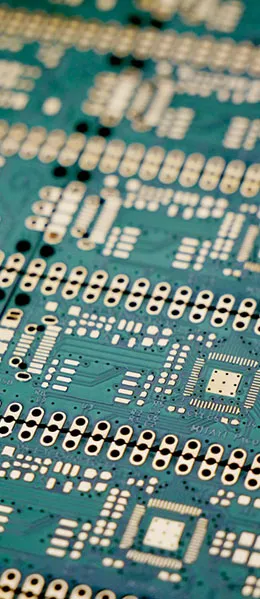
In the LED manufacturing industry, heat dissipation has long been a major challenge for LED manufacturers. However, there is one solution that can significantly improve the heat dissipation performance of LEDs: the use of aluminum substrates. Due to their high thermal conductivity and excellent heat dissipation properties, aluminum substrates are an ideal choice for LED heat dissipation. In this article, we will take an in-depth look at the characteristics, structure, and wide-ranging applications of aluminum substrates across various fields.
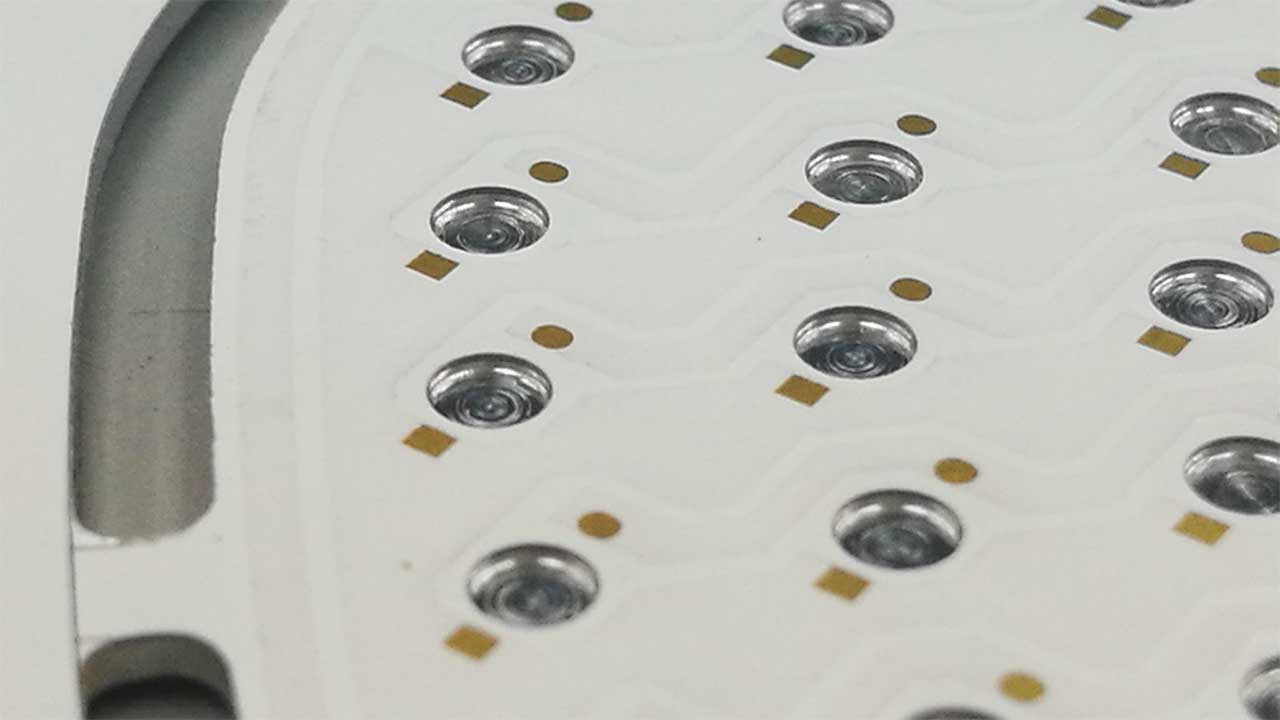
Advanced: Why Are LEDs So Sensitive to Heat?
LEDs are extremely temperature-sensitive devices; an increase in junction temperature triggers a series of chain reactions, which is why thermal management solutions are so critical in LED products:
- Accelerated Lumen Decay: For every certain increase in junction temperature, the luminous flux retention rate decreases significantly, and the service life is consequently shortened;
- Wavelength Drift: Changes in junction temperature alter the emission wavelength, which has a significant impact in applications that require high color temperature consistency;
- Change in Forward Voltage Drop: As the temperature rises, the forward voltage drop decreases, causing the operating point to drift under constant-current drive, which further exacerbates heat generation;
- Aging of Packaging Materials: The accelerated degradation of phosphors and encapsulant at high temperatures is one of the primary causes of premature failure.
To understand heat dissipation, you need to focus onThermal Resistance LinkHere’s the concept: Heat travels from the chip’s junction region, passing sequentially through the package, the solder layer, the substrate circuit layer, the insulating layer, and the metal base layer, before finally being dissipated into the air via the heat sink. The substrate accounts for only a portion of this path, but it is often the section with the highest thermal resistance.
| Thermal Resistance Section | Percentage of Typical Cases | Optimization Methods |
|---|---|---|
| From the connection to the packaging housing | Determined by the device | Choose a low-thermal-resistance package |
| Weld Deposition | 小 | Controlling the Porosity |
| Insulation Layer | 大 | Select an insulating material with high thermal conductivity and reduce the thickness |
| Metal Substrate | 小 | Aluminum or copper; copper is better, but it is heavier and more expensive. |
| Interface to Heat Sink | Intermediate | Thermal Interface Materials, Flatness, and Pressure |
| Radiator to Air | Determined by the structure | Increased surface area, forced air cooling |
As can be seen,The insulation layer is the key bottleneck in the heat dissipation capability of aluminum substrates.. This is why aluminum substrates from different manufacturers may vary in thermal conductivity by a factor of several, even when they share the same aluminum base material.
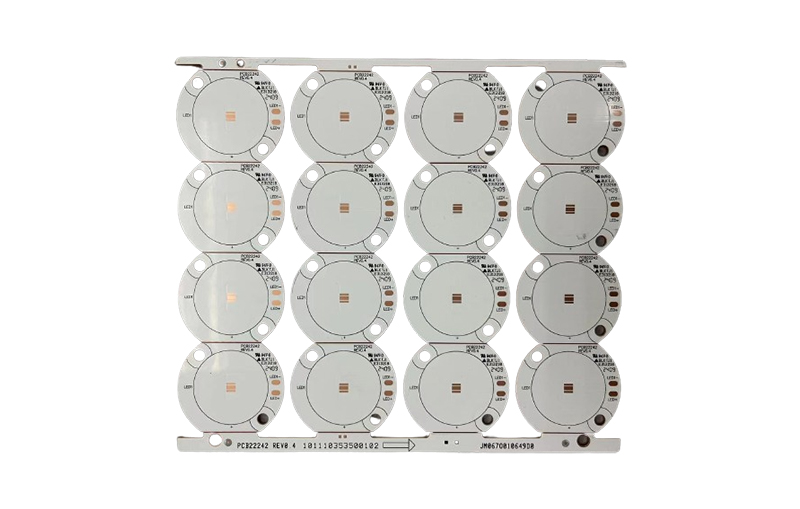
For a general overview of metal substrates, seeMetal Substrate; For heat dissipation solutions for aluminum substrates, seeHigh-Efficiency Heat Dissipation Solutions for Aluminum Substrates。
1. Characteristics of Aluminum Substrates
Aluminum substrates, as a type ofMetal Substrate, which has the following notable features:
1.1 High Thermal Conductivity
Aluminum has excellent thermal conductivity, so aluminum substrates can efficiently dissipate the heat generated inside the LED, effectively lowering the LED's operating temperature.
1.2 Electrical Insulation Properties
Aluminum substrates not only offer excellent thermal conductivity but also provide outstanding electrical insulation, ensuring stable and safe circuit operation during LED use.
1.3 Machinability
Aluminum substrates are easy to process and are suitable for various machining processes, such as drilling, punching, and cutting, which facilitates LED manufacturing.
Advanced: How to Choose Between Aluminum, FR-4, and Ceramic Substrates
| Comparison Items | FR-4 | Aluminum Substrate | Ceramic Substrate |
|---|---|---|---|
| Thermal Conductivity | Approximately 0.3 W/(m·K) | 1–3 W/(m·K) (depending on the insulation layer) | 20–200 W/(m·K) |
| Electrical Insulation | 好 | Dependent on the insulation layer | 好 |
| Machinability | 好 | Okay, suitable for punching, shearing, and drilling | Brittle; processing limitations |
| Cost | Lowest | 中 | 高 |
| Applicable Power Density | 低 | Medium to High | Very high |
| Typical Applications | General Electronics | LED Lighting, Power Modules | High-Power Devices, High-Frequency Modules |
The decision-making process when making a choice is straightforward:Start with FR-4; if the heat cannot be contained, move on to an aluminum substrate; only consider a ceramic substrate if that is still insufficient or space is extremely limited.. The cost difference is an order of magnitude, so there's no need to go with the most expensive option right off the bat.
- Standard Indicator Lights and Low-Power Light Panels: Just add heat-dissipating vias to the FR-4;
- Lighting Fixtures and Medium-Power Modules: Aluminum substrates are the most common choice;
- Automotive Headlights, High-Power Spotlights, Laser Components: Consider ceramic or copper substrates.
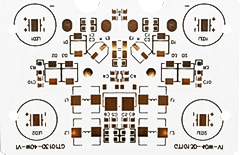
For applications of ceramic substrates, seeThe Widespread Use of Ceramic Substrates in the New Energy Automotive Sector; For an introduction to aluminum substrates, seeIntroduction to and Applications of Aluminum Substrates。
2. Structure of Aluminum Substrates
The structure of an aluminum substrate is typically divided into three layers:
2.1 Circuit Layer
The circuit layer is the surface of the aluminum substrate, used to create printed circuits that connect the various components of an LED. The copper foil on the circuit layer is typically less than 10 oz thick, but it must have a high current-carrying capacity.
2.2 Insulation Layer
The insulating layer is the core technology of aluminum substrates and is typically composed of a polymer filled with special ceramics. The primary function of this layer is to provide excellent thermal conductivity and high-strength electrical insulation. It also exhibits outstanding resistance to thermal aging and can withstand mechanical and thermal stress.
2.3 Grassroots Level
The base layer serves as the supporting structure for the aluminum substrate and is typically made of aluminum or, optionally, copper. The metal base layer in an aluminum substrate must have high thermal conductivity, as it directly affects the LED’s heat dissipation efficiency. In some cases, a copper base layer may be chosen to provide even better thermal conductivity.
Advanced: The Insulation Layer—The True Technical Core of Aluminum Substrates
The structure of an aluminum substrate may seem simple, but the real difference lies entirely in the insulating layer in the middle. It must simultaneously meet two conflicting requirements:Good thermal conductivity and strong insulation。
- Thermal Conductivity: Special ceramic fillers provide pathways; the higher the filler content, the better the thermal conductivity;
- Insulation: To withstand the operating voltage and provide a safety margin, the voltage withstand rating is typically in the range of several thousand volts;
- Thickness Trade-offs: Reducing the thickness lowers thermal resistance, but both the pressure resistance and mechanical strength decrease accordingly;
- Heat Aging: The medium must not crack or carbonize under prolonged high temperatures; this is a hidden threshold for reliability;
- Thermal Expansion Matching: It should have a coefficient of thermal expansion similar to that of copper foil and aluminum substrates; otherwise, delamination is likely to occur after temperature cycling.
Therefore, when requesting a quote, simply saying “aluminum substrate” is not enough.The thermal conductivity, voltage rating, and insulation thickness must be specified.These three specifications must be clearly defined; otherwise, different suppliers may be quoting for entirely different products. In applications with high voltage-withstand requirements (such as lighting fixtures with mains power input), it is especially important to specify these requirements in advance, as safety testing imposes strict requirements on insulation.
For a discussion on the trade-off between panel thickness and copper thickness, seeBoard Thickness and Copper Thickness in PCB Design; For thermal design methods, seeGuide to PCBA Testing Methods and Thermal Design Optimization。
3. Applications of Aluminum Substrates
Aluminum substrates are widely used in a variety of fields, including but not limited to:
3.1 Audio Equipment
Aluminum substrates are commonly used in audio equipment, such as input and output amplifiers, balanced amplifiers, and power amplifiers, to improve the products’ power density and reliability.
3.2 Power Supply Equipment
In power supply equipment, aluminum substrates can be used in switch-mode regulators, DC/AC converters, and other devices, helping to reduce the operating temperature of the products.
3.3 Communications and Electronic Equipment
Aluminum substrates are also commonly used in high-frequency amplifiers, filters, and transmitter circuits in telecommunications and electronic equipment to ensure performance and stability.
3.4 Automotive Electronics
In the automotive industry, aluminum substrates are used in electronic regulators, ignition systems, power controllers, and other components, enhancing the performance of automotive electronic devices.
3.5 Computer Hardware
Aluminum substrates are also widely used in computer hardware, such as CPU boards, floppy disk drives, and power supplies.
3.6 Power Modules
For power modules, aluminum substrates are commonly used in converters, solid-state relays, rectifier bridges, and other applications to provide excellent heat dissipation.
Advanced: Six Factors to Consider When Selecting Aluminum Substrates
- Thermal Conductivity: Select based on heat flux density; typically 1–2 W/(m·K), with values exceeding 3 for more demanding applications;
- Dielectric Strength Requirements: Determine this based on safety regulations and the operating voltage, and allow for a sufficient margin;
- Copper Foil Thickness: Select based on current-carrying capacity and circuit precision; thick copper is beneficial for current-carrying capacity but not for fine circuits;
- Substrate Material and Thickness: Aluminum-based materials are commonly used; copper-based materials offer better thermal conductivity but are heavier and more expensive;
- Surface Treatment: Select based on the soldering method and storage period: tin plating, immersion gold, or OSP;
- Dimensions and Molding Methods: Punching and shearing are suitable for high-volume production, while edge rounding is suitable for small batches and irregular shapes.
Among these, Rule 3 is often underestimated. The aluminum substrate carries the LED’s power supply and series current, while the copper foil determines the current-carrying capacity and contributes to lateral heat dissipation; choosing a foil that is too thin will compromise both of these properties, but a foil that is too thick will limit the minimum line width.The typical range is 1–3 oz; the higher the power, the higher the value.。

For an overview of the materials system, seePCB Materials; For reliability design, seePCB Reliability Design: DfR Principles and Applications。
Conclusion
Aluminum substrates are an ideal choice for LED heat dissipation, offering notable characteristics such as high thermal conductivity, electrical insulation, and machinability. Not only do they reduce the operating temperature of LEDs, but they also extend the service life of LEDs and enhance product reliability. Therefore, selecting aluminum substrates is a wise decision in LED manufacturing.
Advanced: Five Key Points for Aluminum Substrate Design and Fabrication
- Hole Processing: Since aluminum-based materials are conductive, vias must first be insulated before metallization; the process is completely different from that used for FR-4;
- Primarily single-sided: The vast majority of aluminum substrates are single-sided; double-sided aluminum substrates are costly and involve complex manufacturing processes;
- Cannot be mounted as a through-hole component: The components are concentrated on the side with the circuit, while the other side features an exposed aluminum substrate for attaching a heat sink;
- Be mindful of burrs during molding: Metal burrs resulting from punching, shearing, and drilling must be removed; otherwise, they will compromise insulation and safety;
- Higher welding temperatures: Aluminum-based materials dissipate heat quickly, so the reflow profile needs to be adjusted accordingly, and they are also more difficult to solder by hand.
Step 5 is the stage in mass production where problems are most likely to occur. When using the reflow profile designed for FR-4 to desolder aluminum substrates, a common result isInsufficient local temperature causes cold solder joints... Moreover, such defects are not easily detectable by visual inspection and are often only revealed during aging tests.
In addition, please note: If the aluminum base layer of an aluminum substrate is designed to be electrically connected to the circuit (as required by certain structural specifications for grounding), this must be explicitly stated, since the standard practice is for the aluminum substrate to be completely electrically isolated from the circuit.
- Check the following before placing the board: Thermal conductivity, voltage rating, insulation thickness, copper thickness, substrate material;
- Documents to Be Submitted: Circuit diagrams, layout drawings, solder mask and marking requirements, surface treatment methods;
- Communicate in advance: Is pre-application of thermal grease required? Is a heat sink needed? Are there any color consistency requirements for the appearance?
Frequently Asked Questions
1. Why is heat dissipation so important for LEDs?
Heat dissipation in LEDs affects their performance and lifespan, so it requires special attention during LED manufacturing.
2. What is the difference between an aluminum substrate and a traditional PCB?
Aluminum substrates offer high thermal conductivity and electrical insulation, making them suitable for high-temperature environments, whereas traditional PCBs typically lack these characteristics.
3. In which fields are aluminum substrates widely used?
Aluminum substrates are widely used in audio equipment, power supply equipment, communications electronics, automotive electronics, computer hardware, and power modules, among other fields.
4. How do aluminum substrates improve LED heat dissipation?
Thanks to its high thermal conductivity and excellent heat dissipation properties, the aluminum substrate effectively dissipates the heat generated inside the LED, thereby lowering the LED's operating temperature.
5. How do I choose the right cooling solution for my project?
When selecting a thermal management solution, it is important to consider the project’s requirements, including factors such as operating temperature, reliability, and cost. Aluminum substrates are a viable option, but they should be evaluated based on specific needs.
6. Can aluminum substrates be used for double-sided boards?
Yes, but it is costly and technically complex, as it requires applying insulation layers and routing traces on both sides of the aluminum substrate, as well as addressing insulation issues related to interlayer interconnections. In most applications, single-sided routing with jumpers is sufficient to meet requirements; double-sided aluminum substrates are only considered when routing density cannot be further reduced.
7. Is a higher thermal conductivity always better for aluminum substrates?
Yes, within budget constraints, but a balance must be struck between voltage rating and cost. High thermal conductivity is typically achieved by increasing the proportion of ceramic filler or reducing the thickness of the insulating layer; the former increases costs, while the latter reduces the voltage rating. When selecting a product, calculations should be based on the actual heat flux density; there is no need to blindly pursue the highest specifications.
8. Can an aluminum substrate replace a heat sink?
It cannot serve as a complete substitute. Aluminum substrates efficiently conduct heat from the components to the back of the board, but ultimately, a heat sink or structural component is still needed to dissipate the heat into the air. Its role is to reduce the thermal resistance between the component and the heat sink, thereby making subsequent heat dissipation more efficient.
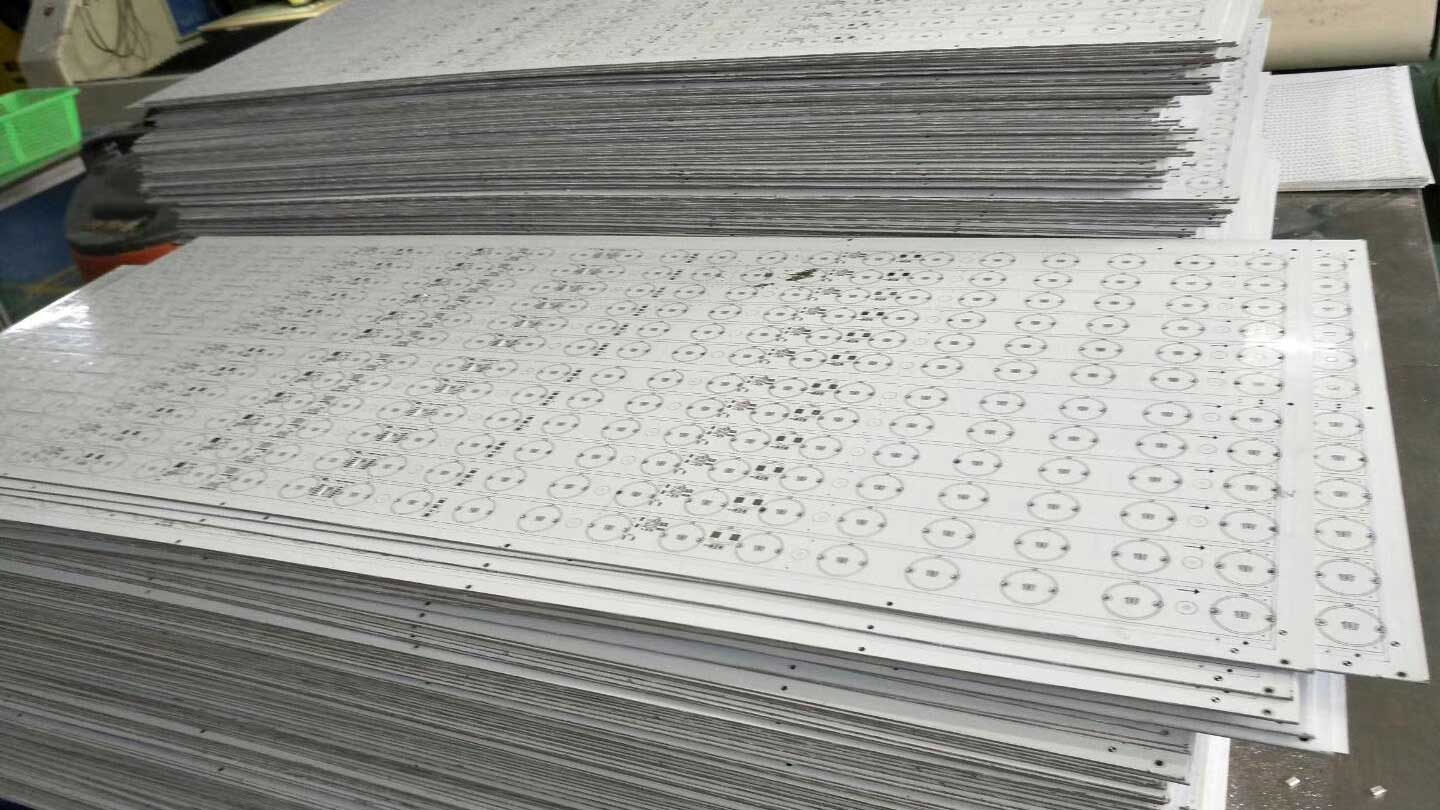
9. Why are most aluminum substrates white?
White is typically the color of solder mask ink or reflective coatings. In LED applications, a white surface can improve light reflectance and reduce light loss, making it a common choice for aluminum substrates used in lighting. Black or other colors may also be used in other applications.
10. How long is the service life of an aluminum substrate?
This depends on the junction temperature and the thermal aging characteristics of the insulating layer. Provided that the junction temperature is controlled, the aluminum substrate itself can operate stably over the long term; failures are more likely to result from the light decay of the LED device itself and the degradation of the insulating layer’s performance under prolonged high temperatures. Controlling the junction temperature is key to extending the service life.
11. How are copper substrates better than aluminum substrates?
Copper has a thermal conductivity approximately twice that of aluminum, offering better thermal performance and a coefficient of thermal expansion closer to that of certain semiconductor devices. The trade-off is its high density, high cost, and greater difficulty in processing. Therefore, copper substrates are primarily used in applications that require extremely high heat dissipation or where weight is not a constraint.
Related Recommendations:Aluminum Substrate · The Role of LED Aluminum Substrates in Lighting Fixtures