

With government policies supporting autonomous vehicles, new energy vehicles are gradually replacing traditional gasoline-powered cars as the market mainstay. This trend has not only reshaped the automotive industry but has also had a profound impact on the related supply chain.
According to Jingpeng Circuit PCB Factory, the rise of new energy vehicles has driven the widespread use of ceramic substrates in the automotive electronics sector.
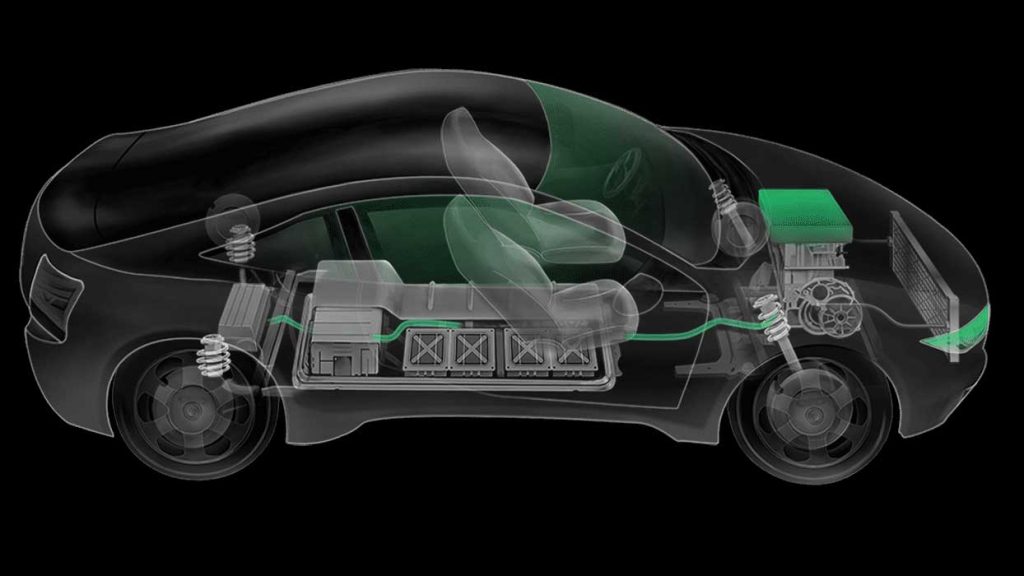
This article will briefly analyze the important role of ceramic substrates in the new energy vehicle sector.
1. Growing Demand for Heat Dissipation in New Energy Vehicles
New energy vehicles contain a large number of high-voltage, high-power devices, such as IGBTs (insulated-gate bipolar transistors) and MOSFETs (metal-oxide-semiconductor field-effect transistors), which generate a significant amount of heat during operation.
To ensure the stability and performance of electronic systems, this heat must be effectively dissipated. Ceramic substrates are highly favored for their excellent heat dissipation properties. They rapidly conduct high levels of heat to the external environment, ensuring the normal operation of high-power loads.
In each new energy vehicle, the total area of PCBs required for just these few types of high-power devices alone amounts to approximately 0.8 square meters. This means that growth in the new energy vehicle market has directly driven an increase in demand for ceramic substrates.
2. Seismic Resistance and Wear Resistance of Ceramic Substrates
The drive modules in new energy vehicles require PCBs that are vibration-resistant and wear-resistant. Ceramic materials excel in this regard due to their outstanding mechanical properties, enabling them to withstand the vibrations and impacts encountered during vehicle operation and ensuring the stability and reliability of the electronic systems.
According to data, the market size for ADAS (Advanced Driver Assistance Systems) modules in new energy vehicles was approximately 9.59 billion yuan in 2018. With the increase in new energy vehicle production and the rising penetration rate of ADAS, this market is expected to grow to 35.11 billion yuan by 2020, representing a threefold increase.
It is projected that by 2025, as the National Medium- and Long-Term Development Plan for the Automotive Industry is gradually implemented, this market will expand further, reaching the 100-billion-level.
Ceramic substrates hold broad application prospects in the new energy automotive sector. Not only do they meet the heat dissipation requirements of new energy vehicles, but they also offer shock resistance and wear resistance, thereby extending the service life of automotive electronic systems. As the new energy vehicle market continues to expand, the ceramic substrate industry will also see more opportunities.
Frequently Asked Questions
Q1: What is a ceramic substrate?
Ceramic substrates are a type of electronic material that offer excellent heat dissipation properties and mechanical strength; they are commonly used in the manufacture of high-power electronic devices.
Q2: Why do new energy vehicles need ceramic substrates?
New energy vehicles contain a large number of high-power components that require effective heat dissipation, and ceramic substrates can meet this need.
Q3: What is the role of ceramic substrates in automotive electronic systems?
Ceramic substrates help conduct heat, improve heat dissipation efficiency, and ensure the stability and reliability of electronic systems.
Q4: Why are seismic resistance and wear resistance important for new energy vehicles?
New energy vehicles are subject to vibrations and impacts while in motion; ceramic substrates with vibration-resistant and wear-resistant properties ensure the long-term stable operation of electronic systems.
Q5: What does the future hold for the ceramic substrate industry?
With the growth of the new energy vehicle market, the ceramic substrate industry is expected to see more opportunities, and its market outlook is promising.
