

LED lighting fixtures often face heat dissipation issues during prolonged operation, which can affect their performance and lifespan. To address this issue, LED lighting manufacturers have adopted various methods, one of which is the use of aluminum substrates for LEDs.
This article will take an in-depth look at the characteristics and advantages of LED aluminum substrates, as well as their key role in LED lighting fixtures.
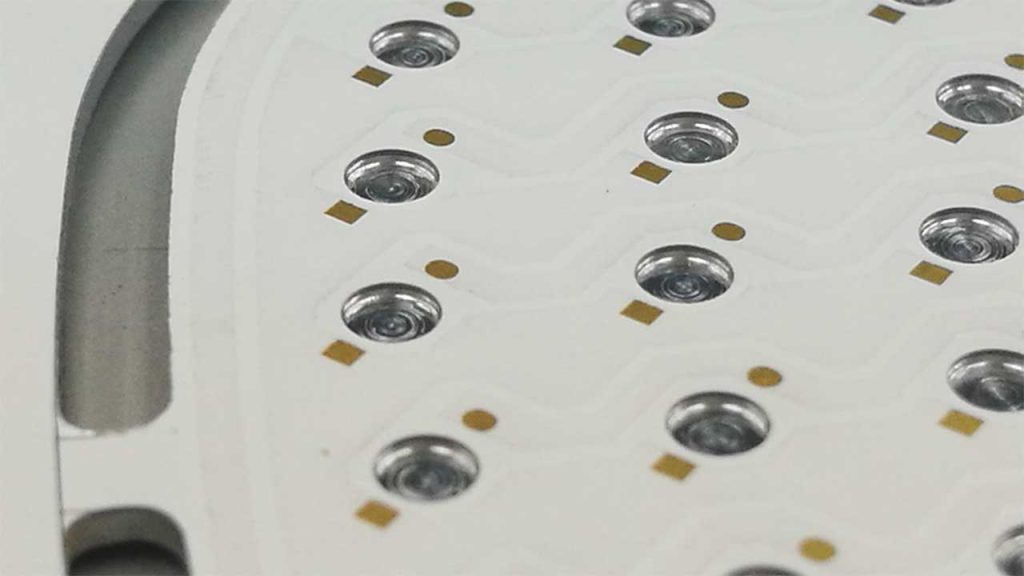
Features of LED Aluminum Substrates
An LED aluminum substrate is a metal substrate made of aluminum that has the following notable characteristics:
1. High thermal conductivity
One of the key characteristics of LED aluminum substrates is their excellent thermal conductivity. Aluminum is an excellent thermal conductor that helps effectively transfer and dissipate the heat generated by LEDs, preventing them from overheating.
2. Electrical Insulation Function
LED aluminum substrates typically provide good electrical insulation, which is critical to the safety of LED lighting fixtures. They ensure that current flows along the intended path while preventing the risk of electric shock.
3. Machining Capabilities
Aluminum substrates for LEDs are relatively easy to machine—for example, through drilling, punching, shearing, and cutting. This allows for greater flexibility in the manufacturing of LED lighting fixtures, enabling them to meet a variety of design requirements.
Advantages of LED Aluminum Substrates
1. Excellent heat dissipation
The high thermal conductivity of LED aluminum substrates effectively solves the heat dissipation challenges faced by LED lighting fixtures. It rapidly transfers the heat generated by the LEDs to the surrounding environment, ensuring that the LEDs’ operating temperature remains within a safe range at all times.
2. Extend the lifespan of LEDs
The lifespan of an LED is typically closely related to its operating temperature. The superior heat dissipation properties of aluminum substrates for LEDs help lower the LED’s operating temperature, thereby extending its lifespan.
3. Improve Product Performance
The use of aluminum substrates for LEDs can improve the performance of LED lighting fixtures. They allow LEDs to achieve higher power densities, thereby providing brighter lighting.
How to Choose the Right LED Aluminum Substrate
Choosing the right LED aluminum substrate depends on the specific LED fixture design and requirements. The following are key factors to consider when selecting an LED aluminum substrate:
- Thermal Conductivity: Ensure that the LED aluminum substrate has sufficient thermal conductivity to meet the LED's heat dissipation requirements.
- Dimensions and Shapes: Select an LED aluminum substrate of the appropriate size and shape based on the design requirements of the LED luminaire.
- Electrical Insulation: Ensure that the LED aluminum substrate has good electrical insulation properties to ensure safety.
Frequently Asked Questions
Question 1: Are LED aluminum substrates suitable for all LED fixtures?
LED aluminum substrates are typically suitable for most LED lighting fixtures, especially those that require efficient heat dissipation.
Question 2: How are LED aluminum substrates machined?
LED aluminum substrates can be processed using common machining methods, such as drilling, punching, and cutting, to meet various design requirements.
