Abstract: This article will discuss the sources of contaminants that affect the quality of small holes in PCB manufacturing and how to address these issues. We will delve deeply into this important topic, focusing on the control of fine contaminants that accumulate over time in metal holes.
From 1995 to 2026, the capabilities of mechanical drilling have advanced from a minimum hole diameter of 0.4 mm to 0.15 mm—and even smaller. The diameters of metallized holes have also become increasingly smaller, and these holes directly affect the reliability of printed circuit boards.
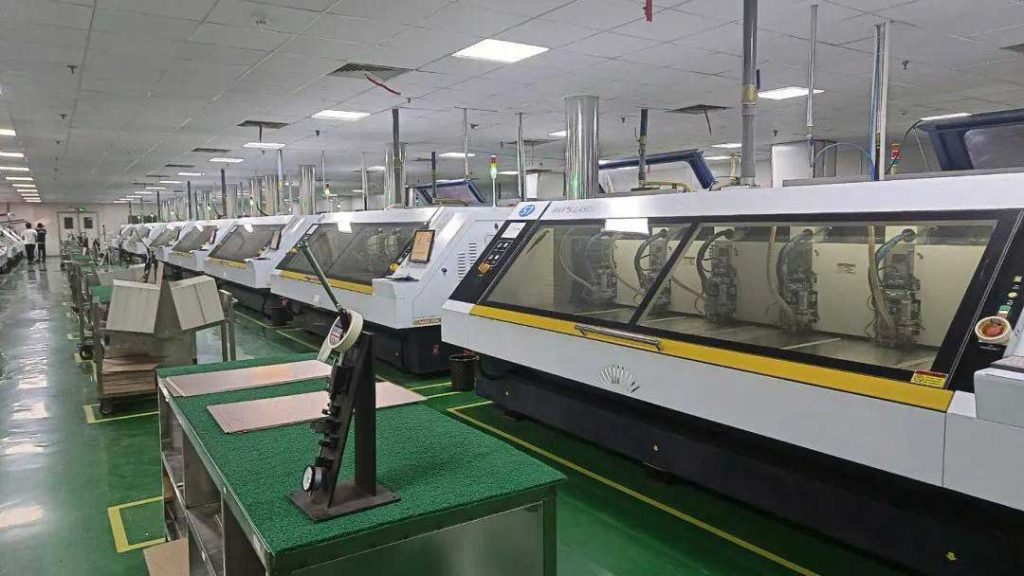
Requirements for the Workshop Environment in PCB Manufacturing
In PCB manufacturing, the workshop environment and cleanliness are critical to product quality. The following are some specific requirements for the workshop environment in PCB manufacturing:
1. Temperature and Humidity Requirements
To ensure the proper operation of equipment and high-quality production processes, the workshop temperature should be maintained at 23±3 degrees Celsius, and relative humidity should ideally be between 45% and 70%RH. Such an environment helps prevent equipment malfunctions and maintain high standards in production processes.
2. Ventilation Capacity
Reflow and wave soldering equipment generate fumes, so exhaust fans must be installed to remove them. For fully hot-air ovens, the minimum airflow rate in the exhaust duct is typically required to be 14–15 m/min. Proper ventilation helps maintain clean air quality in the workshop and protects the health of workers.
3. Power Requirements
PCB manufacturing equipment requires a stable power supply voltage and power. Typically, single-phase AC 220 V (220 ± 101 TP3T, 50/60 Hz) or three-phase AC 380 V (380 ± 101 TP3T, 50/60 Hz) is required. If the power supply is unstable, a voltage regulator must be installed, and the power supply capacity should exceed the equipment’s power consumption. Additionally, SMT placement machines require a dedicated ground connection to minimize electromagnetic interference, as the high operating speeds of these machines may affect the normal operation of other equipment and compromise placement accuracy.
4. Electrostatic Protection Requirements
Static electricity can cause damage during PCB production, so static electricity protection is crucial. Employees entering the workshop must wear antistatic work clothes and caps, put shoe covers over their shoes, and wear antistatic wrist straps. These measures help minimize the impact of static electricity on PCBs.
Quality Issues with Small Holes and Foreign Matter Control
1. Mechanism of Pore Formation
Drilling and Chemical Processing in PCB ManufacturingElectrolytic Copper PlatingThis is a critical step. Drilling is performed on bare holes, which are then converted into conductive plated-through holes through chemical copper plating. Chemical copper plating and electroplating are important steps in metallizing the holes.
1.1 Mechanism of Chemical Copper Deposition
When manufacturing double-sided and multilayer PCBs, it is necessary to convert non-conductive bare vias into conductive ones, which requires electroless copper plating. This is a catalytic “oxidation/reduction” reaction in which copper is deposited in a chemical solution through the catalytic action of metal particles.
1.2 Mechanism of Copper Electroplating
Electroplating is a process that uses an electrical current to deposit positively charged metal ions onto the surface of a conductor to form a coating. Copper electroplating is also an “oxidation/reduction” reaction, achieved by oxidizing the metal surface and then reducing copper ions to form metallic copper.
2. Debris clogging the hole
Over the course of long-term production, it was found that when the pore size reached 0.15–0.3 mm, the proportion of clogged pores increased by 30%.
2.1 The Problem of Pore Blockage During Pore Formation
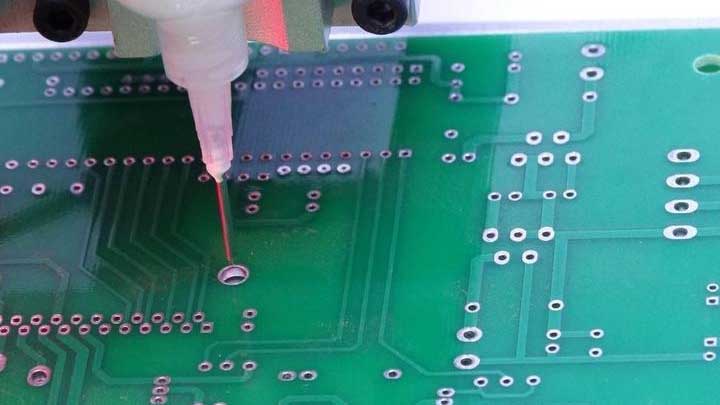
In printed circuit board manufacturing, mechanical drilling is still the most common process used for small holes ranging from 0.15 to 0.3 mm. Long-term inspections have revealed that impurities left in the holes during drilling can cause plating failures. Some possible causes of hole plugging include:
- During drilling, high-pressure water rinsing and chemical cleaning prior to electroless copper plating are often insufficient to remove impurities from small holes, which affects the electroless copper plating process.
- When drilling, it is essential to select the appropriate drill bit and backing plate, keep the substrate clean, avoid reusing backing plates, and use an effective dust extraction system—these are among the key factors in preventing drill bit jamming.
2.2 The Problem of Pore Blockage During the Process of Adjusting the Surface Condition of Metals
To meet the demand for higher-density and finer-line printed circuit boards, effective surface treatment of the board surface is required prior to electroless copper plating and dry film application in order to improve adhesion. Different surface treatment methods—such as deburring, cleaning, polishing, and grinding—utilize various types of abrasives and auxiliary materials, all of which can have a significant impact on the plugging of fine via holes.
2.2.1 Abrasive Plug Formation
Abrasive brushes are commonly used in deburring, cleaning, polishing, and grinding processes, and they can leave behind abrasive residue. If the size of this residue is close to the diameter of the small holes, the holes may become clogged. Nonwoven abrasive brushes generally perform well in metal surface treatment, but they can sometimes shed fibers. Since these fibers vary in size, once they become lodged in small holes, they cannot be removed even with high-pressure water washing.
2.2.2 Volcanic Ash Plugging
To ensure strong adhesion between the dry film and the substrate surface, the substrate must be carefully treated. Modern circuit design requires increasingly finer line widths and spacing, which has led to the development of volcanic ash brushing machines. Volcanic ash brush-cleaning machines use a volcanic ash slurry and nylon brushes to treat the board surface. This process involves scrubbing the board surface with a combination of nylon brushes and the volcanic ash slurry, brushing off the volcanic ash residue, high-pressure rinsing, rinsing, and drying.
Terminology and Standards for Panel Cleaning and Data Management
Classifying and standardizing terms related to board cleaning and data management by concept is more conducive to review alignment than continuing to use customary terms; please refer to the standard specifications for guidance.EMI Design Specifications and Control Principles。
The same term often carries different default assumptions across the design, procurement, production, and inspection phases; without prior alignment, it is easy for all parties to reach conclusions that are correct in their own right but mutually contradictory. It is recommended to establish a terminology cross-reference table that specifies the applicable scope, the version of the reference document, and the responsible party for verification; obsolete terms should be archived separately. This page does not provide any information regarding cleaning agent ingredients, concentrations, temperatures, or disposal procedures; all descriptions already present in the original text remain unchanged.
- Classify by concept and assign uniform names.
- The default assumptions differ across the various stages.
- The cross-reference table specifies the basis and functions.
- Invalid names are kept on file separately.
- Comparisons are only valid when the criteria are consistent.
- This article does not provide operating conditions.
Document and Version Control
Requirements for tasks or test documents with the same name may vary across different versions; executing them based on name rather than version will result in a loss of comparability. For standard compilation, please refer toCommon IPC Standards for Printed Circuit Boards。
It is recommended that document numbers, version numbers, effective dates, and approver information be retained in the records, and that redistribution be restricted; only the currently valid version should be kept on-site, while obsolete versions should be stored separately. Applicable standards, customer specifications, and internal operating procedures belong to different levels of hierarchy; the order of precedence in the event of a conflict should be specified in advance in the contract or technical agreement. This page does not provide any information regarding cleaning agent ingredients, concentrations, temperatures, or disposal procedures; the descriptions already present in the original text remain unchanged.

- Versions with the same name may differ.
- No., Version, Date, Approver—all recorded.
- Only the currently valid version will remain on-site.
- Standard customer component hierarchy.
- Priorities are agreed upon in advance.
- The conclusion does not change depending on who cites it.
Supplier Data Sheet and Responsibility Interface
Performance and safety information related to panel surface cleaning and material management should be based on controlled data provided by the supplier, rather than verbal experience or visual impressions. For regulatory guidance, please refer toWhat is RoHS?。
It is recommended to document the name, version, effective date, responsible department, and approver of the documentation, and to cross-reference it with the procurement specifications and acceptance criteria. When the documentation is updated or the supplier changes, the authorized department shall assess the scope of impact and initiate a re-evaluation. This page does not provide any information regarding the ingredients, concentration, temperature, or disposal procedures of cleaning agents; the descriptions already included in the original text remain unchanged.

- The information is derived from controlled sources.
- Name, Version, Date, Approver—all recorded.
- Cross-reference with the procurement specifications and acceptance criteria.
- Updates to the data trigger a re-evaluation.
- The data tables and regulations shall prevail.
- This article does not specify any terms of use.
Safety, Environmental Protection, and Applicable Regulations
On-site responsibilities related to panel cleaning and data management should be verified separately in accordance with applicable laws and local regulatory requirements; external experience cannot be applied directly. For guidance on interpreting standards, please refer toA Comprehensive Overview of Common Printed Circuit Board Standards。
It is recommended to establish a list of applicable regulations that records the regulation name, version, effective date, responsible functions, and review milestones, and to cross-reference compliance conclusions with procurement and delivery documents. Matters such as occupational protection, waste disposal, and information disclosure shall be governed by on-site controlled documents, supplier data sheets, and local regulations, and shall be reviewed by appropriately qualified personnel before being filed. This page does not provide any information regarding cleaning agent ingredients, concentrations, temperatures, or disposal procedures; all descriptions already present in the original text remain unchanged.
- The list of regulations is maintained separately.
- Specify the version date and responsibilities.
- Compliance conclusions and procurement are interrelated.
- Refer to the on-site documentation for safety precautions.
- Verify and file the records of qualified personnel.
- This article does not provide operating conditions.
Staff Authorization and Position Qualifications
Personnel who access controlled data, draw conclusions regarding panel cleaning and data management, or sign off on records must have explicit authorization; for a statement of reliability, please refer toPCB Reliability Design: DfR Principles and Applications。
It is recommended to maintain an authorization list that records job titles, scope of authorization, effective dates, approving authorities, and review points, with revoked authorizations clearly marked. Revoke authorizations promptly when personnel are reassigned or projects are completed. Matters involving safety and regulatory interpretation should be handled by personnel with the appropriate qualifications; this document does not provide any methods for qualification determination, training content, or assessment thresholds. This page does not provide any information regarding cleaning agent ingredients, concentrations, temperatures, or disposal procedures; the descriptions already present in the original text remain unchanged.
- The list of authorized personnel is maintained by position.
- Scope, dates, and approval authority are recorded together.
- Revoke access privileges promptly once the job reassignment is complete.
- Separate label for revoked authorizations.
- Security explanations are provided by the authorized department.
- This article does not provide a threshold for determination.
Record Fields and the Chain of Custody
The value of records related to panel cleaning and data management lies in their traceability; the relevant fields should be included in management reports, and reference can be made to the material guidelines.A Guide to PCB Materials。
It is recommended to record the time of discovery, the stage at which it was discovered, the sample identification, the version of the reference document, the positions responsible for execution and review, the conclusion category, the nonconformance report number, and the disposition status, and to link these to the batch, work order, and report numbers; the disposition conclusion must be confirmed in writing by an authorized official, and the recipient’s acknowledgment must be filed. This page does not provide any information regarding cleaning agent ingredients, concentrations, temperatures, or disposal procedures; the descriptions already present in the original text remain unchanged.

- The field is located in the traceability information.
- The date of discovery is recorded alongside the specimen.
- Retain based on version and position.
- Disposition is confirmed by the authorized function.
- The acknowledgment and the re-evaluation conclusion cross-reference each other.
- This article does not provide instructions on how to proceed.
Review Records and Conclusions Are Traceable
The value of audits related to board cleaning and data management lies in producing traceable conclusions, rather than merely reaching a verbal agreement on the spot.
It is recommended that review records include the topic, participating functions, the version of the reference document, conclusions, outstanding items, and closure status, and that they cross-reference the glossary and record ledger. For items on which consensus has not been reached, the responsible party and the date for re-evaluation should be specified to prevent the issue from recurring in a different form in the next delivery cycle; relevant records should be archived by project and version, and invalid conclusions should be clearly marked. This page does not provide any information regarding cleaning agent ingredients, concentrations, temperatures, or disposal procedures; the descriptions already present in the original text remain unchanged.

- The review results in traceable conclusions.
- The basis for the agenda items is the same.
- The conclusions and outstanding issues are listed side by side.
- Write the responsibilities and tasks for pending items.
- Several lists reference each other.
- Invalid conclusions should be marked separately.
Outsourcing Agreement with Suppliers
Clearly define the boundaries of responsibility between external contractors, suppliers, and internal functions regarding panel cleaning and data management to avoid any gaps where no one is responsible for verification. Management guidelines can be referenced.Management Guidelines for 5G PCBs。
It is recommended that the agreement specify the scope of delivery, compliance documentation accompanying the goods, procedures for reporting deviations, prohibited actions, and principles for handling breaches of contract, and require the other party to provide written notice of any changes to document versions. Any delivery beyond the agreed scope may only be accepted after written confirmation by the authorized function; documents of unknown origin shall not be included in the controlled document system nor used as the basis for acceptance. This page does not provide any information regarding cleaning agent ingredients, concentrations, temperatures, or disposal procedures; the descriptions already present in the original text remain unchanged.
- The scope of responsibility is specified in the agreement.
- The scope of delivery and compliance documentation are clearly defined.
- Any deviation from the standard notification method must be agreed upon.
- Any changes to the information must be notified in writing.
- Deliveries made beyond one's authority require authorization and confirmation.
- Items of unknown origin are not accepted for control.
Exceptions and Exemptions from Approval
When on-site conditions are limited, there are always exceptions to established rules regarding panel cleaning and data management; the key is to turn those exceptions into verifiable, written conclusions.
It is recommended to establish an exemption record that covers the reason for the request, scope of application, scope of impact, basis for substitution, approval authority, and re-evaluation milestones, and that cross-references the review record. An exemption does not constitute permanent approval; when subsequent versions of documentation, suppliers, or supporting documents change, a reassessment should be conducted to determine whether the historical conclusion remains applicable. This page does not provide any information regarding cleaning agent ingredients, concentrations, temperatures, or disposal procedures; the descriptions already present in the original text remain unchanged.
- Exceptions due to time constraints are inevitable.
- Exceptions must be documented in writing.
- Record the reason, scope, and basis.
- The approval functions and re-evaluation milestones are specified.
- Cross-references to the review records.
- Do not provide a value for the alternative condition.
Changes to Trigger Conditions and the Scope of Re-evaluation
Any change in the data version, supplier, applicable regulations, or supporting documentation should trigger a targeted re-evaluation of conclusions related to panel cleaning and data management.
The value of a re-evaluation lies in confirming whether historical conclusions remain valid, rather than redoing the entire record from scratch. It is recommended to document changes, the scope of impact, re-evaluation conclusions, and conditions for restoration, and to cross-reference these with the original evaluation records and nonconformance reports; for cross-departmental projects, the authorized function should uniformly determine the depth of the re-evaluation to avoid having two sets of criteria coexisting for the same project. This page does not provide any information regarding cleaning agent ingredients, concentrations, temperatures, or disposal procedures; the descriptions already present in the original text remain unchanged.
- Any change will trigger a reassessment.
- Determine whether historical conclusions are applicable.
- The scope of impact and conclusions remain the same.
- Clearly state the conditions for restoration.
- Cross-references with the exception record.
- Avoid having two sets of criteria operating in parallel.
Comparison of Governance Dimensions
Comparing the focus areas, sources, and record formats of workstation cleaning and document management helps quickly identify gaps in policies or records that need to be addressed during an audit. The table below is intended solely for qualitative classification and does not replace the conclusions of an audit or approval process.
The table does not provide any formulas, temperatures, times, pressures, quantities, or acceptance criteria. Actual conclusions must be jointly confirmed based on the supplier’s data sheets, on-site operating procedures, applicable standards, contracts, and local regulations, and must be reviewed by personnel with the appropriate qualifications before being filed. The purpose of the table is to ensure that no management items are overlooked; it is not intended to replace any round of actual review or validation. This page does not provide any information regarding cleaning agent ingredients, concentrations, temperatures, or disposal procedures; the descriptions already present in the original text remain unchanged.
| Subject of Focus | Source | Recording Medium |
|---|---|---|
| Terminology and Versions | Standards and Documents | Cross-Reference Table and Version Log |
| Resources and Regulations | Data Tables and Lists | Source Ledger and List of Regulations |
| Authorization and Record-Keeping | Positions and Reporting | List of Authorizations and Record-Keeping Ledger |
| Review and Changes | Review and Approval | Review Records and Re-evaluation Conclusions |
- The form is used for the initial screening review.
- It is merely a qualitative classification.
- This is not a substitute for actual verification.
- No values are provided.
- The documents and regulations shall prevail.
- The review findings must be filed.
Client Review and Delivery Checklist
It is recommended to verify, item by item, the definitions, reference versions, supplier documentation, lists of regulations, personnel authorizations, record-keeping ledgers, review records, outsourcing responsibilities, exemption approvals, and re-evaluation conclusions related to panel cleaning and data management. For welding standards, please refer toPCBA Soldering Standards。
The checklist should retain the verification conclusions and descriptions of discrepancies for each round as a basis for revising the procedures. This approach advances management from “filling in records only when asked” to a system characterized by “clear guidelines, defined responsibilities, and traceable processes,” and also enables the rapid identification of specific steps during client audits or internal traceability reviews. For cross-departmental projects, it is recommended that a single checklist be used as a delivery baseline shared by all three parties, with the effective version clearly indicated. This page does not provide any information regarding cleaning agent ingredients, concentrations, temperatures, or disposal procedures; all descriptions already present in the original text remain unchanged.

- Go over the specifications and documentation item by item.
- Ensure that all statutory authorizations and records are thoroughly reviewed.
- Review the exemption from outsourcing in conjunction with the verification.
- The conclusions of the re-evaluation must be consistent.
- Description of the discrepancy write-back system.
- The three parties share a single baseline.
Frequently Asked Questions on Board Cleaning and Compliance Management for Data Governance
1. Why is it important to standardize the terminology first?
Because the same term often carries different underlying assumptions in the design, procurement, production, and inspection phases, failure to align these assumptions in advance can easily lead to conclusions that are correct from each party’s perspective but mutually contradictory. It is recommended to establish a glossary of terms, specifying the scope of application, the version of the reference document, and the approving authority, with obsolete terms archived separately. This page does not provide any information regarding cleaning agent ingredients, concentrations, temperatures, or disposal procedures; the descriptions already present in the original text remain unchanged.
2. Why should data and information be based on controlled versions?
Since requirements for documents with the same name may vary across different versions, referencing them by name alone may compromise comparability. It is recommended to record the document number, version number, effective date, and approver, and to archive superseded versions separately; the order of precedence for applicable standards, customer specifications, and internal documents should be specified in advance in the contract.
3. How should safety and environmental protection obligations be incorporated into documents?
It is recommended to establish a list of applicable regulations, documenting the names, versions, effective dates, responsible functions, and review milestones, and to cross-reference compliance conclusions with procurement and delivery documents; occupational protection and waste disposal shall be governed by on-site controlled documents, supplier data sheets, and local regulations. This page does not provide any information regarding cleaning agent ingredients, concentrations, temperatures, or disposal procedures; the descriptions already present in the original text remain unchanged.
4. What information should the list of authorized personnel include?
It is recommended to specify the positions covered, the scope of authorization, the effective date, the approval functions, and the review points, and to clearly identify revoked authorizations. Revoke permissions promptly when personnel are reassigned or a project ends. Matters involving security and regulatory interpretation should be handled by personnel with the appropriate authority; this page does not provide any methods for qualification determination or decision-making thresholds.
5. What fields should the ledger include?
This should include the time of discovery, the stage at which it was discovered, the sample identification, the version of the reference document, the positions responsible for execution and review, the conclusion category, the nonconformance report number, and the disposition status, and should be linked to the batch, work order, and report numbers. The fields should focus on traceable information rather than recording any reusable conditions. This page does not provide any information regarding cleaning agent ingredients, concentrations, temperatures, or disposal procedures; the descriptions already present in the original text remain unchanged.
6. Under what circumstances should a re-evaluation be initiated?
Any change to the version of the documentation, the supplier, the applicable regulations, or the supporting documents should trigger a targeted re-evaluation to confirm whether the previous conclusions remain valid. It is recommended to document the changes, their scope of impact, the re-evaluation conclusions, and the conditions for reinstatement to avoid having two sets of supporting documentation coexisting for the same project.
7. Why should the scope of responsibility for outsourced work be included in the agreement?
Since verbal agreements cannot be traced back after a version update or personnel changes, it is recommended to clearly specify the scope of delivery, the compliance documentation accompanying the shipment, the procedures for reporting deviations, and prohibited actions, and to require the other party to provide written notification of any changes to document versions. Documents of unknown origin should not be included in the controlled document system.
8. What should be included in the delivery checklist prior to client review?
Recommendations should include terminology definitions, applicable versions, supplier information, a list of regulations, personnel authorizations, record-keeping logs, review records, responsibilities for outsourced work, exemptions from approval, and re-evaluation conclusions. For each round, retain the verification conclusions and descriptions of discrepancies, and update the management system accordingly. This page does not provide any information regarding cleaning agent ingredients, concentrations, temperatures, or disposal procedures; all descriptions already present in the original text remain unchanged.
Conclusion
Modern PCB manufacturing places increasingly high demands on the quality of fine holes, and issues with fine holes are closely related to contamination control. In PCB processing, chemical copper plating, electroplating, and surface treatment are all critical steps in ensuring the quality of fine holes. At the same time, proper control of the workshop environment is also an indispensable factor in maintaining high-quality production.
To resolve quality issues with small holes, keep the following points in mind:
- Select appropriate drilling and surface treatment methods to minimize the residue of foreign matter.
- For small pores with different pore sizes, select the appropriate type of volcanic ash to prevent pore blockage.
- Maintain the workshop environment to ensure that temperature, humidity, ventilation, and electrostatic protection all meet the required standards.
These measures can improve the quality of PCB manufacturing and ensure the reliability and performance of the final product.
Frequently Asked Questions
1. Why is the quality of small holes so important in PCB manufacturing?
The quality of the small holes directly affects the reliability and performance of the printed circuit board. Any quality issues can lead to PCB failure.
2. How can you prevent small holes from getting clogged?
The key to preventing small-hole and clogged-hole issues lies in selecting the appropriate drilling and surface treatment methods, as well as maintaining a well-organized workshop environment.
3. Why is it important to control the workshop environment?
Controlling the workshop environment ensures the proper operation of equipment and high-quality production processes, thereby improving the quality and reliability of PCB manufacturing.
4. What are chemical copper plating and electroplating?
Chemical copper plating is a process that uses a catalyst to deposit copper in a chemical solution; it is used to convert non-conductive bare holes into conductive plated-through holes. Electrolytic copper plating is a process that uses an electrical current to drive metal ions from a solution onto the surface of a conductor to form a coating; it is also used for metallizing holes.
Related Reading:The Impact of PCB Via Solderability on Soldering Quality and Optimization Methods · How to Choose the Right PCB Design Stack-Up Scheme