

With the widespread use of small, lightweight, thin, and high-performance components in electronic products, assembly technology has become crucial. At the same time, the relationship between assembly materials and environmental protection has grown increasingly close. This article will exploreElectronics AssemblySome key issues in this field involve material selection, environmental challenges, and the development of new technologies.
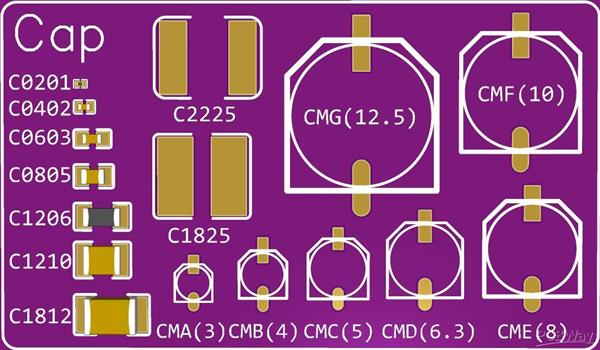
Three Main Areas of Environmental Regulations for Electronic Assembly
The Importance of Material Selection
Since 1995, certain cleaning agents used to clean substrate materials during assembly—such as Freon and trichloroethane—have been explicitly banned by the international community because they damage the Earth’s ozone layer. In addition, materials used in some assembly processes—such as lead (Pb), volatile organic compounds (VOCs), and resin-based circuit boards—also pose environmental challenges. When it comes to material selection, environmental considerations have become a factor that cannot be ignored.
Assembly technologies based on Sn-Pb soldering, such as fine-pitch QFP (Quad Flat Package), have made significant progress in single-pass reflow technology. However, transitioning to lead-free soldering now requires a comprehensive reassessment of various aspects, including the composition of solder materials, manufacturing processes, and reliability—a daunting task.
Advanced: How Environmental Requirements Influence Material Selection
The original text points out that since 1995, cleaning agents such as Freon and trichloroethane have been explicitly banned by the international community; materials such as lead, volatile organic compounds, and resin-based circuit boards also pose environmental challenges, making environmental considerations an indispensable factor in material selection. This shift has expanded the evaluation of materials beyond mere performance and cost to include the dimension of compliance.
| Controlled Materials | Environmental issues highlighted in the original text | Corresponding alternative directions |
|---|---|---|
| Freon Cleaner | Depletion of the ozone layer | Switch to alternatives such as HCFCs, HFCs, PFCs, and IPA |
| Trichloroethane | Both are classified as prohibited cleaning agents | To be phased out along with Freon |
| Lead (Pb) | Heavy Metal Pollution | The Shift to Lead-Free Soldering and Sn-Based Alloys |
| VOC | Emissions Harm the Environment and Human Health | Switch to a closed-loop recycling system and water-soluble materials |
| Resin Series Wiring Boards | Facing similar environmental challenges | Recyclability and degradability must be evaluated. |
The most important thing to keep in mind is"Substitutes themselves may also give rise to new environmental problems.". The original text explicitly states that alternatives such as HCFCs, HFCs, PFCs, and IPA still pose environmental concerns, which is why research and development of third-generation CFCs is still ongoing. This indicates that switching to environmentally friendly alternatives is often not a one-time transition, but rather an ongoing process of iteration; therefore, when selecting alternatives, it is important to allow for the possibility of future adjustments.
- First, check the exclusion list: Re-evaluate each material currently in use;
- Substitutes Must Undergo Environmental Review: The original text points out that they also have problems;
- The Reliability of the Transition to Lead-Free Must Be Re-evaluated: The original text refers to it as a daunting task;
- Compliance and performance must both be met: It is not enough to satisfy just one of them.
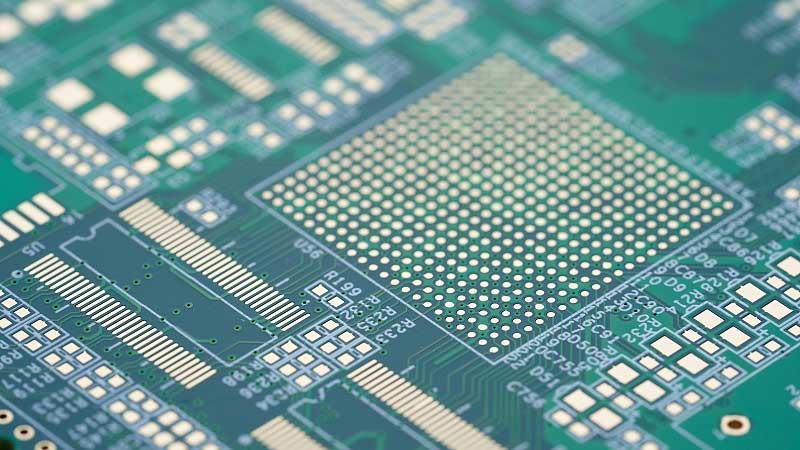
See "Lead-Free Process"The Application of Lead-Free Processes in PCB Manufacturing; For lead-free reliability analysis, seeReliability Analysis and Solutions for Lead-Free HDI Digital Products。
Challenges and Solutions for Lead-Free Soldering
The challenges associated with lead-free soldering include:
- Development of Alternative Welding Fluxes: Finding solder alternatives to lead is a critical task. These solders must meet multiple requirements, including low cost, a melting point close to that of Sn-Pb, superior electrical, mechanical, and chemical properties, compatibility with existing processes and equipment, and suitability for fine patterns.
- New Assembly Techniques: Lead-free soldering requires new assembly techniques and equipment. This means reevaluating existing joining techniques and developing new methods.
Advanced: Why Lead-Free Soldering Is a Challenging Task
The original text categorizes the challenges of lead-free soldering into two types: the development of alternative fluxes, and new assembly technologies and equipment. The former requires low cost, a melting point close to that of Sn-Pb, superior electromechanical and chemical properties, compatibility with existing process equipment, and suitability for fine patterns; the latter implies a reassessment of existing joining technologies.
| Evaluation Dimensions | Requirements in the original text | The Cost of Switching |
|---|---|---|
| Cost | Low-cost | Alloy Formulations and the Supply Chain Need to Be Rebuilt |
| Melting Point | Close to Sn-Pb | A high melting point will increase the welding temperature. |
| Electrical Properties | Superior | Continuity and reliability testing must be repeated. |
| Mechanical Properties | Superior | The strength and fatigue life of the welds must be retested. |
| Process Compatibility | Compatible with existing equipment | The furnace temperature curve and the flux must be adjusted simultaneously. |
| Detailed Graphics | Suitable for detailed graphics | Risks Associated with Fine-Pitch QFPs and Other Devices Are on the Rise |
The real challenge lies in"The Ripple Effects of Melting Point Shift". The original text mentions that significant progress has been made in one-pass reflow technology for fine-pitch QFPs based on Sn-Pb soldering; however, after switching to lead-free solder, the composition of the solder, the process, and reliability must all be reevaluated. An increase in melting point will simultaneously affect the oven temperature profile, the device’s thermal margin, and the appearance of the solder joints—this cannot be resolved simply by changing the alloy.
- First, evaluate the device's thermal margin.: An increase in melting point will reduce the allowance;
- Adjust the furnace temperature profile again: Compatible with the alloy's properties;
- The reliability of the solder joints must be retested.: Emphasis in the original text;
- Fine-pitch devices pose the highest risk: Requires thorough verification.
- Determine the melting point and process window of the alternative alloy;
- Verify the maximum temperature rating of the components on the board;
- Adjust the reflow profile and perform a first-article verification;
- Re-test the strength and appearance of the solder joints;
- Mass production will begin after the reliability tests are completed.
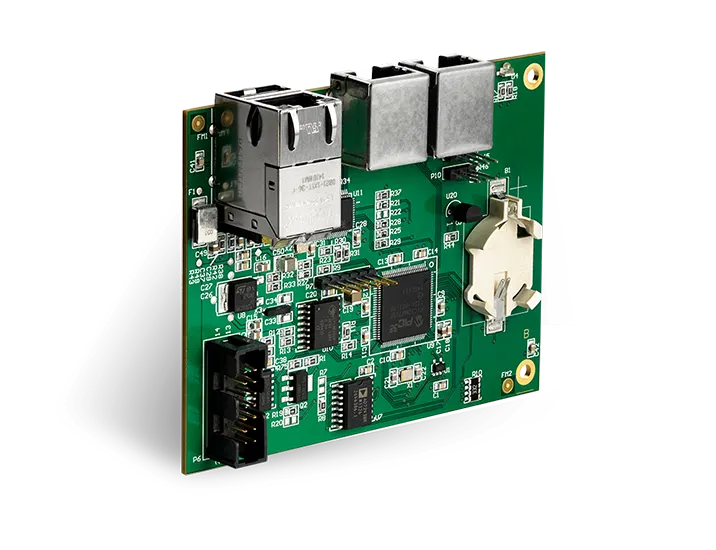
For an analysis of welding defects, seeAnalysis of SMT Soldering Defects and Solutions; For information on distinguishing between leaded and lead-free solder joints, seeHow to Determine Whether Solder Joints on a PCBA Board Are Leaded or Lead-Free。
Developments in New Assembly Materials and Technologies
1. Completely phase out the use of Freon
Freon is a cleaning agent used for circuit boards in assembly, but it damages the Earth’s ozone layer and contributes to global warming. The international community has restricted its use and banned Freon. It has been replaced by alternatives such as HCFCs (transitional compounds), HFCs (hydrofluorocarbons), PFCs (perfluorometaborane), IPA (isopropyl alcohol), propanol, and hexyl acetate. However, these alternatives also pose environmental concerns, so research and development of third-generation CFCs is actively underway.
2. Lead-Free Soldering Is on the Agenda
Due to the heavy metal contamination—including lead—caused by Sn-Pb soldering, the development of lead-free soldering technologies has become urgent. Researchers are actively developing Sn-based alloys, such as Sn-Ag alloys, to replace traditional Sn-Pb soldering. These alloys have already begun to be used in electronic products, where they maintain good soldering quality while improving environmental sustainability.
3. Development of Solderless Connection Technology
As electronic components continue to shrink in size and pin pitches become increasingly narrow, traditional soldering techniques can no longer meet the demands. Consequently, solder-free bonding technologies have begun to attract attention. These technologies include methods such as ultrasonic bonding and hot-press bonding, which allow IC chips to be bonded directly to substrate electrodes without the use of solder. This not only simplifies the process but also reduces the number of cleaning steps.
4. Control the Use and Emissions of VOCs
Controlling the use and emissions of volatile organic compounds (VOCs) is also an important aspect of environmental protection. This includes restricting the use of VOCs to enclosed or recoverable systems and developing new materials, such as water-soluble fluxes and flux-free resins, to reduce VOC usage. However, research on VOC control is still ongoing, as these compounds are diverse and exhibit varying properties.
Advanced: Why Is Detergent Replacement an Ongoing Process?
The original text explains that Freon, when used as a cleaning agent for wiring boards during assembly, damages the ozone layer and contributes to global warming, and the international community has restricted and banned its use, replacing it with alternatives such as HCFCs, HFCs, PFCs, IPA, propanol, and ethyl acetate. However, these alternatives also pose environmental concerns, so research and development of third-generation CFCs is currently underway.
- First-generation CFCs have been completely banned.: The original text explicitly states that the timeframe begins in 1995;
- Second-generation alternatives still pose an environmental burden: This should not be considered a final solution;
- The third generation is still under development.: It is necessary to continuously monitor changes in regulations;
- The no-wash process is another viable option: This can reduce the amount of detergent used.
The practical conclusion that follows from this is"Reducing the need for cleaning is a more fundamental solution than changing the cleaning agent.". The original text, in discussing flux-free joining technology, noted that it simplifies the process and reduces the number of cleaning steps. When the joining process itself no longer produces residues that require cleaning, reliance on cleaning agents naturally decreases—a more sustainable approach than constantly searching for more environmentally friendly solvents.
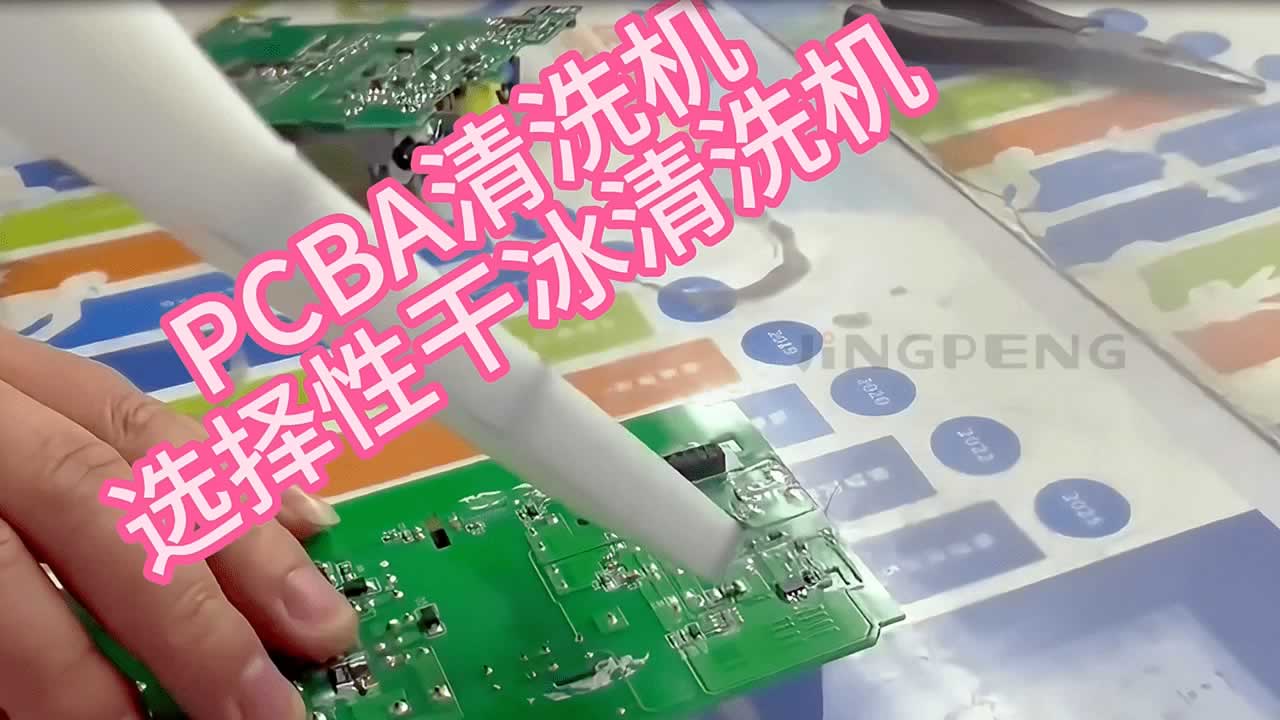
For cleaning instructions, seePCB Cleaning Methods; For the cleaning process, seePCB Cleaning; For selective soldering, seeSelective Soldering。
Conclusion
Driven by environmental pressures, the electronics assembly industry is actively seeking more environmentally friendly materials and technologies. Lead-free soldering, flux-free joining technologies, and the control of VOC use and emissions are all key issues at present. In the future, we can expect more environmentally friendly innovations to ensure the sustainability and environmental responsibility of electronic products.
Advanced: What Makes VOC Control So Challenging?
The original text identifies the control of the use and emissions of volatile organic compounds (VOCs) as a key aspect of environmental protection. Specific measures include restricting the use of VOCs to enclosed or recovery systems and developing new materials—such as water-soluble fluxes and flux-free resins—to reduce their consumption. The text also notes that research in this area is ongoing, given the wide variety of such compounds and their differing properties.
| Control Path | Original Method | Implementation Challenges |
|---|---|---|
| System Shutdown | Restricted to use in closed or recoverable systems | Equipment upgrades require a significant investment. |
| Material Substitution | Development of Water-Soluble Flux | Welding performance must be revalidated. |
| Material Substitution | Development of Solvent-Free Resins | Limited range of applicable processes |
| Reduction at the Source | Reduce VOC usage | Emissions must be calculated for each process step. |
| Ongoing Research | The original text notes that the research is still ongoing. | There is a wide variety of compounds, and their properties vary greatly. |
The root cause of the problem is"VOCs are not a single substance but a broad class of compounds.". The original text clearly states that there are many different types with varying properties, which means it is impossible to address emissions issues across all processes with a single, universal substitute; instead, solutions must be sought separately for each process. For this reason, related research is still ongoing.
For electrical reliability, seeEnsuring Electrical Reliability in PCBA Product Design; For information on solderability optimization, seeThe Impact of PCB Via Solderability on Soldering Quality and Optimization Methods。
Advanced: Limits of Application for Solderless Connection Technology
The original text explains that as components become smaller and pitch distances decrease, traditional soldering techniques can no longer meet the demands. As a result, solderless bonding technologies—including ultrasonic bonding and hot-press bonding—have garnered attention. These methods allow IC chips to be bonded directly to substrate electrodes without the need for solder, thereby simplifying the process and reducing the number of cleaning steps.
- Suitable for applications with extremely tight spacing: The driving factors identified in the original text;
- No flux is required, which reduces the need for cleaning: Consistent with environmental goals;
- Ultrasonic bonding and hot-press welding are the most common methods: The original text is listed below;
- High barriers to entry in terms of equipment and processes: The feasibility of mass production needs to be evaluated.
- Verify whether the device spacing exceeds the capabilities of conventional soldering;
- Evaluate the suitability of ultrasonic bonding or hot-press welding;
- Verify the connectivity of the substrate electrodes;
- Verify connection reliability and the feasibility of repairs;
- Confirm the equipment and cycle time for mass production.
The trade-off is"The Trade-off Between Process Simplification and Capital Expenditures". Fluxless bonding eliminates the need for flux and cleaning, but places higher demands on equipment precision and the condition of the substrate electrodes. For high-volume products with extremely small pitch, this investment is usually worthwhile; for products with standard pitch, traditional bonding remains the more economical choice.

For the characteristics of high-reliability PCBs, see10 Characteristics of Highly Reliable PCBs; For assembly and testing, seeWhy Is PCB Assembly and Testing Necessary?。
Frequently Asked Questions
1. Does lead-free soldering affect the performance of electronic products?
Significant progress has been made in lead-free soldering, which now offers performance comparable to that of traditional soldering. Therefore, it does not significantly affect the performance of electronic products.
2. Why should the use of Freon be phased out?
Freon depletes the Earth's ozone layer and contributes to global warming. As a result, the international community has taken measures to ban the use of Freon.
3. Is solderless connection technology safe?
Flux-free soldering technology is safe and has already been adopted in the manufacturing of certain electronic products. It does not involve harmful flux, which helps reduce environmental pollution.
4. Why is it important to control the use and emissions of VOCs?
VOCs are harmful volatile organic compounds that pose risks to the environment and human health. Therefore, controlling their use and emissions is crucial for environmental protection.
5. What are the future trends in electronics assembly?
Future trends in electronics assembly include the development of more environmentally friendly materials and technologies, as well as a focus on the sustainability of electronic products. Environmental considerations will continue to drive innovation and improvement.
As we face environmental challenges in electronic assembly, we must continue to work toward ensuring that the manufacturing of electronic products becomes more environmentally friendly and sustainable. At the same time, advancements in new materials and technologies will also drive the electronic assembly industry toward a more sustainable future. Let’s all focus on environmental protection and do our part for the future of our planet.
6. What aspects need to be reevaluated when switching to lead-free soldering?
The original text points out that switching from Sn-Pb soldering to lead-free soldering requires a reassessment of various aspects, including the composition, process, and reliability of the soldering materials. Specifically, this includes the melting point and process window of the alternative alloys, the upper heat resistance limit of components on the board, the reflow temperature profile, as well as the mechanical strength and fatigue life of the solder joints.
7. Are Freon alternatives completely environmentally friendly?
It is not entirely environmentally friendly. The original text explicitly mentions that alternatives such as HCFCs, HFCs, PFCs, IPA, propanol, and ethyl acetate also pose environmental concerns; therefore, research and development of third-generation CFCs is actively underway. Substitution is an ongoing, iterative process, not a one-time switch.
8. What are some feasible ways to reduce VOC usage?
The approaches outlined in the original text include restricting the use of VOCs to enclosed or recoverable systems, as well as developing new materials—such as water-soluble fluxes and flux-free resins—to reduce their usage. Given the wide variety of these compounds and their differing properties, solutions typically need to be identified on a process-by-process basis.
Related Recommendations:How Component Shortages Affect Electronic Product Design and How to Avoid Them · The Widespread Use of Ceramic Substrates in the New Energy Automotive Sector
