

In the LED industry,Aluminum SubstrateTheir use is very widespread because aluminum has excellent thermal conductivity, making it well-suited for the heat dissipation requirements of LED chips. However, during the manufacturing process, LED aluminum substrates must be cut into appropriate sizes to accommodate different applications. This raises an important question: When cutting LED aluminum substrates, is it better to use a single-blade panel cutter or a multi-blade panel cutter?
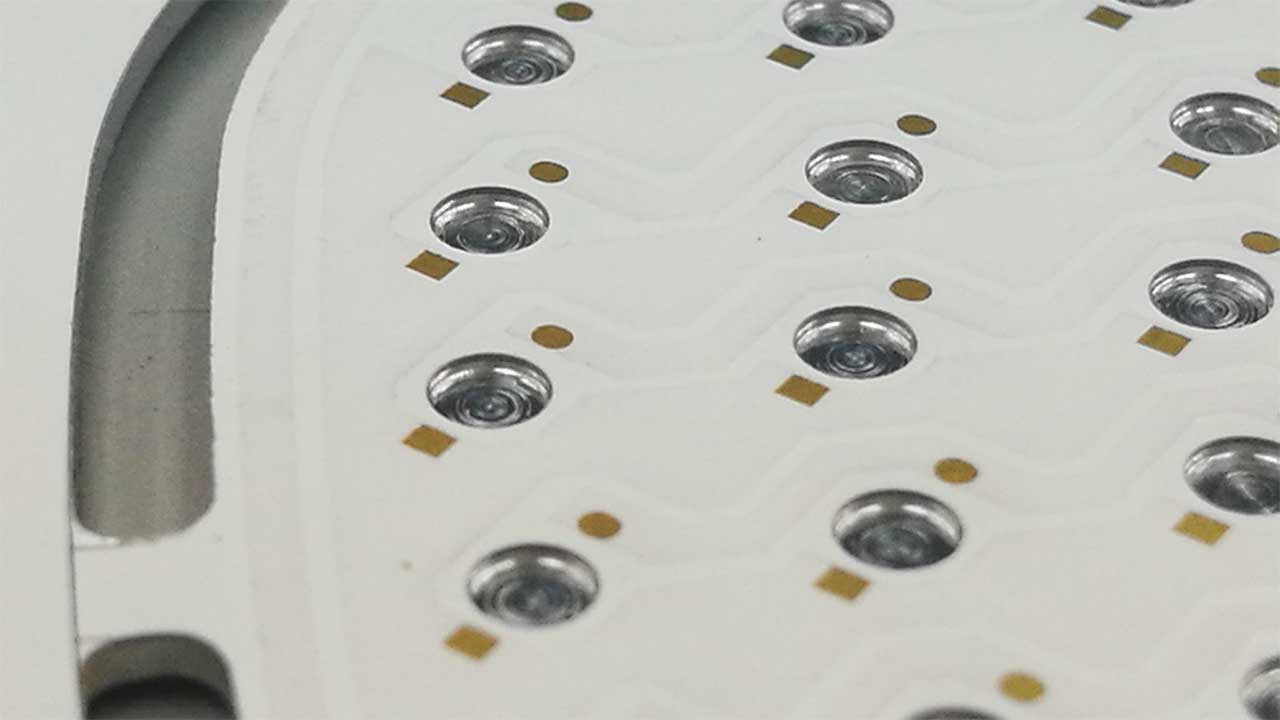
Table of Contents
- Introduction to LED Aluminum Substrates
- The Importance of Cutting Aluminum Substrates
- Single-Blade Panel Slicer vs. Multi-Blade Panel Slicer
- Single-Blade Panel Splitter
- Multi-Blade Panel Cutter
- How to Choose the Right PCB Splitter?
- Frequently Asked Questions
- Conclusion
Introduction to LED Aluminum Substrates
In LED manufacturing, aluminum substrates play a crucial role in heat dissipation. They are typically used as carriers for LED chips, effectively conducting the heat generated by the LEDs to the external environment to ensure their long-term, stable operation. Aluminum substrates offer excellent thermal conductivity, which is why they are widely used in LED lighting, displays, and other applications.
Advanced: The structure of aluminum substrates makes them difficult to cut.
The original text mentions that improper cutting can lead to deformation or damage. The reason for this is that the three-layer structure of the aluminum substrate is completely different from that of conventional FR-4, and the layers behave very differently during cutting:
| Tier | Materials | Performance During Cutting | Problems this causes |
|---|---|---|---|
| Circuit Layer | Copper foil | Good ductility, prone to burr formation | Copper shavings left behind may cause a short circuit |
| Insulation Layer | Resin + Ceramic Filler | Hard and brittle; prone to chipping at the edges | Decrease in Edge Insulation |
| Metal Substrate | 铝 | Soft, sticks to the knife, and conducts heat quickly | Dental calculus, burrs, deformation |
Aluminum'sSoft, sticky, and a fast heat conductorThis is the greatest challenge in slitting. Rapid heat transfer means that cutting heat is quickly conducted into the sheet, which can easily cause localized thermal stress and deformation; if the material is soft and sticky, it is prone to forming built-up edges, which dull the cutting edge and cause burrs to form.
- Burrs are the primary issue: Metal burrs may pierce the insulation or cause a short circuit;
- Decrease in Edge Insulation: Chipping and delamination can weaken the material's ability to withstand pressure;
- Dimensional Deformation: Common defects caused by the combined effects of clamping force and cutting heat.
- First, confirm the board thickness and the aluminum substrate thickness, then select the appropriate cutting tool;
- Set the appropriate speed and feed rate to prevent overheating;
- Remove burrs and metal dust after cutting;
- Conduct random spot checks of the edge withstand voltage for products with withstand voltage requirements.
For information on metal substrate capabilities, seeMetal Substrate; For the thermal design, seeHigh-Efficiency Heat Dissipation Solutions for Aluminum Substrates。
The Importance of Cutting Aluminum Substrates
Aluminum substrates are typically supplied as large sheets, whereas LED applications generally require smaller-sized aluminum substrates. Therefore, before manufacturing LED products, the aluminum substrates must be cut to the required dimensions and shapes. This cutting process is critical to the performance and quality of LED products. Incorrect cutting methods may result in deformation, damage, or unsuitability of the aluminum substrates for specific LED applications.
Advanced: There Are More Than Two Ways to Split Data
The original text compares single-blade and multi-blade panel-cutting machines. In fact, based on their operating principles, the methods for cutting aluminum substrates can be divided into several categories, each with significantly different applications:
| Method | Principle | Cut and slit | Applicable | Limitations |
|---|---|---|---|---|
| Milling Cutter for PCB Separation | High-speed milling cutter cuts along the path | 0.8–2.0 mm | Irregular contours, high precision | There is dust, and the speed is relatively slow. |
| V-CUT | Cut a groove with the upper and lower V-shaped blades, then snap it off. | Residual V-Groove | Straight-line board separation, high-volume production | Aluminum-based materials are difficult to break and prone to deformation. |
| Single-Blade Chopping Knife | A single set of tools cuts one piece at a time | 小 | Small batches, wide variety | Limited efficiency |
| Multi-blade cutter | Multiple sets of cutting tools cut multiple pieces simultaneously | 小 | Large quantities, uniform specifications | Complex changeover and debugging |
| Laser Cutting | Laser-Melted and Vaporized Materials | Very narrow | High precision, stress-free | Aluminum has a high reflectivity, and the equipment is expensive. |
| Stamping Dies | Single-Stroke Die Cutting | No cut seams | Very Large Quantities of Fixed Shapes | High mold costs |
It is important to note that,V-CUT doesn't work well on aluminum substrates.. Due to aluminum’s ductility, it is difficult to break cleanly along a groove, which can leave burrs and cause the board edges to deform; meanwhile, the brittleness of the insulating layer can cause microcracks at the bend. Therefore, aluminum substrates are typically routed using a milling cutter or guillotine cutter rather than a V-cut.
- Priority Milling Cutters for Irregular Contours: CNC edge milling can produce any shape;
- Straight-line high-volume use of shears: High efficiency and consistent cut quality;
- Ultra-high precision: Consider lasers: However, the equipment investment and the issue of aluminum reflection must be evaluated.
See Troubleshooting for Panel SlicersOperational Issues with PCB Depaneling Machines and Their Solutions; For material information, seePCB Sheets。
Single-Blade Panel Slicer vs. Multi-Blade Panel Slicer
Single-Blade Panel Splitter
- Advantages:
- Simple and Easy to Use: Single-blade panel cutters are typically easy to operate and do not require complicated setup.
- Wide Range of Applications: Suitable for aluminum substrates of various sizes and thicknesses.
- Low cost: Typically less expensive than multi-blade panel saws.
- Disadvantages:
- Low production efficiency: Since only one aluminum substrate can be cut at a time, the production speed is relatively slow.
- Accuracy may be limited: Single-blade panel-cutting machines may not be as accurate as multi-blade panel-cutting machines.
Multi-Blade Panel Cutter
- Advantages:
- High Production Efficiency: Multi-blade panel-cutting machines can process multiple aluminum substrates simultaneously, resulting in fast production speeds.
- Higher precision: Multi-blade panel cutters typically offer higher cutting precision.
- Suitable for large-scale production: For production lines that require large quantities of aluminum substrates, multi-blade panel saws are the ideal choice.
- Disadvantages:
- Complex Setup: Multi-blade panel-cutting machines typically require more complex setup and maintenance.
- Higher cost: Compared to single-blade panel saws, multi-blade panel saws are typically more expensive.
Advanced: Which Metrics Should You Look at to Assess Slitting Quality?
When assessing the quality of slitting, it is not enough to simply check whether the material has been cut; the following metrics are more important to include in the inspection:
| Indicators | Common Requirements | Testing Methods |
|---|---|---|
| Dimensional Tolerances | ± 0.10–0.20 mm | Calipers or Image Measurement |
| Burr Height | ≤ 0.05 mm, with no metal chips remaining | Magnifying glass or microscope |
| Edge Perpendicularity | No noticeable bevel | Slicing or Image Measurement |
| Insulation Edge Chipping | No visible cracks or chips | Visual Inspection + Random Pressure Testing |
| Panel Flatness | Meets warpage requirements | Platform Feeler Gauge Measurement |
| Dielectric Strength | Still meets specifications after slitting | Dielectric Withstand Tester |
Among themRetesting the dielectric strength after slitting is the step most likely to be overlooked. If the insulation layer develops chipped edges or microcracks during the cutting process, its dielectric strength will decrease, and this is typically not detectable during a visual inspection. For products with specific dielectric strength requirements (such as LED lighting fixtures and power supply modules), random sampling of the dielectric strength of the cut strips should be included as a routine inspection item.
- All burrs must be thoroughly removed.: If metal shavings fall onto the circuit board, they can cause a short circuit;
- Dust must be vacuumed up.: Aluminum dust poses both health and electrical risks;
- The first item must be confirmed and cannot be omitted.: After changing tools or tool types, you should always re-verify.
- Before starting up the machine, produce a first piece and measure its dimensions;
- Check for burrs and chipped edges;
- Conduct random pressure-resistance tests on a proportional basis;
- Record the data to serve as a basis for tool replacement.

For reliability and slicing, seeKey Points on the Reliability of 19 Printed Circuit Boards and Microsectioning Techniques; For warpage standards, seeStandards and Test Methods for PCB Warpage。
How to Choose the Right PCB Splitter?
Choosing the right PCB depaneling machine depends on your specific needs. Here are some factors to consider:
- Production Capacity: If you need to mass-produce LED aluminum substrates, a multi-blade depaneling machine may be a better choice, as it can improve production efficiency.
- Budget: Single-blade panel-splitting machines are typically less expensive and are suitable for situations with limited budgets.
- Accuracy Requirements: If your application requires a high degree of precision, a multi-blade panel-cutting machine may be a better choice.
- Operational Complexity: Consider whether your operations team has experience operating complex machinery.
Advanced: Tool Selection and Parameter Control
Whether using a single-blade or multi-blade machine, the quality of the cut ultimately depends on the cutting tools and parameters. Here are a few key control points:
| Elements | Key Points | Undesirable Consequences |
|---|---|---|
| Tool Material | Carbide is commonly used in aluminum machining; ensure that the cutting edges are sharp. | A dull knife leaves large burrs |
| Number of Cutting Edges and Front Angle | Selected based on aluminum's soft and sticky properties, which facilitates chip removal | Dental calculus, debris buildup |
| Rotational Speed | Aluminum is best machined at higher speeds, combined with an appropriate feed rate. | If the rotational speed is too low, there will be excessive burrs; if it is too high, the material is prone to ablation. |
| Feed Rate | Match the speed to avoid sudden fluctuations | If the feed rate is too fast, the edge will chip; if it's too slow, the workpiece will overheat. |
| Cooling and Chip Removal | Remove chips promptly and use auxiliary cooling when necessary. | Heat buildup causes deformation |
| Tool Change Interval | Judge based on the quantity processed rather than appearance | Quality Continues to Deteriorate with Prolonged Use |
The tool change cycle is the stage where problems most commonly arise during actual operation. Tool wear is a gradual process,By the time the burrs are visible to the naked eye, a batch of defective products has already been shipped out.. Therefore, the forced tool change cycle should be set based on the number of millimeters machined or the number of parts, and the first part produced after a tool change should be subject to a thorough inspection.
- Create a Tool Change Log: Correlate tool life with actual quality data;
- Keep spare blades in common sizes on hand: Avoid lowering standards just because you have to wait for a scalpel;
- Regularly verify the accuracy of the equipment: Wear on the guide rails and positioning mechanisms directly affects dimensional accuracy.

For information on the relationship between cutting tools and base materials, seeCopper Foil: The Lifeline of PCBs; For material information, seePCB Sheets。
Frequently Asked Questions
Q: What is the cutting accuracy of single-blade and multi-blade panel-cutting machines?
Answer: Multi-blade panel cutters typically offer higher cutting precision because they can process multiple aluminum substrates simultaneously. The precision of single-blade panel cutters may be limited.
Q: In what situations is a single-blade panel-splitting machine suitable?
A: Single-blade panel cutters are suitable for smaller-scale production or when budgets are limited. They are easy to operate and relatively inexpensive.
Q: What are the main advantages of a multi-blade panel-cutting machine?
Answer: The main advantages of multi-blade panel-cutting machines are high production efficiency and greater cutting precision. They are suitable for large-scale production and applications that require high precision.
Q: Can aluminum substrates be separated using V-CUT?
Answer: It is generally not recommended. Due to aluminum’s ductility, it is difficult to break cleanly along the score line, which can easily leave burrs and cause deformation of the board edges; microcracks may also form in the insulation layer. Aluminum substrates are better suited for separation using a milling cutter or a shearing tool. If the product has a regular rectangular shape and is produced in very large batches, a stamping die solution may also be considered.
Q: What causes the edges of the sheet to turn black or discolor after slitting?
Answer: Most cases involve localized overheating caused by cutting heat, oxidation of the aluminum surface, or carbonization of the insulating resin layer. The causes are typically a mismatch between spindle speed and feed rate, a dull cutting tool, or poor chip evacuation. The recommended course of action is to first inspect the condition of the cutting tool, then adjust the spindle speed and feed rate, and finally check whether chip removal and cooling are functioning properly.
Q: Why are the dimensions smaller or larger than expected after slitting?
A: There are three common causes: First, tool wear or runout causes variations in the actual cut width; second, unstable clamping causes the sheet to shift; and third, drift in the machine’s positioning accuracy. We recommend first measuring the first part to determine the extent of the deviation, then systematically checking the tool, clamping, and positioning to avoid simply masking the problem with compensation parameters.
Q: What are the challenges involved in changing setups on a multi-blade panel-splitting machine?
Answer: Primarily, the spacing between multiple sets of cutting tools must be adjusted simultaneously, and the height and perpendicularity of each set must be calibrated individually; as a result, the setup time is significantly longer than that of single-tool machines. Furthermore, since multiple cutters are aligned simultaneously, any deviation in any one group will be reflected on the corresponding board. Therefore, multi-cutter machines are better suited for high-volume production with fixed specifications; they are not cost-effective in scenarios involving frequent changeovers.
Q: How should aluminum dust generated during slitting be handled?
Answer: An effective dust collection system should be installed to collect dust immediately at the cutting point, preventing it from settling on the workpiece surface or entering the machine’s guideways. Aluminum dust not only affects electrical reliability but also poses occupational health and safety risks (as it is combustible metal dust). After cleaning, the panel surface should also be cleaned once more using compressed air or a dust-removal method to ensure no metal chips remain.
Q: How do I know when it's time to change the blade?
Answer: The most reliable method is to set a mandatory tool change cycle based on the machining volume and verify it by comparing burr height with edge finish quality. Do not wait until burrs are visible to the naked eye to change tools, as a batch of defective products will have already been shipped by that point. We recommend recording the number of parts machined with each tool along with the corresponding quality data to gradually determine a cycle that is appropriate for your equipment.
Q: Why does the dielectric strength decrease after slitting?
Answer: During the cutting process, the insulating layer may experience chipping, microcracks, or delamination from the metal substrate; these issues can all weaken the material’s dielectric strength and are often difficult to detect visually. Measures to address this include keeping the cutting tools sharp, controlling cutting heat, reducing the feed rate, and conducting random dielectric strength tests on products with dielectric strength requirements after slitting.
Q: Do LED aluminum substrates require surface treatment after slitting?
A: It depends on the application. If the exposed aluminum base along the panel edges could compromise assembly safety or corrosion resistance, the edges are typically anodized, painted, or fitted with insulating edge strips. For lighting products subject to safety certification requirements, edge insulation and dielectric strength are often key focuses of the certification review; therefore, these requirements should be confirmed in advance and incorporated into the manufacturing process.
Single-blade panel-cutting machines are suitable for small-scale production and situations with limited budgets, while multi-blade panel-cutting machines are suitable for large-scale production and applications that require high precision.
Additional Information:The Role of LED Aluminum Substrates in Lighting Fixtures · How to Choose the Right PCB Design Stack-Up Scheme
