With the continuous advancement of electronic science and technology, PCB (Printed Circuit Board) technology has also undergone tremendous changes. This has been accompanied by continuous improvements in manufacturing processes, as quality and process requirements for PCBs have gradually increased across various industries. This article will provide you with an in-depth understanding of PCB surface treatment processes, as well as the advantages, disadvantages, and appropriate applications of each process.
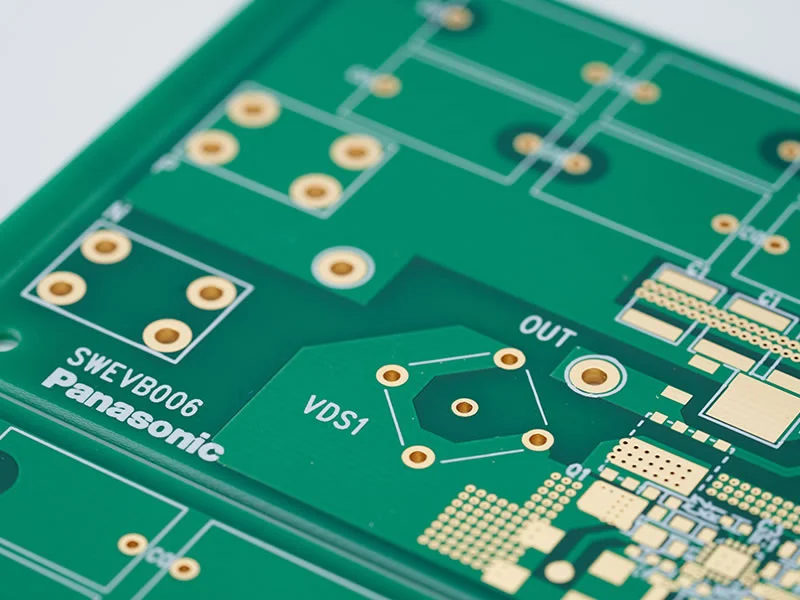
1. Appearance and Color of PCB Boards
First, when looking at the appearance of a PCB, we usually see three different colors: gold, silver, and light red. These colors can provide some clues about the quality of the PCB. Let’s take a look at what each one signifies.
- Gold Plate: The gold color typically comes from a layer of real gold plated onto the PCB. Even if it is only a very thin layer of gold, it still accounts for nearly 10% of the PCB's cost. This appearance usually indicates high-quality manufacturing, as gold offers excellent electrical conductivity and corrosion resistance.
- Silver Plate: A silver color typically indicates that the surface of the PCB has been coated with a layer of tin. Tin provides good solderability but does not offer the same long-term reliability as gold. For certain components—especially those with pads that are exposed to air over long periods—the reliability of a silver coating may be insufficient.
- Light red panel: Light red PCBs are typically made using copper-based substrates with thermal-electric separation, as found in mining lamps. This process is relatively inexpensive, but it may not be sufficient for some high-demand applications.
2. Bare Copper Plate
Bare copper board is a common type of PCBSurface TreatmentThis process has distinct advantages and disadvantages.
Advantages:
- Lower cost.
- The surface is smooth and has good weldability (when not oxidized).
Disadvantages:
- It is sensitive to acid and moisture and cannot be stored for long periods; in particular, it must be used within 2 hours after opening.
- It cannot be used on double-sided boards because the second side has already oxidized by the time the first side has undergone reflow soldering.
- If there are test points, solder paste must be applied to prevent oxidation.
Bare copper oxidizes easily when exposed to air, so a protective layer is usually required on its surface. This is also why large areas of certain circuit boards need to be gold-plated to ensure the PCB’s protection and stability.
3. Gold-Plated Board (Gold Plating)
A gold-colored PCB typically indicates that the surface of the board has been gold-plated. The metal gold—the very essence of gold—is expensive and valuable, even in very thin layers. The primary purpose of gold plating is to provide good solderability and corrosion resistance.
Advantages:
- It does not oxidize easily and can be stored for a long time.
- The surface is flat, making it suitable for soldering fine-pitch leads and small-sized components.
- Suitable for repeated reflow soldering; it does not significantly reduce solderability.
Disadvantages:
- The cost is relatively high.
- The weld strength is poor, which may result in problems such as black spots.
- The gold-plated layer will oxidize over time, so long-term reliability is a concern.
Most smartphone circuit boards use gold-plated boards because they offer excellent solderability and stability. However, the cost of the immersion gold process is relatively high, so it may not be suitable for certain applications.
4. Tin-Plated Sheet (Tin Plating)
A silver-colored PCB typically indicates that the board has undergone a tin-plating process. This involves spraying a layer of tin onto the outer surface of the copper traces to improve solderability.
Advantages:
- It is relatively inexpensive and has good weldability.
Disadvantages:
- It is not suitable for soldering fine-pitch leads and small-sized components because the surface is not sufficiently flat.
- This can easily cause solder balls, which may lead to short circuits in components with fine-pitch leads.
- Prolonged use can cause oxidation and rust, leading to poor electrical contact.
The tin-plating process is commonly used for circuit boards in small digital devices because it is less expensive. However, it may not be suitable for demanding applications, particularly those requiring the soldering of fine components.
5. OSP (Organic Solderability Preservatives) Process Board
An OSP-processed circuit board is a circuit board treated with an organic solder mask. It typically has a light red appearance because this process is relatively inexpensive.
Advantages:
- It offers all the advantages of bare copper plate welding.
- Out-of-date circuit boards can be resurfaced.
Disadvantages:
- It is susceptible to acids and humidity.
- The shelf life is limited, so these components are generally not suitable for repeated reflow soldering.
- Solder paste must be applied to the test points to remove the existing OSP layer in order to perform electrical testing.
The sole purpose of the OSP process is to protect the inner copper foil from oxidation prior to soldering. Although it offers some advantages, it may not be suitable in certain situations, particularly in applications requiring long-term reliability.
Terminology and Definitions for OSP Membranes and Materials Management
Classifying and standardizing terms related to OSP membranes and data management by concept is more conducive to aligning reviews than continuing to use customary terminology; please refer to the standard specifications for guidance.EMI Design Specifications and Control Principles。
The same term often carries different default assumptions across the design, procurement, production, and inspection phases; without prior alignment, it is easy for all parties to arrive at conclusions that are correct in their own right but mutually contradictory. It is recommended to establish a terminology cross-reference table that specifies the scope of application, the version of the reference document, and the responsible party for verification, with obsolete terms archived separately. This page does not provide any film thickness values, bath compositions, process parameters, or acceptance criteria; all descriptions from the original text remain unchanged.
- Classify by concept and assign uniform names.
- The default assumptions differ across the various stages.
- The cross-reference table specifies the basis and functions.
- Invalid names are kept on file separately.
- Comparisons are only valid when the criteria are consistent.
- This article does not provide operating conditions.
Document and Version Control
Requirements for tasks or test documents with the same name may vary across different versions; executing them based on name rather than version will result in a loss of comparability. For standard compilation, please refer toCommon IPC Standards for Printed Circuit Boards。
It is recommended that document numbers, version numbers, effective dates, and approver information be retained in the records, and that redistribution permissions be restricted; only the currently valid version should be kept on-site, while obsolete versions should be stored separately. Applicable standards, customer specifications, and internal operating procedures belong to different levels of hierarchy; the order of precedence in the event of a conflict should be specified in advance in the contract or technical agreement. This page does not provide any film thickness values, bath compositions, process parameters, or acceptance criteria; all descriptions already present in the original text remain unchanged.

- Versions with the same name may differ.
- No., Version, Date, Approver—all recorded.
- Only the currently valid version will remain on-site.
- Standard customer component hierarchy.
- Priorities are agreed upon in advance.
- The conclusion does not change depending on who cites it.
Supplier Data Sheet and Responsibility Interface
Performance and safety information regarding OSP membranes and material management should be based on controlled data provided by the supplier, rather than on anecdotal experience or visual impressions. For regulatory information, please refer toWhat is RoHS?。
It is recommended to document the name, version, effective date, responsible department, and approver of the documentation, and to cross-reference it with the procurement specifications and acceptance criteria; when the documentation is updated or the supplier changes, the authorized department shall assess the scope of impact and initiate a re-evaluation. This page does not provide any film thickness values, bath compositions, process parameters, or acceptance criteria; the descriptions already present in the original text remain unchanged.

- The information is derived from controlled sources.
- Name, Version, Date, Approver—all recorded.
- Cross-reference with the procurement specifications and acceptance criteria.
- Updates to the data trigger a re-evaluation.
- The data tables and regulations shall prevail.
- This article does not specify any terms of use.
Safety, Environmental Protection, and Applicable Regulations
On-site responsibilities related to OSP membranes and data management should be verified independently in accordance with applicable laws and local regulatory requirements; external experience should not be relied upon. For guidance on interpreting standards, please refer toA Comprehensive Overview of Common Printed Circuit Board Standards。
It is recommended to establish a list of applicable regulations that records the regulation name, version, effective date, responsible functions, and review milestones, and to cross-reference compliance conclusions with procurement and delivery documents. Matters such as occupational protection, waste disposal, and information disclosure shall be governed by on-site controlled documents, supplier data sheets, and local regulations, and shall be reviewed by appropriately qualified personnel before being filed. This page does not provide any film thickness values, bath compositions, process parameters, or determination thresholds; all descriptions from the original text remain unchanged.
- The list of regulations is maintained separately.
- Specify the version date and responsibilities.
- Compliance conclusions and procurement are interrelated.
- Refer to the on-site documentation for safety precautions.
- Verify and file the records of qualified personnel.
- This article does not provide operating conditions.
Staff Authorization and Position Qualifications
Personnel who access controlled information, draw conclusions regarding OSP films and material management, or sign off on records must have explicit authorization; for a statement of reliability, please refer toPCB Reliability Design: DfR Principles and Applications。
It is recommended to maintain an authorization list that records job titles, scope of authorization, effective dates, approving authorities, and review points, with revoked authorizations clearly marked. Revoke authorizations promptly when personnel are reassigned or projects are completed. Matters involving safety and regulatory interpretation should be handled by personnel with the appropriate authority; this document does not provide any methods for qualification determination, training content, or assessment thresholds. This page does not provide any film thickness values, bath compositions, process parameters, or determination thresholds; the descriptions already present in the original text remain unchanged.
- The list of authorized personnel is maintained by position.
- Scope, dates, and approval authority are recorded together.
- Revoke access privileges promptly once the job reassignment is complete.
- Separate label for revoked authorizations.
- Security explanations are provided by the authorized department.
- This article does not provide a threshold for determination.
Record Fields and the Chain of Custody
The value of records related to OSP membranes and material management lies in their traceability; the relevant fields should be included in the management information, and the material overview can be used as a reference.A Guide to PCB Materials。
It is recommended to record the time of discovery, the stage at which the issue was discovered, the sample identification, the version of the reference document, the positions responsible for execution and review, the conclusion category, the nonconformance report number, and the disposition status, and to link these to the batch, work order, and report numbers; the disposition conclusion must be confirmed in writing by an authorized official, and the recipient’s acknowledgment must be filed. This page does not provide any film thickness values, tank solution compositions, process parameters, or acceptance thresholds; all descriptions already present in the original text remain unchanged.

- The field is located in the traceability information.
- The date of discovery is recorded alongside the specimen.
- Retain based on version and position.
- Disposition is confirmed by the authorized function.
- The acknowledgment and the re-evaluation conclusion cross-reference each other.
- This article does not provide instructions on how to proceed.
Review Records and Conclusions Are Traceable
The value of reviews related to OSP membranes and data management lies in producing traceable conclusions, rather than merely reaching a verbal agreement on the spot.
It is recommended that review records include the topic, participating functions, the version of the reference document, conclusions, outstanding items, and closure status, and that they cross-reference the glossary and record ledger. For items on which consensus was not reached, the responsible person and the date for re-evaluation should be specified to prevent the issue from recurring in a different form in the next delivery cycle; Relevant records shall be archived by project and version, with invalid conclusions marked separately. This page does not provide any film thickness values, bath compositions, process parameters, or acceptance thresholds; all descriptions already present in the original text remain unchanged.

- The review results in traceable conclusions.
- The basis for the agenda items is the same.
- The conclusions and outstanding issues are listed side by side.
- Write the responsibilities and tasks for pending items.
- Several lists reference each other.
- Invalid conclusions should be marked separately.
Outsourcing Agreement with Suppliers
Clearly define the boundaries of responsibility between external partners, suppliers, and internal functions regarding OSP membranes and data management to avoid any gaps where no one is responsible for verification. Management guidelines can be referenced.Management Guidelines for 5G PCBs。
It is recommended that the agreement specify the scope of delivery, compliance documentation accompanying the goods, procedures for reporting deviations, prohibited actions, and principles for handling breaches of contract, and require the other party to provide written notice of any changes to document versions. Any delivery beyond the agreed scope may only be accepted after written confirmation by the authorized function; documents of unknown origin shall not be included in the controlled document system nor used as the basis for acceptance. This page does not provide any film thickness values, bath compositions, process parameters, or acceptance thresholds; the descriptions already present in the original text remain unchanged.
- The scope of responsibility is specified in the agreement.
- The scope of delivery and compliance documentation are clearly defined.
- Any deviation from the standard notification method must be agreed upon.
- Any changes to the information must be notified in writing.
- Deliveries made beyond one's authority require authorization and confirmation.
- Items of unknown origin are not accepted for control.
Exceptions and Exemptions from Approval
When on-site conditions are limited, there are always exceptions to the established rules regarding OSP membranes and data management; the key is to turn those exceptions into verifiable, written conclusions.
It is recommended to establish an exemption record that covers the reason for the request, scope of application, scope of impact, basis for substitution, approval authority, and re-evaluation milestones, and that cross-references with the review records. An exemption does not constitute permanent approval; when subsequent versions of documentation, suppliers, or supporting documents change, a reassessment should be conducted to determine whether the historical conclusions remain applicable. This page does not provide any film thickness values, bath compositions, process parameters, or acceptance thresholds; the descriptions already present in the original text remain unchanged.

- Exceptions due to time constraints are inevitable.
- Exceptions must be documented in writing.
- Record the reason, scope, and basis.
- The approval functions and re-evaluation milestones are specified.
- Cross-references to the review records.
- Do not provide a value for the alternative condition.
Changes to Trigger Conditions and the Scope of Re-evaluation
Any change in the material version, supplier, applicable regulations, or supporting documentation should trigger a targeted re-evaluation of conclusions related to OSP membranes and material management.
The value of a re-evaluation lies in confirming whether historical conclusions remain valid, rather than redoing the entire record from scratch. It is recommended to document changes, their scope of impact, re-evaluation conclusions, and conditions for reinstatement, and to cross-reference these with the original evaluation records and non-conformance reports; for cross-departmental projects, the authorized department should uniformly determine the scope of the re-evaluation to avoid having two sets of criteria coexisting for the same project. This page does not provide any film thickness values, bath compositions, process parameters, or determination thresholds; the descriptions already present in the original text remain unchanged.

- Any change will trigger a reassessment.
- Determine whether historical conclusions are applicable.
- The scope of impact and conclusions remain the same.
- Clearly state the conditions for restoration.
- Cross-references with the exception record.
- Avoid having two sets of criteria operating in parallel.
Comparison of Governance Dimensions
Comparing the OSP membrane with the subjects of data management, the sources of information, and the record media helps quickly identify gaps in policies or records that need to be addressed during an audit. The table below is for qualitative classification only and does not replace the conclusions of an audit or approval review.
The table does not provide any formulations, temperatures, times, pressures, quantities, or acceptance criteria. Actual conclusions must be jointly confirmed based on the supplier’s data sheets, on-site operating procedures, applicable standards, contracts, and local regulations, and must be reviewed by personnel with the appropriate qualifications before being filed. The purpose of the table is to ensure that no management items are overlooked; it is not intended to replace any round of actual review or validation. This page does not provide any film thickness values, bath compositions, process parameters, or acceptance criteria; the descriptions already present in the original text remain unchanged.
| Subject of Focus | Source | Recording Medium |
|---|---|---|
| Terminology and Versions | Standards and Documents | Cross-Reference Table and Version Log |
| Resources and Regulations | Data Tables and Lists | Source Ledger and List of Regulations |
| Authorization and Record-Keeping | Positions and Reporting | List of Authorizations and Record-Keeping Ledger |
| Review and Changes | Review and Approval | Review Records and Re-evaluation Conclusions |

- The form is used for the initial screening review.
- It is merely a qualitative classification.
- This is not a substitute for actual verification.
- No values are provided.
- The documents and regulations shall prevail.
- The review findings must be filed.
Client Review and Delivery Checklist
It is recommended to verify, item by item, the definitions of terms related to OSP membrane and data management, the versions of supporting documents, supplier documentation, lists of regulations, personnel authorizations, record-keeping ledgers, review records, outsourcing responsibilities, and conclusions regarding approval exemptions and re-evaluations. Welding standards may be referenced as follows:PCBA Soldering Standards。
The checklist should retain the verification conclusions and descriptions of discrepancies for each round as a basis for revising the procedures. This approach advances management from “filling in records only when asked” to a system characterized by “clear guidelines, defined responsibilities, and traceable processes,” and also enables the rapid identification of specific steps during customer audits or internal traceability reviews. For cross-departmental projects, it is recommended that a single checklist be used as a delivery baseline shared by all three parties, with the effective version clearly indicated. This page does not provide any film thickness values, bath compositions, process parameters, or acceptance thresholds; all descriptions from the original text remain unchanged.

- Go over the specifications and documentation item by item.
- Ensure that all statutory authorizations and records are thoroughly reviewed.
- Review the exemption from outsourcing in conjunction with the verification.
- The conclusions of the re-evaluation must be consistent.
- Description of the discrepancy write-back system.
- The three parties share a single baseline.
Frequently Asked Questions on OSP Membrane and Data Governance Compliance Management
1. Why is it important to standardize the terminology first?
Because the same term often carries different underlying assumptions in the design, procurement, production, and inspection phases, failure to align these assumptions in advance can easily lead to conclusions that are correct from each party’s perspective but mutually contradictory. It is recommended to establish a glossary of terms, specifying the scope of application, the version of the reference document, and the responsible party for verification, while retaining obsolete terms in a separate archive. This page does not provide any film thickness values, bath compositions, process parameters, or acceptance criteria; all descriptions already present in the original text remain unchanged.
2. Why should data and information be based on controlled versions?
Since requirements for documents with the same name may vary across different versions, referencing them by name alone may compromise comparability. It is recommended to record the document number, version number, effective date, and approver, and to archive superseded versions separately; the order of precedence for applicable standards, customer specifications, and internal documents should be specified in advance in the contract.
3. How should safety and environmental protection obligations be incorporated into documents?
It is recommended to establish a list of applicable regulations, documenting the names, versions, effective dates, responsible functions, and review milestones, and to cross-reference compliance conclusions with procurement and delivery documents; occupational protection and waste disposal shall be governed by on-site controlled documents, supplier data sheets, and local regulations. This page does not provide any film thickness values, bath compositions, process parameters, or acceptance criteria; all descriptions from the original text remain unchanged.
4. What information should the list of authorized personnel include?
It is recommended to specify the positions covered, the scope of authorization, the effective date, the approval functions, and the review points, and to clearly identify revoked authorizations. Revoke permissions promptly when personnel are reassigned or a project ends. Matters involving security and regulatory interpretation should be handled by personnel with the appropriate authority; this page does not provide any methods for qualification determination or decision-making thresholds.
5. What fields should the ledger include?
This should include the time of discovery, the stage at which it was discovered, the sample identification, the version of the reference document, the positions responsible for execution and review, the conclusion category, the nonconformance report number, and the disposition status, and should be linked to the batch, work order, and report numbers. The fields should focus on traceable information rather than recording any reusable conditions. This page does not provide any film thickness values, tank solution compositions, process parameters, or acceptance thresholds; the descriptions already present in the original text remain unchanged.
6. Under what circumstances should a re-evaluation be initiated?
Any change to the version of the documentation, the supplier, the applicable regulations, or the supporting documents should trigger a targeted re-evaluation to confirm whether the previous conclusions remain valid. It is recommended to document the changes, their scope of impact, the re-evaluation conclusions, and the conditions for reinstatement to avoid having two sets of supporting documentation coexisting for the same project.
7. Why should the scope of responsibility for outsourced work be included in the agreement?
Since verbal agreements cannot be traced back after a version update or personnel changes, it is recommended to clearly specify the scope of delivery, the compliance documentation accompanying the shipment, the procedures for reporting deviations, and prohibited actions, and to require the other party to provide written notification of any changes to document versions. Documents of unknown origin should not be included in the controlled document system.
8. What should be included in the delivery checklist prior to client review?
Recommendations should include terminology definitions, applicable versions, supplier information, a list of regulations, personnel authorizations, record-keeping logs, review records, responsibilities for outsourced work, exemptions from approval, and re-evaluation conclusions. For each round, retain the verification conclusions and descriptions of discrepancies, and update the management system accordingly. This page does not provide any film thickness values, bath compositions, process parameters, or acceptance criteria; all descriptions already present in the original text remain unchanged.
Conclusion
Selecting the appropriate PCB surface treatment is critical to the quality and performance of the circuit board. Different processes have their own advantages and limitations, and the choice should be based on the specific application requirements. Regardless of which process you choose, you should ensure that it meets your project requirements to guarantee high-quality manufacturing and reliability.
Frequently Asked Questions (FAQs)
1. Does the color of a PCB affect its performance?
The color of a PCB typically reflects the surface treatment process; while the color itself does not directly affect performance, different processes may have different performance characteristics.
2. Why do some PCBs use gold, while others use silver or red?
PCB boards of different colors reflect different surface treatment processes, each of which has its own applications and advantages. The choice depends on the specific project requirements.
3. What is the difference between gold-plated boards and tin-plated boards?
Gold-plated boards offer good solderability and corrosion resistance, but they are more expensive. Tin-plated boards are less expensive, but they are not suitable for soldering small components.
4. Why are OSP-processed boards usually light red?
OSP-treated boards typically have a light red appearance, which is due to the color of the organic flux film. It is a relatively inexpensive surface treatment process.
5. How do I choose the right PCB surface finish for my needs?
When selecting the appropriate PCB surface finish, consider the project’s requirements, including cost, solderability, reliability, and the application scenario. Make an informed choice based on specific requirements to ensure high-quality manufacturing.
Further Reading:Advantages and Disadvantages of Seven Common Surface Treatment Processes for PCBs · How to Choose a PCB Surface Treatment Process