

I. Introduction: “Context-Specific Differences” in Printed Circuit Boards”
In the digital age, printed circuit boards (PCBs) serve as the “nervous system” of electronic devices; everything from smartphones and computers to industrial controllers and core automotive systems relies on them to function. They are not only the foundation for electronic components but also play a crucial role in signal transmission, data processing, and functional control.
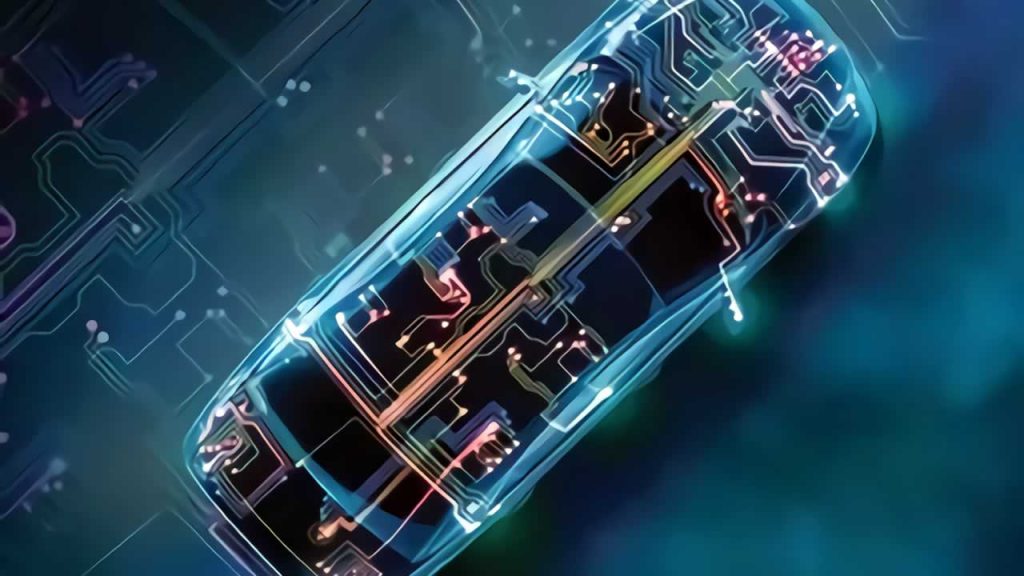
Different application scenarios impose vastly different requirements on circuit boards, and the “automotive sector” is particularly unique. While in operation, vehicles are exposed to extreme high and low temperatures, constant vibration and shock, and intense electromagnetic interference; moreover, safety is a matter of life and death. As a result, automotive circuit boards must possess performance capabilities far exceeding those of conventional circuit boards. This article will examine the core differences between the two from four perspectives—environmental adaptability, reliability, materials and processes, and standards and certifications—and provide an in-depth explanation of the details regarding materials and processes.
II. Basic Concepts: The Difference Between Definitions and Application Boundaries
(1) Standard Circuit Boards: The “Basic Framework” of General-Purpose Electronic Devices”
Standard circuit boards are standardized boards designed for non-automotive applications such as consumer electronics, industrial control, and office equipment. They comply with general electronics industry standards, and their design and production place greater emphasis on cost control and meeting basic performance requirements.
These boards have a wide range of applications: In the consumer electronics sector, smartphone motherboards must integrate components into a limited space to enable functions such as making calls and accessing the internet, with an emphasis on space utilization and basic signal transmission; in industrial equipment, standard sensor signal acquisition boards and small controller motherboards operate in relatively stable environments and have low requirements for environmental adaptability; In office equipment, printer control boards and projector signal processing boards need only meet the basic functional requirements of office environments.
(2) Automotive Circuit Boards: The “Safety Core” of In-Vehicle Systems”
Automotive circuit boards are high-reliability circuit boards specifically designed for the complex operating conditions of vehicles. They not only house electronic components but also ensure the safe, stable, and long-term operation of in-vehicle systems in challenging environments.
Its applications span critical automotive systems: In the powertrain, circuit boards for the Engine Control Unit (ECU) and Battery Management System (BMS) must process engine parameters and battery data in real time, requiring extremely high computational accuracy and stability; In safety systems, circuit boards for ABS, airbag controllers, and autonomous driving perception modules are directly related to human safety and must respond with precision under extreme conditions; in vehicle body electronic systems, circuit boards for the central control display, climate control, and lighting systems—while subject to slightly lower safety requirements—must operate stably over the long term to meet comfort needs.
III. Breaking Down Key Differences: An In-Depth Comparison from Performance to Manufacturing Processes
(1) Environmental Adaptability: The “Extreme Challenge” for Automotive Circuit Boards”
Environmental adaptability is the most significant difference between the two; automotive circuit boards must withstand “extreme conditions,” while conventional circuit boards are designed to function only in general environments.
Temperature Range: Standard circuit boards comply with general commercial standards and have a normal operating temperature range of –20°C to 85°C, which is sufficient for indoor and typical outdoor environments; in everyday use of devices such as cell phones and computers, temperatures rarely exceed this range. In contrast, automotive circuit boards face far harsher environments: temperatures during startup in cold regions during winter can drop as low as –40°C, while engine compartment temperatures in summer can reach 125°C; some powertrain circuit boards must withstand temperatures as high as 150°C. To withstand this range, automotive circuit boards use high-temperature-resistant substrates and components—for example, substrates with a higher glass transition temperature (Tg)—to ensure stable performance under extreme temperatures.
Immunity to Interference: Conventional circuit boards are designed for typical electromagnetic environments, such as homes and offices, where interference levels are low and the impact is minimal. The interior of a vehicle, however, is a complex electromagnetic environment; the operation of the engine and high-voltage circuits generates strong electromagnetic radiation, which can cause malfunctions in the vehicle’s systems if left uncontrolled. Therefore, automotive circuit boards must comply with automotive EMC standards such as ISO 11452. Their design incorporates shielding, grounding, and filtering techniques—such as adding metal shielding enclosures to isolate sensitive circuits from interference sources—to ensure stable signal transmission and data processing in strong electromagnetic environments.
Vibration and Shock Resistance: Conventional circuit boards are used in desktop devices and stationary industrial equipment, where they are subjected to minimal vibration and shock, and mild vibrations have no noticeable impact. However, during vehicle operation, the vehicle encounters bumpy roads, sudden braking, and collisions, requiring circuit boards to withstand continuous vibration and instantaneous shock over extended periods. Automotive circuit boards must comply with the ISO 16750 vibration standard. Structural design incorporates reinforcement measures—such as increasing board thickness, optimizing component layout, and refining soldering processes—to prevent component detachment or damage and ensure reliable structural and electrical performance.
(2) Reliability and Lifecycle: “Short-Term Compatibility” vs. “Long-Term Durability”
Reliability and lifecycle are key differences: automotive circuit boards aim for “long-term durability,” while conventional circuit boards focus on “short-term compatibility.”
Service Life: The typical lifespan of a circuit board aligns with the replacement cycles of consumer electronics and general industrial equipment, generally ranging from 3 to 5 years. Take cell phones, for example: users typically replace them every 3 to 5 years, and even if the circuit board in an old phone still works, it will be phased out along with the device. Vehicles typically have a lifespan of 10 to 15 years, and automotive circuit boards must be designed to match this lifespan—they must not experience performance degradation or failures over the course of 10 to 15 years of use. To this end, automotive circuit boards are subject to strict quality control from material selection through production and testing. They incorporate high-quality, long-life components and substrates, utilize high-precision manufacturing processes, and undergo rigorous reliability testing.
Failure Rate Requirements: Conventional circuit boards can tolerate a low probability of failure. Most failures in consumer electronics can be resolved through a restart or repair and do not pose a life-threatening risk; for example, a computer’s blue screen may be resolved by restarting, and repairs result only in financial loss and inconvenience. Automotive circuit boards, especially safety-critical modules, require “zero failures.” For example, an airbag controller must deploy instantly and accurately upon a collision; any failure could endanger lives. The failure rate for such circuit boards must be less than 10⁻⁹ per hour. To mitigate failure risks, designs incorporate redundancy, fault detection, and diagnostic technologies, while production involves strict quality control and reliability testing.
Protection Rating: Standard circuit boards offer basic dust and moisture protection, typically with an IP40 rating, which prevents the ingress of solid foreign objects larger than 1.0 mm. They have no liquid protection requirements and are suitable for dry indoor environments, such as circuit boards inside computer towers, where exposure to dust and moisture is minimal. Automotive circuit boards are exposed to rain, oil, dust, and other contaminants. They typically have an IP6K or IP9K protection rating, which completely prevents the ingress of solid foreign objects and withstands high-pressure, high-temperature water jets, effectively protecting internal components from corrosion.
(3) Materials and Processes: “Cost First” vs. “Performance First”
Material selection and manufacturing processes directly determine performance and cost. Conventional circuit boards prioritize cost, while automotive circuit boards prioritize performance; the two differ significantly in terms of material properties and manufacturing details.
Selection of Substrates: Standard circuit boards typically use FR-4 epoxy-glass-fiber-reinforced substrates, which are low-cost, easy to process, and offer good insulation properties. They meet basic performance requirements, are suitable for mass production, and are widely used in consumer electronics and general industrial equipment. Automotive circuit boards must withstand extreme environments and therefore place high demands on substrate performance. Substrates with a high Tg (glass transition temperature)—typically ≥170°C—are usually selected. These substrates maintain good mechanical and electrical properties even at high temperatures, do not soften or deform, and are suitable for high-temperature environments such as the engine compartment. Additionally, to meet automotive environmental requirements, halogen-free flame-retardant substrates are selected to prevent the release of harmful halogen gases during combustion.
Welding Processes: Standard circuit boards use a conventional reflow soldering process with a gentle temperature profile, a soldering temperature range of 220°C to 250°C, and a short cycle time. This process is suitable for soldering standard components, offering high production efficiency and low costs. Automotive circuit boards require a high-temperature lead-free soldering process that complies with the RoHS 2.0 standard. Lead-free soldering is more environmentally friendly and eliminates the hazards associated with lead. The soldering temperature is higher, ranging from 250°C to 280°C, and the process is more complex, requiring a high degree of precision. Additionally, after soldering, the boards must undergo thermal cycling tests to simulate the high- and low-temperature cycles encountered during actual use, verifying the reliability of the solder joints and preventing detachment or cold solder joints during long-term use.
Wiring Design: Conventional circuit board routing focuses on space utilization and basic signal transmission requirements. Since consumer electronics have limited space, the layout must be compact and only need to ensure basic signal transmission quality. Automotive PCB routing is more complex. Critical signals employ a redundant design with dual pathways; if one fails, the other continues to function, ensuring uninterrupted signal transmission. Additionally, since both high-voltage and low-voltage circuits are present, crosstalk-resistant design is required. These two types of circuits are isolated from one another to reduce electromagnetic coupling and ensure accurate and stable signal transmission.
(4) Standards and Certification: “General Specifications” vs. “Vehicle-Specific”
The standards and certifications followed are key distinguishing factors; while standard circuit boards adhere to general specifications, automotive circuit boards must pass certifications specific to the automotive industry.
Standard printed circuit boards primarily adhere to IPC (International Electronics Manufacturing Association) standards, such as the IPC-2221 design specification. This standard is a universal standard in the electronics industry that covers all stages of design, production, and testing, ensuring that standard printed circuit boards meet the basic performance and quality requirements for non-automotive applications.
In addition to meeting basic electronics industry standards, automotive circuit boards must also pass certifications specific to the automotive sector. In terms of quality management systems, manufacturers must obtain IATF 16949 automotive quality management system certification. Based on ISO 9001 and tailored to the automotive industry’s needs, this standard emphasizes process control, continuous improvement, and risk prevention to ensure quality control throughout the entire PCB manufacturing process. In terms of performance standards, they must comply with the ISO 16750 standard for environmental conditions and testing of automotive electrical equipment, which specifies test methods and requirements for temperature, vibration, humidity, and electromagnetic compatibility; They must also comply with the AEC-Q200 reliability testing standard for passive components used in automotive applications, which includes tests such as high-temperature storage, temperature cycling, and humidity bias to ensure the long-term reliable operation of the components.
