

1. Structure of the aluminum substrate: Each of the three layers performs a specific function
An aluminum substrate (metal-clad copper-clad board, MCPCB) is not simply “using an aluminum sheet as a circuit board”; rather, it consists of a three-layer structure in which each layer serves a specific function:
- Circuit Layer (Copper Foil): Circuits are formed by etching; typical thickness ranges from 35 to 140 μm, with thicker copper used for power devices.
- Dielectric Layer: The most critical intermediate layer, which must provide both thermal conductivity and electrical insulation. It consists of epoxy resin or other polymers combined with highly thermally conductive ceramic fillers, and is typically 50–150 μm thick.The vast majority of the thermal resistance of the aluminum substrate is concentrated in this layer.。
- Metal Substrate (Aluminum Sheet): Typically, 1.0–3.0 mm thick aluminum sheet (usually 5052 aluminum-magnesium alloy), which dissipates heat and provides mechanical strength.
Understanding this structure will help you grasp the logic behind the performance of aluminum substrates:Copper foil provides electrical conductivity; the insulating layer provides insulation and thermal conductivity; the aluminum plate dissipates heat.. The claim that “aluminum substrates have good thermal conductivity” refers to the fact that heat can quickly diffuse from the copper foil through the insulating layer to the aluminum plate; however, it is often the thinnest insulating layer that truly limits thermal conductivity.
Aluminum substrate, also known asMetal Substrate... is a low-alloyed, high-ductility Al-Mg-Si alloy sheet. It is widely used in the electronics industry and is highly regarded for its excellent thermal conductivity, electrical insulation properties, and machinability. Compared to traditional FR-4 circuit boards, aluminum substrates—when used with the same thickness and trace width—can carry higher currents, withstand voltages up to 4,500 V, and have a thermal conductivity greater than 2.0. As a result, aluminum substrates have become the preferred choice in many industries.

2. Advantages and Uses
2.1 Advantages of Aluminum Substrates
Using Surface Mount Technology (SMT)
Aluminum substrates are compatible with SMT technology, a highly integrated circuit assembly technique that allows for a more compact layout of components on the circuit board and higher power density.
One point to note: The SMT reflow temperature profile for aluminum substrates differs from that of FR-4. Aluminum boards conduct heat quickly, causing the board surface to heat up faster during reflow soldering; if you simply apply the FR-4 profile, it is likely to result inLocalized overheating or inadequate lubrication. Typically, this involves extending the preheating zone, reducing the peak temperature deviation, and using a bottom preheating platform as an auxiliary measure.
Effective Management of Heat Diffusion
Aluminum substrates are extremely effective at managing heat diffusion in circuit design, which means they can better disperse and dissipate heat, thereby lowering the product’s operating temperature, improving its power density and reliability, and extending its service life.
Let’s quantify this “effectiveness”: Conventional FR-4 has a thermal conductivity of only 0.3–0.4 W/(m·K), while aluminum substrates can reach 1.0–3.0 W/(m·K) (with high-end products reaching 5–8), a difference of 3 to 20 times. For LEDs, a 10 °C reduction in junction temperature roughly doubles their lifespan—this is why aluminum substrates are irreplaceable in the lighting industry.
Reduce Costs
Due to their heat dissipation properties, aluminum substrates can lower the operating temperature of products, reducing the need for hardware such as heat sinks and fans, and thereby lowering hardware and assembly costs.
Costs must be evaluated from both sides: While the unit price of aluminum substrates is higher than that of FR-4 (typically 2–4 times higher), the savings on heat sinks, fans, assembly labor, and after-sales maintenance often outweigh this difference. For products with higher power density and greater heat dissipation requirements, the overall cost advantage of using aluminum substrates becomes even more evident.
Mechanical Durability
Aluminum substrates have replaced fragile ceramic substrates, offering better mechanical durability and greater resistance to damage, making them suitable for applications in a variety of harsh environments.
In addition, aluminum substrates have three often-overlooked advantages:Good dimensional stability(Aluminum has a stable CTE, so large sheets are less prone to warping),Recyclable(Aluminum is easy to recycle),Good machinability(It can be stamped, drilled, and milled, and is much less expensive to machine than ceramic substrates.)
2.2 Uses of Aluminum Substrates
Audio Equipment
Aluminum substrates are widely used in audio equipment, including input amplifiers, output amplifiers, balanced amplifiers, audio amplifiers, preamplifiers, and power amplifiers.
Power Equipment
It is also used in power supply equipment, such as switching regulators, DC/AC converters, and SW regulators; its heat dissipation performance is particularly important for such equipment.
Communication and Electronic Equipment
In telecommunications and electronic equipment, aluminum substrates are used in high-frequency amplifiers, filters, and transmitter circuits to ensure signal transmission and stability.
Office Automation Equipment
Aluminum substrates are also used in office automation equipment, such as motor drivers, to improve the performance and reliability of the equipment.
Automotive Electronics
In the automotive industry, aluminum substrates are widely used in electronic regulators, ignition systems, power controllers, and other components to ensure the proper operation of vehicles.
Computer
In the computer industry, aluminum substrates are used to manufacture CPU boards, floppy disk drives, power supplies, and other components, thereby improving computer performance and stability.
Power Module
In power modules, aluminum substrates are used to manufacture converters, solid-state relays, rectifier bridges, and other components, ensuring efficient power transmission.
Light Fixtures and Lighting Decor
With the widespread adoption of energy-efficient LED lights, aluminum substrates have also come into widespread use in the lighting industry to ensure proper heat dissipation and stability for LED lights.
If we categorize the eight types listed above based on “why cooling is needed,” there are actually three driving factors:Heat Generation in Power Devices(Power Supplies, Power Modules, Automotive Electronics),Heat Generated by the Light Source(LED lighting fixtures),High Ambient Temperature(Automotive engine compartments, outdoor equipment). During the design process, first identify the primary cause, then determine the specifications of the aluminum substrate.
3. Thermal Design: How to Interpret Thermal Conductivity Parameters
When selecting a product, don’t just look at the single figure “thermal conductivity 2.0”; consider these three parameters:
| Parameters | Meaning | Normal values | High-end value |
|---|---|---|---|
| Overall Thermal Conductivity | Thermal conductivity of the entire board (including the insulating layer) | 1.0–2.0 W/(m·K) | 3.0–8.0 W/(m·K) |
| Thermal Resistance of the Insulation Layer | Thermal resistance through an insulating layer | 0.8–2.0 °C·cm²/W | 0.2–0.5 °C·cm²/W |
| Dielectric Breakdown | Insulation Breakdown Voltage | 2–3 kV | 4.5 kV or higher |
What is more useful in engineering isThermal resistanceRather than the thermal conductivity, since it is directly involved in the junction temperature calculation: Tj = Ta + P × (Rjc + Rboard + Rsink). The thermal resistance of the insulation layer was reduced from 2.0 to 0.5, which lowered the junction temperature by 7.5 °C at a power dissipation of 5 W.
4. Types and Applications
4.1 Types of Aluminum Substrates
Aluminum substrates can be classified into various types based on their manufacturing processes and applications, including:
4.2 Application Areas
Aluminum substrates have a wide range of applications, including but not limited to:
- Aluminum Substrates for Street Lights
- Aluminum Substrates for Fluorescent Lamps
- LB Aluminum Substrate
- COB Aluminum Substrate
- Encapsulated Aluminum Substrates
- Aluminum Substrate for Bulb Lamps
- Aluminum Substrate for Power Supplies
- Aluminum Substrates for Automobiles
These applications span a wide range of fields, from lighting to electronics, automotive, and computers, fully demonstrating the versatility and wide-ranging uses of aluminum substrates.
4.3 How to Choose a Surface Treatment
Tin-plated aluminum substrate
The surface treatment is lead-free hot-air solder leveling (HASL), which offers low cost and good solderability. It is a general-purpose option suitable for applications where flatness requirements are not stringent.
Alumina-based substrate
The surface is treated with OSP (organic solder preservative), which results in a smooth surface and low cost, but has a short shelf life and a limited number of soldering cycles; it is suitable for high-volume production with fast turnaround times.
Silver-plated aluminum substrate
With a silver-plated surface, it offers excellent electrical and thermal conductivity as well as high reflectivity, and is commonly used in LED products that require high light output efficiency.
Electrolytically Plated Gold on Aluminum Substrate
Electroless nickel-in-gold (ENIG) plating offers excellent surface flatness and long shelf life; it is suitable for fine-pitch and multiple soldering applications. It is the most expensive option and is used in high-reliability products.
| Surface Treatment | Flatness | Shelf Life | Cost | Applicable |
|---|---|---|---|---|
| Hot Air Solder Leveling (HASL) | Generally | 6–12 months | 低 | Versatility and low cost are the top priorities |
| OSP Antioxidant | 好 | 3–6 months | 低 | Rapid-Turn Mass Production |
| Silver-plated | 好 | 6–12 months | 中 | High Reflectivity Requirements for LEDs |
| Gold Plating (ENIG) | 优 | 12 months or more | 高 | Fine-pitch, high reliability, multiple soldering cycles |
For a comparison of complete surface treatment systems, seePCB Surface Treatment Processes。
Based on structural form, they can be further classified into another category, which determines the degree of design flexibility:
- Single-sided aluminum substrate: A single layer of circuit traces; this is the most common type and the least expensive, and is used in most LEDs and power supplies.
- Double-sided aluminum substrate: There are circuits on both sides, interconnected via insulated vias or metallized vias; the process is complex and costly.
- Multilayer Aluminum Substrate: With more than two layers, this product is designed for high-power-density modules and is a custom product.
- Plated-through-hole aluminum substrate: Metallizing the hole walls while insulating them from the aluminum plate is the most technically challenging process.

5. Aluminum Substrates vs. FR-4 vs. Ceramic Substrates

| Comparison Items | Aluminum Substrate | FR-4 | Ceramic Substrates (Al₂O₃ / AlN) |
|---|---|---|---|
| Thermal Conductivity, W/(m·K) | 1.0–8.0 | 0.3–0.4 | 24 (Al₂O₃) / 170–200 (AlN) |
| Insulation Withstand Voltage | 2–4.5 kV | It depends on the thickness of the medium. | 高 |
| Mechanical Strength | Good, shatter-resistant | 好 | Brittle, fragile |
| Machinability | Okay, suitable for stamping and edge milling | 好 | Not good; requires laser processing |
| Line Accuracy | Intermediate | 高 | High (thin-film/thick-film process) |
| Cost | 中 | 低 | 高 |
| Typical Applications | LEDs, Power Supplies, Automotive | General Electronics | Power Modules, RF, New Energy Vehicles |
The criteria for selecting a board type are clear: general heat dissipation requirements → FR-4; heat dissipation required, cost-sensitive, and high structural strength required → aluminum substrate; extremely high thermal conductivity required, and willingness to accept high cost and brittleness → ceramic substrate. For applications of ceramic substrates, seeThe Widespread Use of Ceramic Substrates in the New Energy Automotive Sector。
6. Design Considerations: Five Common Pitfalls to Avoid
- Do not drill through-hole metallization.: Aluminum substrates are conductive metal substrates; standard through-holes can cause a short circuit with the aluminum plate. When holes are necessary, insulation treatment is required (first drill a large hole, fill it with insulating resin, then drill a small hole), which significantly increases costs. In design, drilling holes in aluminum substrates should be avoided whenever possible.
- The insulation layer should not be compressed too thin.: Thinning the insulation layer to improve thermal conductivity results in a corresponding decrease in dielectric strength. For dielectric strength requirements of 2 kV or higher, the insulation layer is generally no less than 75 μm.
- Consider CTE mismatch: The CTE of aluminum is approximately 23 ppm/°C, that of copper is approximately 17 ppm/°C, and that of ceramic-packaged power devices may be as low as 5–7 ppm/°C. During temperature cycling, solder joints are subjected to shear stress, so high-power devices require stress-relief designs.
- Heat dissipation paths must be unobstructed: After the aluminum substrate transfers heat to the aluminum plate, the aluminum plate must be attached to the housing or heat sink. The gap between them should be filled with thermal grease or a thermal pad; the contact surfaces must be flat, and the screws must be tightened evenly. Otherwise, even the best heat transfer in the earlier stages will be wasted.
- Forming Methods: Aluminum substrates can be stamped (for high-volume production and simple shapes) or edge-milled/edge-cut (for low-volume production and complex shapes). V-cuts are not suitable for aluminum substrates; they are typically separated using stamping holes or milled grooves.

7. Conclusion
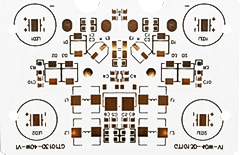
As a highly efficient heat-dissipating and versatile circuit board material, aluminum substrates play a vital role in the modern electronics industry. Their excellent thermal conductivity, electrical insulation properties, and machinability make them one of the top choices for numerous applications. Whether in audio equipment, power supply units, communications electronics, or automotive electronics, aluminum substrates play a critical role in enhancing product performance and reliability. At the same time, different types of aluminum substrates are suitable for various processes and applications, meeting a wide range of requirements.
Whether the goal is to improve product performance or reduce costs, aluminum substrates are a viable option to consider.
8. Prototyping and Acceptance: Four-Step Confirmation + Four Inspections
When prototyping and mass-producing aluminum substrates, following these four steps will allow you to skip one round of prototyping:
- Heat Setting Specifications: Given the power dissipation, allowable junction temperature, and heat dissipation area, calculate the required thermal resistance and determine the appropriate material grade.
- Set Electrical Specifications: Voltage rating requirements, copper thickness, trace width and spacing, and whether impedance control is required.
- Define Structure: Sheet thickness, external dimensions, forming method (stamping/edge milling), whether holes are present, and insulation treatment method.
- Specifying Surface Treatment and Acceptance: Select surface treatments based on welding methods and service life, and specify the pressure test conditions and sampling rates.
Once you receive the board, we recommend performing the following four tests:
- Dielectric Withstand Test: Apply the test voltage according to specifications to verify that there is no breakdown and that the leakage current meets the requirements.
- Thermal Conductivity Testing: Use a thermal resistance test bench or measure the actual temperature rise to verify whether the promised thermal conductivity has been achieved.
- Adhesion Testing: The peel strength between the copper foil and the insulating layer should not decrease after thermal cycling.
- Thermal Cycling Test: After several cycles at −40 to 125 °C, retest the pressure resistance and adhesion to verify reliability.
Frequently Asked Questions
Q1: What is the difference between an aluminum substrate and a standard circuit board?
Aluminum substrates offer better thermal conductivity and heat dissipation, making them suitable for applications that require high power and high temperatures—requirements that standard circuit boards typically cannot meet.
Q2: Why is the thermal conductivity of aluminum substrates important?
Aluminum substrates with high thermal conductivity help dissipate heat quickly, prevent electronic components from overheating, and improve circuit reliability.
Q3: What are the manufacturing processes for aluminum substrates?
The manufacturing process for aluminum substrates includes tin plating, oxidation resistance treatment, silver plating, and electroless gold plating; the specific process is selected based on the intended application.
Q4: What are the benefits of using aluminum substrates in LED lighting fixtures?
Aluminum substrates effectively dissipate heat, extend the lifespan of LED lights, improve stability, and reduce the manufacturing costs of lighting fixtures.
Q5: How do I choose the right type of aluminum substrate?
When selecting the appropriate type of aluminum substrate, factors such as the application's power requirements, operating environment, and budget should be considered; this typically requires consultation with the manufacturer and customization.
Q6: 铝基板能做多层板吗?
能做,但属于定制工艺,成本高、周期长。常见做法是先做一块双面或多层 FR-4 的驱动板,再把功率器件所在的单层铝基板与之组合,比整体做多层铝基板更经济。只有在功率密度极高、空间受限时才会考虑多层铝基板。
Q7: 为什么铝基板上的孔很少?
因为铝板本身导电,直接钻孔会与线路短路。要在铝基板上做金属化孔,必须先钻大孔填充绝缘树脂、再钻小孔做金属化,工序复杂且良率风险高。所以设计时应尽量把线路布在单层内,避免过孔。
Q8: 导热系数标注 2.0 够用吗?
要看功耗与允许温升。用热阻算更靠谱:假如器件功耗 5 W,绝缘层热阻 1.5 ℃·cm²/W、导热面积 1 cm²,那么仅绝缘层就贡献 7.5 ℃ 温升。若结温预算只有 20 ℃ 余量,这一项就占去了三分之一,此时应选热阻 ≤0.5 的高导热型号。
Q9: 铝基板的耐压能到 4500V 吗?
能,但要看绝缘层厚度与材料等级。标称 4.5 kV 的产品通常绝缘层在 100–150 μm,且要通过相应的耐压测试(如 AC 3000 V、1 分钟、漏电流 ≤ 规定值)。设计时应留 1.5–2 倍余量,不要按标称值贴着用。
Q10: 铝基板的交期与打样要注意什么?
两点:一是明确给出导热系数(或热阻)、耐压、绝缘层厚度这三个参数,不能只说「铝基板」;二是铝基板成型多用冲压或铣边,打样周期比 FR-4 长 2–4 天,且模具费用要单独确认。工艺能力核对见PCB Manufacturing Capabilities。
Further Reading:Advantages and Applications of Multilayer Printed Circuit Boards · The Role of LED Aluminum Substrates in Lighting Fixtures · Metal Substrate
