1. What exactly determines the price of a PCB?
PCBs are not off-the-shelf products, so there is no standardized price list. Even for the same ”10 cm × 10 cm double-sided PCB,” quotes can range from a few yuan to several hundred yuan. This variation results from the combined effect of seven variables:Materials, Processes, Difficulty, Acceptance Criteria, Manufacturer Capabilities, Payment Terms, Region. Understanding this structure is more useful than simply comparing prices—because in most cases, the ”high price” isn’t due to a markup by the manufacturer, but rather because your needs include hidden cost factors.
First, let's take a look at the big picture: PCB quotes typically consist ofEngineering costs + material costs + manufacturing costs + surface treatment costs + testing costs + packaging and logistics + administrative expenses and profitCost Breakdown. For small batches, engineering costs and test fixture costs account for a high proportion of the total (potentially exceeding the cost of the PCB itself), while for large batches, the cost of the PCB material and the manufacturing process dominate. This is also the fundamental reason why ”prototyping is expensive but mass production is cheap” and why ”unit prices for small batches cannot be lowered.”
2. Variety of Materials and Price Differences
In the PCB (Printed Circuit Board) manufacturing process, a wide variety of materials are used, including substrate materials and solder mask ink. Taking a standard double-sided PCB as an example, common substrate materials include FR-4 and CEM-3, with board thicknesses ranging from 0.6 mm to 3.0 mm, and copper thickness ranges from 1 oz to 3 oz. All of these factors contribute to significant price variations in the substrate alone. Different materials result in noticeable cost differences, which in turn affect the final price of the PCB.

2.1 Price Ranges for Common Sheet Materials
The table below uses a standard FR-4 double-sided board as a baseline (1×) and provides the relative price multiples for common board types, allowing for a quick assessment of ”how significant the cost impact would be if the material were changed.” Actual quotes will also factor in the number of layers, copper thickness, board thickness, and order quantity; these multiples are intended solely for comparative purposes.
| Sheet Types | Relative Price Multiples | Typical Specifications | Cost Drivers | Applicable Products |
|---|---|---|---|---|
| FR-4 (Standard, Tg 130) | 1× (Reference) | 0.6–3.0 mm, 1–3 oz | The resin system is well-established and readily available. | Consumer Electronics, Industrial Control, Home Appliances |
| CEM-3 | 0.85–0.95× | 0.8–1.6 mm | Fiberglass felt replaces some fiberglass cloth | Low-Cost Double-Sided Boards, LED Boards |
| FR-4 High Tg (Tg 170) | 1.3–1.6× | 0.4–3.0 mm | Resin system upgrades, narrow pressing window | Lead-free reflow, multilayer boards, automotive applications |
| Aluminum Substrate | 2.5–4× | 1.0–3.0 mm | Metal Substrate Processing, Thermally Conductive Adhesive Layer | Lighting, Power Supplies, Motor Drives |
| Polyimide (FPC Substrate) | 3–5× | 0.05–0.2 mm | PI film and rolled copper are expensive | Flexible boards, rigid-flex boards |
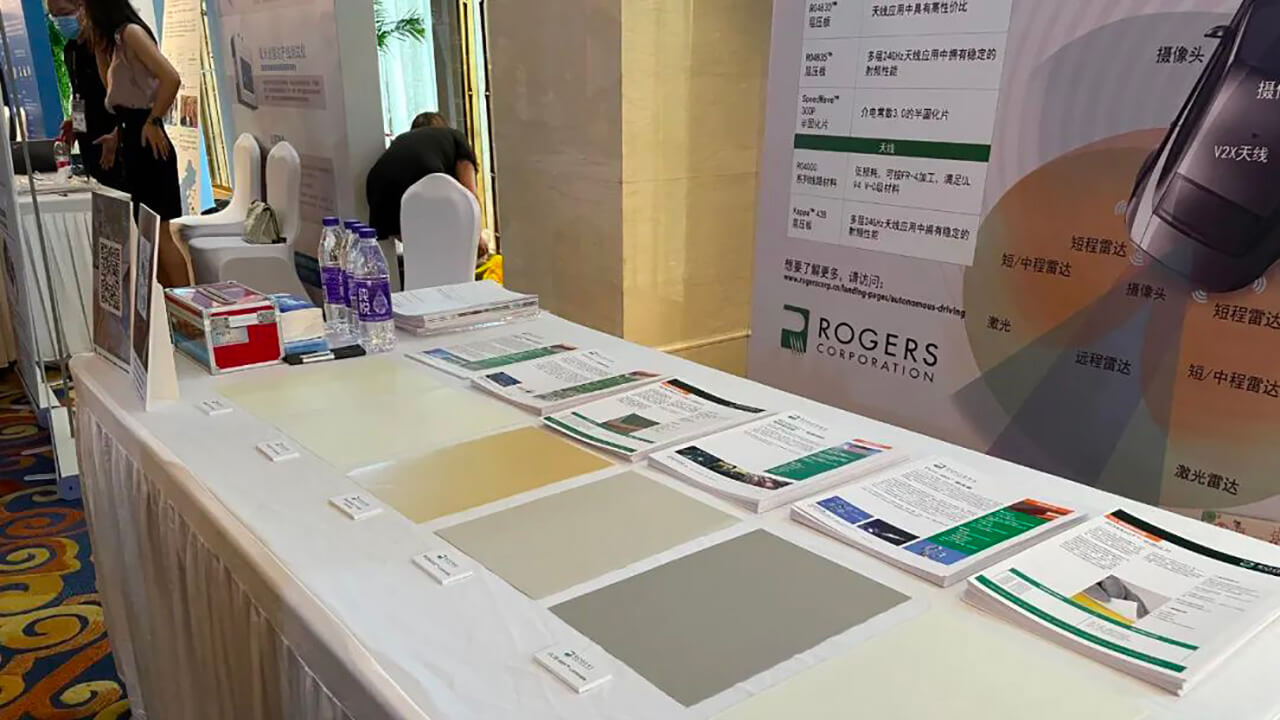
| Rogers Series | 6–9× | 0.1–1.5 mm | Patents for high-frequency materials, small batch sizes | RF, Millimeter Wave, Base Stations |
| Ceramic-Filled PTFE | 10–15× | 0.1–1.0 mm | Filler materials are expensive and difficult to process | UWB, 77 GHz Radar |
Copper thickness is the most easily overlooked cost factor. Increasing the thickness from 1 oz to 2 oz raises the board cost by approximately 15–25%, while simultaneously increasing etching difficulty and reducing the yield of fine traces; increasing the thickness to 3 oz or more typically requires switching to a specialized thick-copper process, resulting in non-linear cost increases. Board thickness follows the opposite trend: both ultra-thin boards (≤0.4 mm) and ultra-thick boards (≥3.0 mm) command a premium due to processing difficulties, while the standard 1.6 mm thickness is the most cost-effective option.
3. The Impact of Manufacturing Processes on Price
The use of different manufacturing processes by PCB manufacturers leads to price variations. For example, gold-plated boards andTin PlatingThe cost of PCBs varies depending on factors such as the type of board, the use of routing (milling) and punching (stamping) plates to shape the board, and the choice of manufacturing methods—such as screen-printed or dry-film circuit patterns—all of which result in different costs and, consequently, price differences. Different process requirements not only affect the complexity of the manufacturing process but also impact the equipment and human resources required, thereby directly influencing the price of the PCB.
3.1 Surface Treatment: The Most Obvious Cost Item on the Quote
| Surface Treatment | Relative Cost | Flatness | Number of Reflows | Shelf Life | Applicable Scenarios |
|---|---|---|---|---|---|
| Lead-Free Hot-Air Solder Leveling (HASL) | 1× (Reference) | 差 | 2–3 times | 12 months | Wide-pitch, low-cost products (subject to RoHS restrictions) |
| Lead-Free Hot-Air Solder Leveling (LF-HASL) | 1.1–1.3× | 差 | 2–3 times | 12 months | Lead-free requirement; spacing ≥0.5 mm |
| OSP | 1.0–1.2× | 好 | 1–2 times | 6 months | Short lead times, single-sided mounting |
| Tin Plating / Silver Plating | 1.5–2× | 好 | 2–3 times | 6–12 months | Fine-pitch, crimp connections |
| Electrolytic Nickel Immersion Gold (ENIG) | 2–3× | Great | 3–5 times | 12 months | BGA, Fine-Pitch, Gold Wire Bonding |
| ENEPIG | 3–4× | Great | 5 or more times | 12 months | Gold Wire Bonding + Hybrid Welding Process |
| Hard Gold Plating | 4–8× | Great | Not applicable | 24 months | Gold fingers, plug-in contact areas |
The principle for selecting a finish is ”just enough”: There’s no need to apply ENIG to boards that can undergo two reflow cycles; conversely, using OSP on boards with 0.4mm-pitch BGAs is a gamble on yield. For information on how surface treatments affect solderability, shelf life, and cost, please refer toA Comparison of Four Common PCB Surface Treatment Processes, For a complete list of process capabilities, seePCB Surface TreatmentSkills Page.
3.2 Other Process Cost Items
- Shape Machining: Milled panels are suitable for small batches and complex shapes, while stamped panels require tooling but offer extremely high mass-production efficiency—when production volumes reach tens of thousands, the unit cost drops significantly after the die cost is spread across the production run.
- Circuit Imaging: Screen-printed circuits are low-cost but lack precision, while dry-film circuits offer high precision and are suitable for fine lines, but are more expensive.
- Solder Mask and Markings: Standard green ink is the least expensive; black and white inks require separate parameter adjustments due to their contrast and curing characteristics, and typically command a premium of 10–201 TP3T.
- Via Processing: Plugged holes and resin-plugged holes with plated caps (VIPPO) are more expensive than standard through-holes, but they are often required in BGA areas.
- Impedance Control: Impedance test strips and simulation are required, which will incur engineering and testing fees; the stricter the tolerances, the higher the costs.
4. Price Variations Due to Differences in the Complexity of the PCB Itself
Even if the materials and manufacturing processes are the same, differences in the complexity of the PCB itself can lead to different costs. For example, consider two PCBs, both with 1,000 holes: one with hole diameters all greater than 0.6 mm and another with hole diameters all less than 0.6 mm will incur different drilling costs. Similarly, when line widths and spacing vary, more complex boards have higher scrap rates, which inevitably increases costs and, in turn, leads to price variations.
4.1 Quantification Criteria for the Difficulty Coefficient
| Difficulty Dimension | Regular Slot | High-Difficulty Tier | Cost Impact | Note |
|---|---|---|---|---|
| Minimum pore size | ≥0.3 mm | ≤0.15 mm (laser) | +15–40% | Small holes require laser drilling or the use of a finer drill bit, which leads to increased drill bit wear and longer processing times. |
| Pore Density | <500 pores/dm² | >1,500 pores/dm² | +10–30% | Costs are primarily driven by drilling hours, with the number of holes resulting in a direct linear increase in costs. |
| Line Width/Line Spacing | ≥150 μm | ≤75 μm | +20–50% | Dry film and precision etching are required; yield rates have declined. |
| Number of Floors | Floors 2–4 | 8 stories or higher | Per level +25–401 TP3T | Number of press cycles, alignment difficulty, material layering |
| Plate Thickness-to-Hole Diameter Ratio | ≤8:1 | ≥12:1 | +20–60% | It is difficult to ensure uniform copper plating in deep holes, which requires a special electroplating process. |
| Thickness-to-Diameter Ratio / Thick Copper | 1 oz | ≥3 oz | +30–80% | Thick-copper etching requires multiple compensation steps, resulting in reduced circuit precision. |
| HDI Order | Through-Hole Board | Second order or higher | Per level +25–401 TP3T | Laser Drilling + Hole-Filling Electroplating: The Number of Process Steps Doubles |
This table can be used directly for design reviews: By marking each of the seven dimensions one by one early in the project, you can estimate the order of magnitude of the quote and determine whether ”this requirement is over-engineered.” For further reading, see the relationship between HDI process paths and costs.A Comprehensive Analysis of the HDI PCB Manufacturing Process: From Single-Layer to Any Number of Layers与HDI PCB Product Page。
5. Differences in Customer Requirements
PCB manufacturing costs are also influenced by customer requirements. The level of customer requirements directly affects the board manufacturer’s yield rate. For example, under IPC-A-600E Class 1 requirements, the yield rate is 98%, but under Class 3 requirements, it may be as low as 90%. Different customer requirements result in varying costs for the board manufacturer, which ultimately leads to fluctuations in product prices.
Essentially, every time the acceptance standard is raised by one level, the ”cost of nonconforming products” is shifted from the customer to the panel manufacturer, and this cost is inevitably reflected in the unit price. Common surcharges include:
- Test Requirements: Flying-probe testing, which is billed per board, is suitable for small batches; while the initial investment in specialized test fixtures is high, the unit cost is extremely low once mass production begins.
- Inspection Level: Random sampling, AOI 100% inspection, and 100% electrical testing—there are significant cost differences across the three tiers.
- Documentation and Traceability: Cross-section reports, impedance test reports, COC, batch traceability, RoHS/REACH declarations.
- Packaging and Cleanliness: Vacuum packaging, anti-static packaging, sulfur-free paper, cleanroom classification.
Defense, medical, and automotive projects often require a complete set of documentation and 100% inspection; these costs can account for 10–25% of the total.
6. Differences Among PCB Manufacturers
Even for the same product, different PCB manufacturers have varying process equipment and technical capabilities, which can result in different costs. Some manufacturers may prefer to produce gold-plated boards because the process is simple and costs are low; however, for some manufacturers, producing gold-plated boards results in higher scrap rates, which drives up costs. As a result, they prefer to produce tin-sprayed boards, leading to lower prices for tin-sprayed boards.
Differences in manufacturers' capabilities are evident in three areas:Equipment Configuration(laser drilling machines, vacuum etching, via-filling electroplating, AOI, and electrical testing equipment),Product Categories We Specialize In(Some excel at small-batch express shipments, while others excel at large-volume shipments of a single product),Order Structure(After a production line has undergone long-term optimization for a particular process, the cost of that process will be significantly lower than that of competitors.) Therefore, when requesting a quote, don’t just ask, ”How much does it cost?”—ask, ”Is this your core process?” For information on production capacity and equipment, please refer toPCB Factory与Overview of Manufacturing Capabilities。
7. Different Payment Methods
PCB manufacturers typically adjust PCB prices based on the payment method, with variations ranging from 5% to 10%. Different payment methods can also lead to price differences. The choice of payment method can have a significant impact on the final cost and is therefore a factor contributing to price variability.
The underlying logic involves capital tied up and the risk of bad debt: 30-day and 60-day monthly settlement, cash on delivery, and full prepayment each entail different capital costs, so pricing naturally varies accordingly. For buyers, if cash flow permits, trading shorter payment terms for a price discount of 5–10% is often more cost-effective than repeated price negotiations.
8. Regional Differences
Currently, prices in China are generally higher from south to north, and there are also some regional variations, primarily due to factors such as labor costs and transportation costs. Therefore, regional differences are one of the reasons for this price variability.
The Pearl River Delta has the most concentrated PCB supply chain; everything from copper-clad laminates and ink to drill bits and test fixtures can be sourced locally, resulting in high synergy and low logistics costs. The Yangtze River Delta has stronger capabilities in high-end HDI and IC substrate manufacturing. Inland regions have lower labor and facility costs, but these advantages are partially offset by supply chain limitations and longer transportation times. When selecting a region, in addition to unit price, one must also considerResponse Time for Prototypes and Timeliness of Issue ResolutionTake this into account—the value of these two factors during the R&D phase typically exceeds a price spread of several percentage points.
In summary, the variation in PCB prices results from the interplay of multiple factors. To accurately calculate PCB prices, it is necessary to consider factors such as material costs, manufacturing requirements, complexity, customer specifications, manufacturer selection, payment terms, and geographic location, in order to provide customers with accurate quotes.
9. Volume and Delivery Time: Two Hidden Price Levers
The impact of order volume and delivery time on unit price often exceeds that of the materials themselves:
- Batch: From 5 prototype units to 500 units, the unit price typically decreases by 50–70%, primarily because engineering costs and test fixtures are spread out over a larger volume; From 500 to 5,000 units, the rate of decrease narrows to 15–30%; beyond that, cost reductions are primarily driven by bulk material procurement and production line optimization.
- Panel Utilization Rate: For boards of the same size, the yield difference between irregularly shaped panels and standard rectangular panels can range from 10 to 20%, and this difference is directly factored into the unit price. Designing with panel-friendly shapes (such as V-cuts and minimal irregular notches) can save money.
- Delivery Date: Standard lead times (e.g., 7–10 days) are based on the base price; rush orders with lead times as short as 48 hours or 24 hours typically incur a premium of 50–200%, due to the need to insert orders into the production schedule, switch production lines, and work overtime. Essentially, the rush fee is a payment for securing production capacity.
- Reorder: For a second order of the same model, engineering fees are typically waived or significantly reduced; this is why it’s more cost-effective to ”finalize the design with a prototype first, then place a bulk order.”
How is the price of a PCB calculated?
The following factors must be considered when pricing PCBs:
- Sheet Material Costs: Different types and sizes of sheet materials will affect the cost.
- Drilling Costs: The number of holes and their diameters affect drilling costs.
- Processing Costs: Different process requirements result in varying levels of difficulty, which in turn affect the price.
- Labor, utilities, and administrative expenses: Cost control varies by region and manufacturer, which affects these expenses.
By taking all these factors into account, the final price of the PCB can be calculated. It is important to note that cost calculation in the PCB industry is highly complex; it requires a detailed accounting of material, labor, and manufacturing costs for each production step, while also taking into account the custom requirements of different customers to ensure accurate pricing.
9.1 A General Estimation Framework
Organize the factors above into a formula you can use to calculate the cost yourself before requesting a quote:
- Calculating Area and Material Yield: Sheet area × number of panels ÷ material utilization rate, to calculate the actual material consumption area.
- Calculate the cost of materials: Area of consumables × unit price of sheet material (including copper thickness factor) + prepreg and auxiliary materials.
- Calculate Drilling Costs: Number of holes × unit price per hole (prices are based on pore size categories; the unit price for the small-pore category may be 2–3 times that of standard-sized holes).
- Calculate processing fees: Add up the number of processes item by item, focusing on surface treatment, impedance, via plugging, and the number of HDI layers.
- Calculation, Testing, and Engineering Fees: Engineering fee (one-time) + Test fixture (one-time) + Electrical testing/AOI (per board).
- Cumulative Difficulty and Delivery Schedule Coefficient: Difficulty factor (1.0–1.8) × Expedited processing factor (1.0–3.0).
- Add management fees and profit: Typically 8–151 TP3T of the total mentioned above.
The results calculated using this framework will not match the quote exactly, but they keep the margin of error within a reasonable range and are sufficient to identify cases of ”significant deviations from the quote.” For a more comprehensive cost breakdown, please refer toPCB Price Analysis: Factors Affecting Prices, from Materials to Manufacturing Processes。
10. Actions That Can Be Taken to Lower the Unit Price
- Relax tolerances wherever possible: Increasing the line width and spacing from 75 μm to 100 μm and the via diameter from 0.2 mm to 0.3 mm typically saves 10–201 TP3T.
- Standardize Panel Types and Thicknesses: Mixing different types of sheet materials in the same order will result in multiple machine setup changes and increased material waste.
- Surface treatment should be just enough to get the job done.: If tin plating is possible, don't use gold plating; if gold plating is possible, don't use ENEPIG.
- Reduce the number of layers: By optimizing the layout and fan-out and reducing the number of layers from 6 to 4, costs are typically reduced by more than 30%.
- Combining Orders and Returned Orders: Combining orders for the same model and reusing existing engineering documentation may result in a reduction or waiver of engineering fees.
- Secure Demand Early: Minimizing revisions and rush orders is the most cost-effective way to reduce costs.
Conclusion
The variation in PCB prices results from a combination of factors, including the variety of materials, process requirements, complexity, customer specifications, choice of manufacturer, payment terms, and geographic location. To ensure accurate pricing, PCB manufacturers must take all these factors into account in order to provide customers with reasonable quotes.
Frequently Asked Questions (FAQs)
1. How does the material of a PCB affect its price?
Different PCB materials can lead to price differences, such as board substrates and solder mask ink.
2. How does the PCB manufacturing process affect the price?
Different manufacturing processes result in different costs, including gold-plated boards, tin-plated boards, screen-printed circuits, and dry-film circuits.
3. How do customer requirements affect PCB pricing?
Customer requirements directly affect the PCB yield rate, which in turn affects the price.
4. Does the choice of PCB manufacturer affect the price?
Yes, different PCB manufacturers have different processes and technical capabilities, which can lead to variations in costs and prices.
5. How is the price of a PCB calculated?
When calculating the price of a PCB, factors such as material costs, drilling costs, manufacturing costs, labor, utilities, and administrative expenses must be taken into account.
6. Why is the unit price for a 10-piece sample run so much higher than for a 1,000-piece run?
This is because one-time costs such as engineering fees, test fixtures, and setup time cannot be spread out over small production runs. For example, with an order of 10 pieces, engineering fees may account for 40–60% of the total price; when the order reaches 1,000 pieces, the same engineering fees are spread out to just a few mao per piece. If mass production is confirmed after prototyping, many manufacturers will refund or waive the engineering fees for subsequent orders; you can proactively inquire about this when requesting a quote.
7. How is the rush fee calculated? Is it worth paying?
Rush fees are typically charged based on how far ahead the order is squeezed into the production schedule; a 24-hour turnaround may cost 2–3 times the standard rate, while a 48-hour turnaround may cost about 1.5–2 times the standard rate. Whether it’s worth it depends on the cost of production downtime: during the R&D phase, paying rush fees to save a week is often cost-effective; during mass production, however, you should rely on placing orders in advance and maintaining safety stock instead of using rush services, otherwise the rush fees will erode gross profit over the long term.
8. What information do I need to provide to the panel manufacturer when requesting a quote in order to receive an accurate quote?
At least six items: Gerber files (including all layers, solder mask, and text layers); number of PCB layers and finished thickness; board material specifications (including Tg and copper thickness); surface finish requirements; quantity and delivery date; and acceptance criteria (IPC grade, whether impedance measurements and reports are required). If any of these items are missing, the PCB manufacturer can only provide an estimate based on default parameters, which can easily lead to additional charges later on.
9. Why can the quotes from two different PCB manufacturers for the same Gerber file differ by as much as double?
There are three common reasons: First, differences in the interpretation of specifications (one company quotes based on default tolerances, while the other quotes based on optimal manufacturing processes); second, differences in production capacity structure (for one company, this process is a core production line, while for the other, it is outsourced or scheduled on a temporary basis); and third, differences in the services included (whether test fixtures, impedance reports, 100% inspection, and shipping costs are included). When comparing prices, be sure to have both companies quote based on the same set of specifications and clearly define what is included in the cost.
10. How can we lower the unit price for small batches?
Priority Order: First, reduce the number of layers and relax tolerances (for maximum effect) → Then optimize panel layout to improve material utilization → Next, standardize sheet materials and surface treatments → Finally, consider consolidating orders and extending delivery times. In comparison, the potential for cost reduction through price negotiations alone is typically only 3–5%, whereas design-side optimizations often yield reductions of 20–30%.
Related Reading:What are the payment methods accepted by Shenzhen Jingpeng Electronics? · 5 Key Requirements and Optimization Strategies for the HDI Manufacturing Process