

Printed circuit boards (PCBs) are one of the core components of modern electronic devices. However, once the design is complete, interference issues—such as mobile phone signal interference—often arise. These interferences can affect the user experience; therefore, interference-resistant design has become crucial in PCB manufacturing. Next, we will introduce the principles and methods of interference suppression to help you create more reliable PCB designs.
I. Power Cord Layout
- Avoid arranging wires in parallel: Between the input and output terminals, avoid using parallel wires as much as possible; it is best to use a ground wire between the wires to reduce feedback coupling.
- Selecting the Wire Width: The minimum width of a conductor is primarily determined by the adhesion strength between the conductor and the insulating substrate, as well as the current flowing through them. Typically, for copper foil with a thickness of 0.05 mm, the width is 1
Wires between 15 mm in length can carry a current of 2 A without heating up by more than 3 °C. However, for integrated circuits—especially digital circuits—0.02 is typically chosen.0.3 mm wire width. When selecting wire width, it is best to use wider wire, especially for power and ground wires. - Design of Wire Bends: When routing traces around bends, it is best to use curved paths rather than right angles or sharp angles. This helps minimize the impact on electrical performance in high-frequency circuits. In addition, try to avoid using large areas of copper foil, as prolonged exposure to heat can cause the copper foil to expand and delaminate. If large areas of copper foil must be used, it is best to employ a grid-like pattern to help vent volatile gases between the copper foil and the substrate.
II. Grounding Arrangement
- Separate digital ground from analog ground: Keep the digital ground and analog ground separate to prevent mutual interference between them.
- Thicker Grounding Wire: Ground traces should be as wide as possible, capable of carrying at least three times the allowable current on the PCB. Typically, their width should be 2 to 3 mm.
- Forming an Infinite Loop: The grounding wires should be arranged to form closed loops as much as possible, which helps reduce potential differences in the grounding system.
III. Device Configuration
- Clock Signal Processing: The clock generator, crystal oscillator, and CPU clock input should be placed as close together as possible and kept away from other low-frequency components.
- Separation of Current Circuits and Logic Circuits: Whenever possible, separate low-current circuits from high-current circuits and keep them away from logic circuits.
- Heat Distribution: In PCB layout, ensure that components that generate a significant amount of heat are placed on top to minimize the impact of heat on other components.
IV. Decoupling Capacitor Configuration
- Adding Electrolytic Capacitors: Connect a 10–100 μF electrolytic capacitor across the power input terminal of the PCB; a larger capacitance is preferable if possible.
- Decoupling capacitors for each integrated circuit: A 0.01 should be added between Vcc and GND on each integrated circuit.
A 0.1 μF ceramic capacitor. If space is limited, you can use one for every 4Each of the 10 chips is equipped with a 1–10 μF tantalum capacitor. - Devices with poor noise immunity: For components with low noise immunity or significant variations in turn-off current, as well as ROM and RAM, decoupling capacitors should be added between Vcc and GND.
- Lead Length of Decoupling Capacitors: The lead lengths of decoupling capacitors should not be too long; in particular, high-frequency bypass capacitors should not have leads.
V. Separate Power Cables, AC Cables, and Signal Cables
Try to route power lines and AC lines separately from signal lines to minimize mutual interference. If they must be routed on the same board, ensure that they are routed separately from the signal lines.
VI. Making Effective Use of Decoupling Capacitors
Decoupling capacitors between the power supply and ground in an integrated circuit serve two purposes: first, to provide energy storage for the integrated circuit, and second, to bypass high-frequency noise. Select an appropriate decoupling capacitance value based on the circuit’s requirements, and ensure that the pins are connected closely together, especially for high-frequency bypass capacitors.
抗干扰设计与资料治理术语口径
把抗干扰设计与资料治理相关的名称按概念归类并统一,比各自沿用习惯叫法更利于评审对齐,规范说明可参照EMI Design Specifications and Control Principles。
同一术语在设计、采购、生产与检验环节常带不同默认假设,不预先对齐就容易出现各方都正确却互相矛盾的结论。建议建立术语对照表,注明适用对象、依据文件版本与确认职能,作废名称单独留档。本页不提供任何布线参数、屏蔽规格、接地数值或调试步骤,原文已有的描述一字不删。
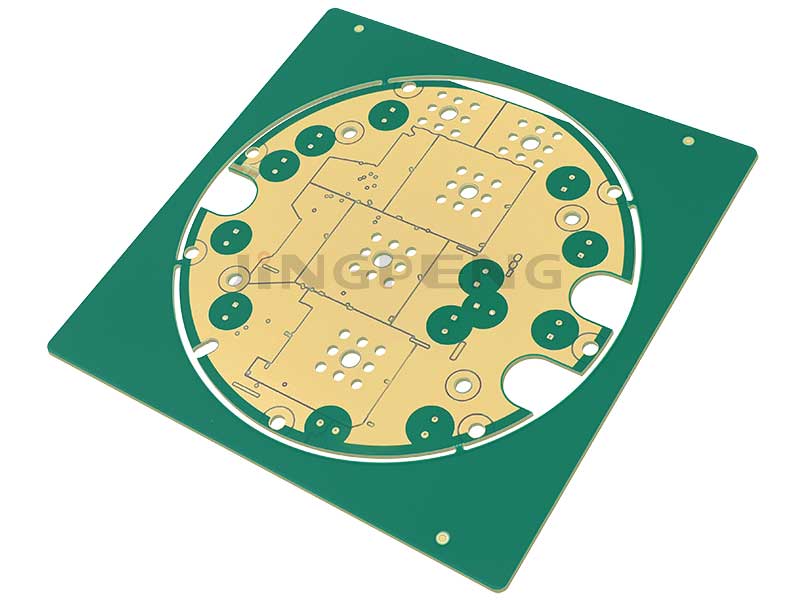
- Classify by concept and assign uniform names.
- The default assumptions differ across the various stages.
- The cross-reference table specifies the basis and functions.
- Invalid names are kept on file separately.
- Comparisons are only valid when the criteria are consistent.
- This article does not provide operating conditions.
Document and Version Control
Requirements for tasks or test documents with the same name may vary across different versions; executing them based on name rather than version will result in a loss of comparability. For standard compilation, please refer toCommon IPC Standards for Printed Circuit Boards。
建议把文件编号、版本号、生效日期与批准人一并留档,并限制再分发权限;现场只保留当前有效版本,作废版本单独封存。适用标准、客户规范与内部作业文件属于不同层级,冲突时的优先顺序宜在合同或技术协议中事先写明。本页不提供任何布线参数、屏蔽规格、接地数值或调试步骤,原文已有的描述一字不删。
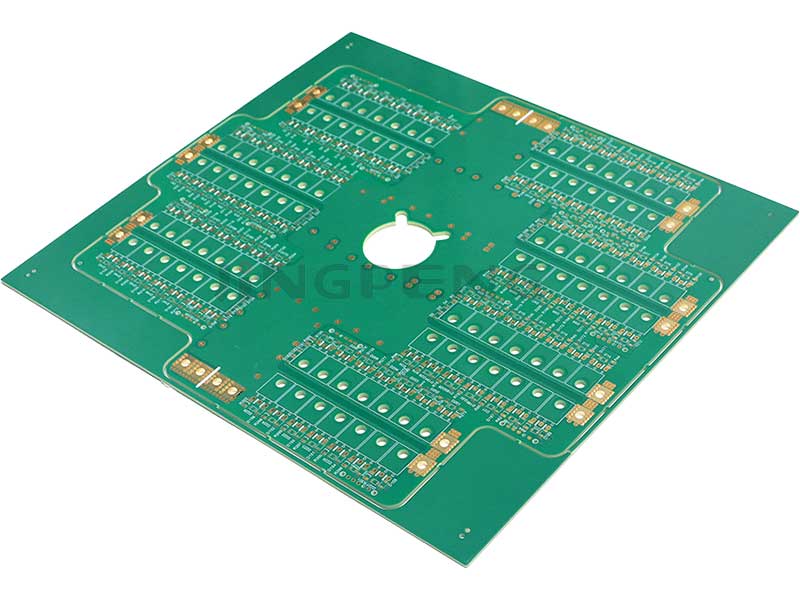
- Versions with the same name may differ.
- No., Version, Date, Approver—all recorded.
- Only the currently valid version will remain on-site.
- Standard customer component hierarchy.
- Priorities are agreed upon in advance.
- The conclusion does not change depending on who cites it.
Supplier Data Sheet and Responsibility Interface
抗干扰设计与资料治理相关的性能与安全信息应来自供应商提供的受控资料,而不是口头经验或外观印象,法规科普可参照What is RoHS?。
建议记录资料名称、版本、生效日期、提供职能与批准人,并与采购规格、验收依据互相引用;资料更新或供应方变更时,由授权职能评估影响范围并触发复评。本页不提供任何布线参数、屏蔽规格、接地数值或调试步骤,原文已有的描述一字不删。
- The information is derived from controlled sources.
- Name, Version, Date, Approver—all recorded.
- Cross-reference with the procurement specifications and acceptance criteria.
- Updates to the data trigger a re-evaluation.
- The data tables and regulations shall prevail.
- This article does not specify any terms of use.
Safety, Environmental Protection, and Applicable Regulations
与抗干扰设计与资料治理相关的现场义务,应按适用法规与当地监管要求单独核实,不能沿用外部经验,标准解读可参照A Comprehensive Overview of Common Printed Circuit Board Standards。
建议建立适用法规清单,记录法规名称、版本、生效日期、责任职能与复核节点,并把合规结论与采购、交付文件互相引用。职业防护、废弃物处置与信息披露等事项以现场受控文件、供应商数据表与当地法规为准,并由具备相应资质的人员复核后留档。本页不提供任何布线参数、屏蔽规格、接地数值或调试步骤,原文已有的描述一字不删。
- The list of regulations is maintained separately.
- Specify the version date and responsibilities.
- Compliance conclusions and procurement are interrelated.
- Refer to the on-site documentation for safety precautions.
- Verify and file the records of qualified personnel.
- This article does not provide operating conditions.
Staff Authorization and Position Qualifications
接触受控资料、作出抗干扰设计与资料治理相关结论或签核记录的人员应有明确授权,可靠性说明可参照PCB Reliability Design: DfR Principles and Applications。
建议维护授权名单,记录岗位、授权范围、生效日期、批准职能与复核节点,作废授权单独标识;人员调岗或项目结束时及时回收权限。涉及安全与法规解释的事项由具备相应职能的人员处理,本文不提供任何资质认定方法、培训内容或判定阈值。本页不提供任何布线参数、屏蔽规格、接地数值或调试步骤,原文已有的描述一字不删。
- The list of authorized personnel is maintained by position.
- Scope, dates, and approval authority are recorded together.
- Revoke access privileges promptly once the job reassignment is complete.
- Separate label for revoked authorizations.
- Security explanations are provided by the authorized department.
- This article does not provide a threshold for determination.
Record Fields and the Chain of Custody
抗干扰设计与资料治理相关记录的价值在于可追溯,字段宜落在管理信息上,材料科普可参照A Guide to PCB Materials。
建议记录覆盖发现时间、发现环节、样件标识、依据文件版本、执行与复核岗位、结论类别、异常单编号与处置状态,并与批次、工单和报告编号关联;处置结论由授权职能书面确认,接收方回执归档。本页不提供任何布线参数、屏蔽规格、接地数值或调试步骤,原文已有的描述一字不删。
- The field is located in the traceability information.
- The date of discovery is recorded alongside the specimen.
- Retain based on version and position.
- Disposition is confirmed by the authorized function.
- The acknowledgment and the re-evaluation conclusion cross-reference each other.
- This article does not provide instructions on how to proceed.
Review Records and Conclusions Are Traceable
抗干扰设计与资料治理相关评审的价值在于留下可追溯的结论,而不只是当场达成口头一致。
建议评审记录覆盖议题、参与职能、依据文件版本、结论、遗留事项与关闭状态,并与术语对照表、记录台账互相引用。对未达成一致的条目,应写明责任人与复评节点,避免问题在下一轮交付中以新面貌重复出现;相关记录按项目与版本归档,作废结论单独标识。本页不提供任何布线参数、屏蔽规格、接地数值或调试步骤,原文已有的描述一字不删。
- The review results in traceable conclusions.
- The basis for the agenda items is the same.
- The conclusions and outstanding issues are listed side by side.
- Write the responsibilities and tasks for pending items.
- Several lists reference each other.
- Invalid conclusions should be marked separately.
Outsourcing Agreement with Suppliers
把外协方、供应商与内部职能在抗干扰设计与资料治理上的责任界面写清楚,才不会出现无人确认的空档,管理规范可参照Management Guidelines for 5G PCBs。
建议在协议中写明交付范围、随货合规资料、偏离通报方式、禁止事项与违约处置原则,并要求对方对资料版本变化给出书面通知。任何超出约定范围的交付由授权职能书面确认后方可接收;来源不明的资料不纳入受控文件体系,也不作为验收依据。本页不提供任何布线参数、屏蔽规格、接地数值或调试步骤,原文已有的描述一字不删。
- The scope of responsibility is specified in the agreement.
- The scope of delivery and compliance documentation are clearly defined.
- Any deviation from the standard notification method must be agreed upon.
- Any changes to the information must be notified in writing.
- Deliveries made beyond one's authority require authorization and confirmation.
- Items of unknown origin are not accepted for control.
Exceptions and Exemptions from Approval
现场条件受限时,抗干扰设计与资料治理相关的既有规则总有例外,关键是把例外变成可核对的书面结论。
建议建立豁免记录,覆盖申请原因、涉及范围、影响范围、替代依据、批准职能与复评节点,并与评审记录互相引用。豁免不等于永久放行,后续资料版本、供应商或依据文件变更时应重新判断历史结论是否仍适用。本页不提供任何布线参数、屏蔽规格、接地数值或调试步骤,原文已有的描述一字不删。

- Exceptions due to time constraints are inevitable.
- Exceptions must be documented in writing.
- Record the reason, scope, and basis.
- The approval functions and re-evaluation milestones are specified.
- Cross-references to the review records.
- Do not provide a value for the alternative condition.
Changes to Trigger Conditions and the Scope of Re-evaluation
资料版本、供应商、适用法规或依据文件任一项变化,抗干扰设计与资料治理相关结论都宜触发一轮有针对性的复评。
复评的价值在于确认历史结论是否仍然适用,而不是把全部记录重做一遍。建议把变更事项、影响范围、复评结论与恢复条件关联留档,并与原评审记录、异常单互相引用;对跨部门项目,由授权职能统一判断复评深度,避免同一项目并行存在两套依据。本页不提供任何布线参数、屏蔽规格、接地数值或调试步骤,原文已有的描述一字不删。
- Any change will trigger a reassessment.
- Determine whether historical conclusions are applicable.
- The scope of impact and conclusions remain the same.
- Clearly state the conditions for restoration.
- Cross-references with the exception record.
- Avoid having two sets of criteria operating in parallel.
Comparison of Governance Dimensions
把抗干扰设计与资料治理的关注对象、依据来源与记录载体并列,有助于在审核时快速定位需要补齐的制度或记录缺口。下表仅为定性归类,不代替评审或签核结论。
表中不给出任何配方、温度、时间、压力、数量或判定数值,实际结论应以供应商数据表、现场作业文件、适用标准、合同与当地法规共同确认,并由具备相应职能的人员复核后留档。表格的作用是保证管理不漏项,而非替代任何一轮实际审查或验证。本页不提供任何布线参数、屏蔽规格、接地数值或调试步骤,原文已有的描述一字不删。
| Subject of Focus | Source | Recording Medium |
|---|---|---|
| Terminology and Versions | Standards and Documents | Cross-Reference Table and Version Log |
| Resources and Regulations | Data Tables and Lists | Source Ledger and List of Regulations |
| Authorization and Record-Keeping | Positions and Reporting | List of Authorizations and Record-Keeping Ledger |
| Review and Changes | Review and Approval | Review Records and Re-evaluation Conclusions |

- The form is used for the initial screening review.
- It is merely a qualitative classification.
- This is not a substitute for actual verification.
- No values are provided.
- The documents and regulations shall prevail.
- The review findings must be filed.
Client Review and Delivery Checklist
建议逐项核对抗干扰设计与资料治理相关的术语口径、依据版本、供应商资料、法规清单、人员授权、记录台账、评审记录、外协责任、豁免审批与复评结论,焊接标准可参照PCBA Soldering Standards。
清单应保留每轮的核对结论与差异描述,作为制度修订依据。这样管理从「被问到才补记录」推进到「依据明确、责任清晰、过程可追溯」,也能在客户审核或内部追溯时快速定位到具体环节。对跨部门项目,建议把同一份清单作为三方共用的交付基线并注明生效版本。本页不提供任何布线参数、屏蔽规格、接地数值或调试步骤,原文已有的描述一字不删。
- Go over the specifications and documentation item by item.
- Ensure that all statutory authorizations and records are thoroughly reviewed.
- Review the exemption from outsourcing in conjunction with the verification.
- The conclusions of the re-evaluation must be consistent.
- Description of the discrepancy write-back system.
- The three parties share a single baseline.
抗干扰设计与资料治理合规管理常见问题解答
1. Why is it important to standardize the terminology first?
因为同一术语在设计、采购、生产与检验环节常带不同默认假设,不预先对齐就容易出现各方都正确却互相矛盾的结论。建议建立术语对照表,注明适用对象、依据文件版本与确认职能,作废名称单独留档。本页不提供任何布线参数、屏蔽规格、接地数值或调试步骤,原文已有的描述一字不删。
2. Why should data and information be based on controlled versions?
Since requirements for documents with the same name may vary across different versions, referencing them by name alone may compromise comparability. It is recommended to record the document number, version number, effective date, and approver, and to archive superseded versions separately; the order of precedence for applicable standards, customer specifications, and internal documents should be specified in advance in the contract.
3. How should safety and environmental protection obligations be incorporated into documents?
建议建立适用法规清单,记录名称、版本、生效日期、责任职能与复核节点,并把合规结论与采购、交付文件互相引用;职业防护与废弃物处置以现场受控文件、供应商数据表与当地法规为准。本页不提供任何布线参数、屏蔽规格、接地数值或调试步骤,原文已有的描述一字不删。
4. What information should the list of authorized personnel include?
It is recommended to specify the positions covered, the scope of authorization, the effective date, the approval functions, and the review points, and to clearly identify revoked authorizations. Revoke permissions promptly when personnel are reassigned or a project ends. Matters involving security and regulatory interpretation should be handled by personnel with the appropriate authority; this page does not provide any methods for qualification determination or decision-making thresholds.
5. What fields should the ledger include?
宜覆盖发现时间、发现环节、样件标识、依据文件版本、执行与复核岗位、结论类别、异常单编号与处置状态,并与批次、工单和报告编号关联。字段应落在可追溯信息上,而不是记录任何可复用的条件。本页不提供任何布线参数、屏蔽规格、接地数值或调试步骤,原文已有的描述一字不删。
6. Under what circumstances should a re-evaluation be initiated?
Any change to the version of the documentation, the supplier, the applicable regulations, or the supporting documents should trigger a targeted re-evaluation to confirm whether the previous conclusions remain valid. It is recommended to document the changes, their scope of impact, the re-evaluation conclusions, and the conditions for reinstatement to avoid having two sets of supporting documentation coexisting for the same project.
7. Why should the scope of responsibility for outsourced work be included in the agreement?
Since verbal agreements cannot be traced back after a version update or personnel changes, it is recommended to clearly specify the scope of delivery, the compliance documentation accompanying the shipment, the procedures for reporting deviations, and prohibited actions, and to require the other party to provide written notification of any changes to document versions. Documents of unknown origin should not be included in the controlled document system.
8. What should be included in the delivery checklist prior to client review?
建议包含术语口径、依据版本、供应商资料、法规清单、人员授权、记录台账、评审记录、外协责任、豁免审批与复评结论,每轮保留核对结论与差异描述并回写管理制度。本页不提供任何布线参数、屏蔽规格、接地数值或调试步骤,原文已有的描述一字不删。
VII. Best Practices for Reducing Noise and Electromagnetic Interference
Some empirical principles in interference-resistant design include:
- A series resistor is used to reduce the rise and fall times of the control circuit and minimize noise.
- Keep the potential around the clock signal circuit as close to zero as possible, enclose the clock area with a ground plane, and keep the clock lines as short as possible.
- I/O driver circuits should be placed as close to the edge of the PCB as possible.
- The outputs of unused gate circuits should not be left floating; instead, they should be connected to ground. The positive inputs of unused operational amplifiers should be connected to ground, and the negative inputs should be connected to the outputs.
- Use 45° bends instead of 90° bends to reduce the radiation and coupling of high-frequency signals to the outside.
- The clock line should be perpendicular to the I/O lines rather than parallel to them, in order to reduce interference.
- Keep the component leads as short as possible.
- Ground lines around weak-signal and low-frequency circuits should not form current loops.
- A pull-up resistor of about 10K can be added to the bus to help protect against interference.
- Using full-decoding rather than bit-by-bit decoding can improve noise immunity.
When designing printed circuit boards, following these principles and methods for electromagnetic interference (EMI) mitigation can help you create more reliable and stable electronic devices, thereby enhancing the user experience. Additionally, for electronic devices with special requirements, customized EMI mitigation designs can be developed based on specific circumstances.
Conclusion
Interference-resistant design is crucial for printed circuit boards. Through proper power and ground trace routing, component placement, the use of decoupling capacitors, and other principles, interference can be effectively reduced, thereby improving the performance and reliability of electronic devices.
Frequently Asked Questions
- What is a decoupling capacitor?
Decoupling capacitors are used to suppress high-frequency noise in circuits and are typically connected between the power supply and ground in integrated circuits.
- Why is it important to separate digital ground from analog ground?
Separating the digital ground from the analog ground reduces mutual interference between them and ensures the stability and performance of the circuit.
- How do you choose the value of a decoupling capacitor?
The value of a decoupling capacitor can be selected based on the circuit's requirements and typically ranges from 0.1 μF to 10 μF. When selecting a value, follow the principle C = 1/F, where F is the data transmission frequency.
- Why should you avoid using large areas of copper foil?
Large areas of copper foil are prone to expansion and delamination when exposed to heat for extended periods, which can cause problems with the PCB; therefore, the use of large areas of copper foil should be avoided in the design.
- What are the key principles of anti-interference design?
Key principles of anti-interference design include proper layout, the use of decoupling capacitors, and the separation of signal and power lines, among others, to minimize interference and improve the performance of electronic devices.
The above outlines some key principles and methods for interference-resistant design, which we hope will help you improve your printed circuit board designs. If you have any further questions or need additional assistance, please feel free to contact us.
Related Reading:How to Avoid Common Mistakes in Printed Circuit Board Design · Analysis and Solutions to Humidity Issues in Printed Circuit Boards