

FPC is also known asFlexible Circuit Boards...is a highly reliable, exceptionally flexible printed circuit board made from a polyimide or polyester film substrate. Commonly referred to as flexible boards or FPCs, they are characterized by high wiring density, light weight, and thin profile. They are primarily used in a wide range of products, including cell phones, laptops, PDAs, digital cameras, and LCMs.
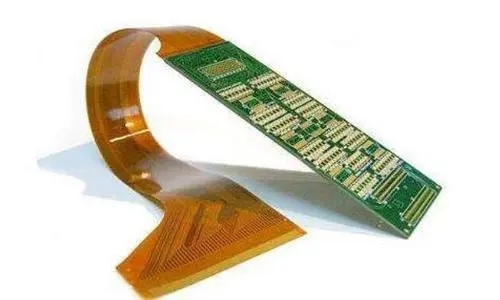
1. Basic Characteristics of Flexible Circuit Boards
Flexible circuits are compact and lightweight. In today’s cutting-edge electronic device assembly boards, flexible circuits are often the only solution that meets the requirements for miniaturization and portability. Flexible circuits are created by etching copper circuits onto a polymer substrate or by printing thick-film circuits onto a polymer substrate. For devices that are both thin and lightweight, with compact and complex structures, design solutions range from single-sided conductive traces to complex multilayer 3D assemblies. The total weight and volume of flexible assemblies are reduced by 70% compared to traditional round-wire harness methods. The strength of flexible circuits can also be increased through the use of reinforcing materials or backing plates to achieve additional mechanical stability. Flexible circuits can move, bend, and twist without damaging the conductors, and they can conform to various shapes and specialized package dimensions. Their only limitation is volumetric space constraints. Because they can withstand millions of dynamic bends, flexible circuits are well-suited for internal interconnect systems subject to continuous or periodic motion, becoming an integral part of the end product’s functionality.
2. Advantages and Benefits of Flexible Circuits
- Flexibility and Reliability of Flexible Circuits: There are four common types of flexible circuits: single-sided, double-sided, multilayer, and rigid-flex. Single-sided flexible boards offer the lowest cost when electrical performance requirements are not high and routing can be done on a single side, such as in printer inkjet cartridges and computer memory modules. Double-sided flexible boards are suitable for applications requiring a flexible design and versatile use. Multilayer flexible boards offer higher reliability, better thermal conductivity, and easier assembly. Rigid-flex boards, meanwhile, combine the advantages of rigid and flexible substrates and are suitable for applications with uneven component distribution.
- The Cost-Effectiveness of Flexible Circuits: Flexible circuits are a cost-effective choice when circuit layouts are complex, signal processing is extensive, and high electrical or mechanical performance is required. Although the cost of raw materials is relatively high, the overall assembly cost can be reduced due to their foldability, flexibility, and the ability to use multi-layer panelization.
- Cost Reduction for Flexible Circuits: In recent years, the price of flexible circuits has been falling, gradually approaching that of traditional PCBs. This is due to the introduction of new materials, improvements in manufacturing processes, and changes in structure. Technologies such as eliminating adhesives and using thinner copper layers have all helped reduce costs. At the same time, the importance of UL certification is growing, and flexible circuits are gradually expanding from military applications into the civilian and consumer markets.
Terminology Standards for Flexible Boards and Materials Management
Classifying and standardizing terms related to flexible boards and material management by concept is more conducive to aligning reviews than continuing to use customary terms; please refer to the standard for guidance.EMI Design Specifications and Control Principles。
The same term often carries different default assumptions across the design, procurement, production, and inspection phases; without prior alignment, it is easy for all parties to arrive at conclusions that are correct in their own right but mutually contradictory. It is recommended to establish a terminology cross-reference table that specifies the scope of application, the version of the reference document, and the responsible party for verification; obsolete terms should be archived separately. This page does not provide any bending radii, material thicknesses, coating parameters, or processing steps; descriptions already present in the original text remain unchanged.
- Classify by concept and assign uniform names.
- The default assumptions differ across the various stages.
- The cross-reference table specifies the basis and functions.
- Invalid names are kept on file separately.
- Comparisons are only valid when the criteria are consistent.
- This article does not provide operating conditions.
Document and Version Control
Requirements for tasks or test documents with the same name may vary across different versions; executing them based on name rather than version will result in a loss of comparability. For standard compilation, please refer toCommon IPC Standards for Printed Circuit Boards。
It is recommended that document numbers, version numbers, effective dates, and the names of approvers be retained in the records, and that redistribution be restricted; only the currently valid version should be kept on-site, while obsolete versions should be stored separately. Applicable standards, customer specifications, and internal operating procedures belong to different levels of hierarchy; the order of precedence in the event of a conflict should be specified in advance in the contract or technical agreement. This page does not provide any bend radii, material thicknesses, cover film parameters, or processing steps; the descriptions already present in the original text remain unchanged.

- Versions with the same name may differ.
- No., Version, Date, Approver—all recorded.
- Only the currently valid version will remain on-site.
- Standard customer component hierarchy.
- Priorities are agreed upon in advance.
- The conclusion does not change depending on who cites it.
Supplier Data Sheet and Responsibility Interface
Performance and safety information regarding flexible panels and material management should be based on controlled documentation provided by the supplier, rather than verbal accounts or visual impressions. For regulatory guidance, please refer toWhat is RoHS?。
It is recommended to document the name, version, effective date, responsible department, and approver of the documentation, and to cross-reference it with the procurement specifications and acceptance criteria; when the documentation is updated or the supplier changes, the authorized department shall assess the scope of impact and initiate a re-evaluation. This page does not provide any bend radii, material thicknesses, cover film parameters, or processing steps; the descriptions already present in the original text remain unchanged.

- The information is derived from controlled sources.
- Name, Version, Date, Approver—all recorded.
- Cross-reference with the procurement specifications and acceptance criteria.
- Updates to the data trigger a re-evaluation.
- The data tables and regulations shall prevail.
- This article does not specify any terms of use.
Safety, Environmental Protection, and Applicable Regulations
On-site obligations related to flexible panels and material management should be verified independently in accordance with applicable regulations and local regulatory requirements; external experience should not be applied directly. For guidance on interpreting standards, please refer toA Comprehensive Overview of Common Printed Circuit Board Standards。
It is recommended to establish a list of applicable regulations that records the regulation name, version, effective date, responsible functions, and review milestones, and to cross-reference compliance conclusions with procurement and delivery documents. Matters such as occupational protection, waste disposal, and information disclosure shall be governed by on-site controlled documents, supplier data sheets, and local regulations, and shall be reviewed by appropriately qualified personnel before being filed. This page does not provide any bend radii, material thicknesses, cover film parameters, or processing steps; the descriptions already present in the original text remain unchanged.
- The list of regulations is maintained separately.
- Specify the version date and responsibilities.
- Compliance conclusions and procurement are interrelated.
- Refer to the on-site documentation for safety precautions.
- Verify and file the records of qualified personnel.
- This article does not provide operating conditions.
Staff Authorization and Position Qualifications
Personnel who access controlled information, draw conclusions regarding flexible circuit boards and material management, or sign off on records must have explicit authorization; for guidance on reliability, please refer toPCB Reliability Design: DfR Principles and Applications。
It is recommended to maintain an authorization list that records job titles, scope of authorization, effective dates, approving authorities, and review points, with revoked authorizations clearly marked. Revoke permissions promptly when personnel are reassigned or a project ends. Matters involving safety and regulatory interpretation should be handled by personnel with the appropriate authority; this document does not provide any methods for qualification determination, training content, or assessment thresholds. This page does not provide any bend radii, material thicknesses, cover film parameters, or processing steps; the descriptions already present in the original text remain unchanged.

- The list of authorized personnel is maintained by position.
- Scope, dates, and approval authority are recorded together.
- Revoke access privileges promptly once the job reassignment is complete.
- Separate label for revoked authorizations.
- Security explanations are provided by the authorized department.
- This article does not provide a threshold for determination.
Record Fields and the Chain of Custody
The value of records related to flexible panels and material management lies in their traceability; the relevant fields should be included in the management information, and material education materials may be used as a reference.A Guide to PCB Materials。
It is recommended to record the time of discovery, the stage at which the issue was discovered, the sample identification, the version of the reference document, the positions responsible for execution and review, the conclusion category, the nonconformity report number, and the disposition status, and to link this information to the batch, work order, and report numbers. The disposition conclusion must be confirmed in writing by an authorized official, and the recipient’s acknowledgment must be filed. This page does not provide any bend radii, material thicknesses, cover film parameters, or processing steps; the descriptions already present in the original text remain unchanged.

- The field is located in the traceability information.
- The date of discovery is recorded alongside the specimen.
- Retain based on version and position.
- Disposition is confirmed by the authorized function.
- The acknowledgment and the re-evaluation conclusion cross-reference each other.
- This article does not provide instructions on how to proceed.
Review Records and Conclusions Are Traceable
The value of flexible panel reviews related to materials management lies in producing traceable conclusions, rather than merely reaching a verbal agreement on the spot.
It is recommended that review records include the topic, participating functions, the version of the reference document, conclusions, outstanding items, and closure status, and that they cross-reference the glossary and record ledger. For items on which consensus has not been reached, the responsible person and the date for re-evaluation should be specified to prevent the issue from recurring in a different form in the next delivery cycle; Relevant records shall be archived by project and version, with invalidated conclusions clearly marked. This page does not provide any bend radii, material thicknesses, coating parameters, or processing steps; descriptions already present in the original text remain unchanged.

- The review results in traceable conclusions.
- The basis for the agenda items is the same.
- The conclusions and outstanding issues are listed side by side.
- Write the responsibilities and tasks for pending items.
- Several lists reference each other.
- Invalid conclusions should be marked separately.
Outsourcing Agreement with Suppliers
Clearly define the boundaries of responsibility among external partners, suppliers, and internal functions regarding the management of flexible circuits and materials to avoid any gaps where no one is responsible for verification. Management guidelines can be referenced as follows:Management Guidelines for 5G PCBs。
It is recommended that the agreement specify the scope of delivery, compliance documentation accompanying the goods, procedures for reporting deviations, prohibited actions, and principles for handling breaches of contract, and require the other party to provide written notice of any changes to document versions. Any delivery beyond the agreed scope may only be accepted after written confirmation by the authorized department; documents of unknown origin shall not be included in the controlled document system nor used as the basis for acceptance. This page does not provide any bend radii, material thicknesses, cover film parameters, or processing steps; the descriptions already present in the original text remain unchanged.

- The scope of responsibility is specified in the agreement.
- The scope of delivery and compliance documentation are clearly defined.
- Any deviation from the standard notification method must be agreed upon.
- Any changes to the information must be notified in writing.
- Deliveries made beyond one's authority require authorization and confirmation.
- Items of unknown origin are not accepted for control.
Exceptions and Exemptions from Approval
When on-site conditions are limited, there are always exceptions to the established rules regarding flexible panels and material management; the key is to turn those exceptions into verifiable written conclusions.
It is recommended to establish an exemption record that covers the reason for the request, scope of application, scope of impact, basis for substitution, approval authority, and re-evaluation milestones, and that cross-references the review record. An exemption does not constitute permanent approval; when subsequent versions of documentation, suppliers, or supporting documents change, a reassessment should be conducted to determine whether the historical conclusion remains applicable. This page does not provide any bend radii, material thicknesses, cover film parameters, or processing steps; the descriptions already present in the original text remain unchanged.

- Exceptions due to time constraints are inevitable.
- Exceptions must be documented in writing.
- Record the reason, scope, and basis.
- The approval functions and re-evaluation milestones are specified.
- Cross-references to the review records.
- Do not provide a value for the alternative condition.
Changes to Trigger Conditions and the Scope of Re-evaluation
Any change in data version, supplier, applicable regulations, or supporting documentation should trigger a targeted re-evaluation of conclusions related to the management of flexible panels and materials.
The value of a re-evaluation lies in confirming whether historical conclusions remain valid, rather than redoing the entire record from scratch. It is recommended to document changes, the scope of impact, re-evaluation conclusions, and conditions for restoration, and to cross-reference these with the original evaluation records and non-conformance reports. For cross-departmental projects, the authorized function should uniformly determine the depth of the re-evaluation to avoid having two sets of criteria coexisting for the same project. This page does not provide any bend radii, material thicknesses, cover film parameters, or processing steps; the descriptions already present in the original text remain unchanged.

- Any change will trigger a reassessment.
- Determine whether historical conclusions are applicable.
- The scope of impact and conclusions remain the same.
- Clearly state the conditions for restoration.
- Cross-references with the exception record.
- Avoid having two sets of criteria operating in parallel.
Comparison of Governance Dimensions
Comparing the flexible checklist with the focus areas, sources, and record-keeping methods of materials management helps quickly identify gaps in policies or records that need to be addressed during an audit. The table below is for qualitative classification only and does not replace the conclusions of an audit or approval process.
The table does not provide any formulations, temperatures, times, pressures, quantities, or acceptance criteria. Actual conclusions must be jointly confirmed based on the supplier’s data sheets, on-site operating procedures, applicable standards, contracts, and local regulations, and must be reviewed by personnel with the appropriate qualifications before being filed. The purpose of the table is to ensure that no management items are overlooked; it is not intended to replace any round of actual review or validation. This page does not provide any bend radii, material thicknesses, cover film parameters, or processing steps; the descriptions already present in the original text remain unchanged.
| Subject of Focus | Source | Recording Medium |
|---|---|---|
| Terminology and Versions | Standards and Documents | Cross-Reference Table and Version Log |
| Resources and Regulations | Data Tables and Lists | Source Ledger and List of Regulations |
| Authorization and Record-Keeping | Positions and Reporting | List of Authorizations and Record-Keeping Ledger |
| Review and Changes | Review and Approval | Review Records and Re-evaluation Conclusions |
- The form is used for the initial screening review.
- It is merely a qualitative classification.
- This is not a substitute for actual verification.
- No values are provided.
- The documents and regulations shall prevail.
- The review findings must be filed.
Client Review and Delivery Checklist
It is recommended to verify, item by item, the definitions of terms related to flexible circuit board and material management, the versions of reference documents, supplier information, lists of regulations, personnel authorizations, record-keeping ledgers, review records, outsourcing responsibilities, exemptions from approval, and re-evaluation conclusions. Welding standards may be referenced as follows:PCBA Soldering Standards。
The checklist should retain the verification conclusions and descriptions of discrepancies for each round as a basis for revising the procedures. This approach advances management from “filling in records only when asked” to a system characterized by “clear guidelines, defined responsibilities, and traceable processes,” and also enables the rapid identification of specific steps during client audits or internal traceability reviews. For cross-departmental projects, it is recommended that a single checklist be used as a delivery baseline shared by all three parties, with the effective version clearly indicated. This page does not provide any bend radii, material thicknesses, coating parameters, or processing steps; all descriptions already present in the original text remain unchanged.
- Go over the specifications and documentation item by item.
- Ensure that all statutory authorizations and records are thoroughly reviewed.
- Review the exemption from outsourcing in conjunction with the verification.
- The conclusions of the re-evaluation must be consistent.
- Description of the discrepancy write-back system.
- The three parties share a single baseline.
Frequently Asked Questions on Compliance Management for Flexible Circuit Boards and Materials
1. Why is it important to standardize the terminology first?
Because the same term often carries different underlying assumptions in the design, procurement, production, and inspection phases, failure to align these assumptions in advance can easily lead to conclusions that are correct from each party’s perspective but mutually contradictory. It is recommended to establish a glossary of terms, specifying the scope of application, the version of the reference document, and the approving authority, with obsolete terms archived separately. This page does not provide any bend radii, material thicknesses, coating parameters, or processing steps; descriptions already present in the original text remain unchanged.
2. Why should data and information be based on controlled versions?
Since requirements for documents with the same name may vary across different versions, referencing them by name alone may compromise comparability. It is recommended to record the document number, version number, effective date, and approver, and to archive superseded versions separately; the order of precedence for applicable standards, customer specifications, and internal documents should be specified in advance in the contract.
3. How should safety and environmental protection obligations be incorporated into documents?
It is recommended to establish a list of applicable regulations, documenting the names, versions, effective dates, responsible functions, and review milestones, and to cross-reference compliance conclusions with procurement and delivery documents; occupational protection and waste disposal shall be governed by on-site controlled documents, supplier data sheets, and local regulations. This page does not provide any bend radii, material thicknesses, cover film parameters, or processing steps; the descriptions already present in the original text remain unchanged.
4. What information should the list of authorized personnel include?
It is recommended to specify the positions covered, the scope of authorization, the effective date, the approval functions, and the review points, and to clearly identify revoked authorizations. Revoke permissions promptly when personnel are reassigned or a project ends. Matters involving security and regulatory interpretation should be handled by personnel with the appropriate authority; this page does not provide any methods for qualification determination or decision-making thresholds.
5. What fields should the ledger include?
This should include the time of discovery, the stage at which it was discovered, the sample identification, the version of the reference document, the positions responsible for execution and review, the conclusion category, the nonconformance report number, and the disposition status, and should be linked to the batch, work order, and report numbers. The fields should focus on traceability information rather than recording any reusable conditions. This page does not provide any bend radii, material thicknesses, cover film parameters, or processing steps; the descriptions already present in the original text remain unchanged.
6. Under what circumstances should a re-evaluation be initiated?
Any change to the version of the documentation, the supplier, the applicable regulations, or the supporting documents should trigger a targeted re-evaluation to confirm whether the previous conclusions remain valid. It is recommended to document the changes, their scope of impact, the re-evaluation conclusions, and the conditions for reinstatement to avoid having two sets of supporting documentation coexisting for the same project.
7. Why should the scope of responsibility for outsourced work be included in the agreement?
Since verbal agreements cannot be traced back after a version update or personnel changes, it is recommended to clearly specify the scope of delivery, the compliance documentation accompanying the shipment, the procedures for reporting deviations, and prohibited actions, and to require the other party to provide written notification of any changes to document versions. Documents of unknown origin should not be included in the controlled document system.
8. What should be included in the delivery checklist prior to client review?
Recommendations should include terminology definitions, applicable versions, supplier information, a list of regulations, personnel authorizations, record-keeping logs, review records, outsourcing responsibilities, exemptions from approval, and re-evaluation conclusions. For each round, retain the verification conclusions and descriptions of discrepancies, and update the management system accordingly. This page does not provide any bend radii, material thicknesses, coating parameters, or processing steps; all descriptions already present in the original text remain unchanged.
3. Future Applications of Flexible Circuits
The flexible circuit industry is growing rapidly, particularly in the field of lead-free printed circuit boards. These circuits are already widely used in devices such as cell phones, laptops, and PDAs. As technology continues to advance, the demand for FPCs will continue to rise, and hybrid flexible circuits will become increasingly important. Flexible circuits will play an increasingly significant role, particularly in the field of miniaturized, high-performance, and low-cost electronic products.
The future of flexible circuits holds great promise, especially in today’s rapidly evolving electronics industry. Their reliability, flexibility, and cost-effectiveness make them an ideal choice for many applications. As technology continues to advance, we can expect to see even more innovations and applications that will expand the use of flexible circuits into new fields, opening up new possibilities for the design and manufacturing of electronic products.
Conclusion
FPC, as a representative of flexible printed circuits, offers outstanding reliability, flexibility, and cost-effectiveness, providing an ideal solution for the miniaturization and high performance of electronic products. Its advantages—including flexibility, reliability, cost-effectiveness, and continuously decreasing costs—have led to its widespread use in devices such as cell phones, laptops, and PDAs. With continuous technological advancements, the application prospects for flexible circuits will become even broader, bringing more innovation and possibilities to the electronics industry.
FAQs
- What is the difference between flexible circuits and rigid circuits? Flexible circuits are flexible and well-suited for miniaturized designs, while rigid circuits are typically used in larger electronic devices.
- How much do flexible circuits cost? The cost of flexible circuits depends on the complexity of the design, but prices have been gradually declining in recent years and are becoming increasingly comparable to those of traditional PCBs.
- In which fields are flexible circuits used? Flexible circuits are widely used in consumer electronics such as cell phones, laptops, and PDAs to meet the demands for miniaturization and portability.
- What are the advantages of flexible circuits? Flexible circuits offer the advantages of flexibility, reliability, and cost-effectiveness, making them suitable for a wide range of applications.
- What are the future trends for flexible circuits? The future of flexible circuits holds great promise; as technology advances, they will expand into even more fields, providing innovative solutions for electronic products.
Related Recommendations:A Detailed Explanation of the Surface Plating Process for FPC Flexible Printed Circuit Boards · A Detailed Explanation of the Solder Mask Process for FPC Flexible Printed Circuit Boards
