

With the rapid development of the electronics industry, flexible printed circuits (FPCs) are finding increasingly widespread application in new fields. This has spurred rapid advancements in FPC manufacturing technology to meet the ever-increasing demands for FPC product structure, functionality, and performance.
This article will take an in-depth look at the development of FPC manufacturing technology and the increasing performance requirements for flexible copper-clad laminates (FCCL).
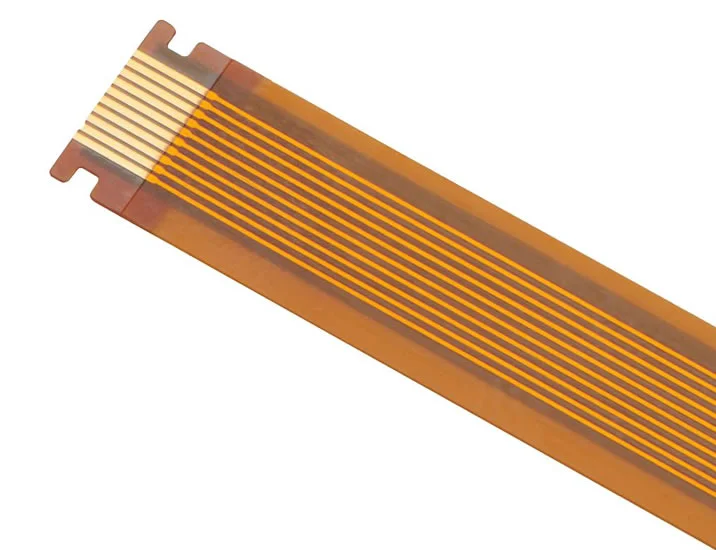
The Widespread Use of FPCs
- Applications of IC Substrates: FPCs are widely used in IC substrates, appearing not only in CSPs and COFs mounted directly on single chips, but also in SIPs consisting of multiple ICs. These applications make FPCs the ideal choice for flexible substrates.
- FPC Multilayer Boards and Rigid-Flex Boards: Multilayer FPCs and rigid-flex boards are experiencing rapid growth, offering greater design flexibility and performance for electronic products.
- Miniaturization of Circuit Patterns: The miniaturization of FPC circuit patterns allows for the integration of more electronic components within a limited space, opening up entirely new possibilities for product design.
- Embedded Components on Flexible Substrates: New developments in embedded components have driven the further adoption of FPCs and improved overall system performance.
- Suitable for halogen-free, lead-free FPCs: Environmental requirements are driving the FPC industry toward halogen-free and lead-free production to meet increasingly stringent regulations and standards.
- High signal transmission speed: As signal transmission speeds in the electronics industry increase, the composition of flexible substrates is also continuously evolving to accommodate these higher speeds.
High-Density FPC Manufacturing
As the range of FPC applications continues to expand, the demand for high-density FPCs is also growing day by day. The following are some key trends in high-density FPC manufacturing:
- Reduced Conductor Spacing: High-density FPCs require smaller conductor spacing, reduced from 100 µm to less than 50 µm, or even smaller.
- Miniaturization of Through-Holes: The diameter of through-holes (TH) has been reduced from 300 µm to less than 100 µm, and IVHs with a diameter of 50 µm have even been designed and manufactured.
- Refine Line Width and Line Spacing: The more stringent requirements for line width and spacing call for the use of thinner FCCL materials, particularly a reduction in the thickness of the PI film insulation layer to below 25 µm.
- The Use of Thin Copper Foil: In high-density FPC manufacturing, the copper foil in the conductor layer is also thinner, ranging from 35 µm down to 17.5 µm, 12 µm, 9 µm, and even 5 µm.
These trends have made high-density FPC manufacturing more complex, requiring solutions to issues such as material brittleness and damage, and thus necessitating improvements in processes and equipment.
Improved Bending Performance
Advances in new LCD displays and high-resolution digital cameras require thinner wires and higher wire counts, which place greater demands on the flexibility of flexible printed circuits (FPCs).
Double-sided FPCs generally have lower flexibility than single-sided FPCs; therefore, special substrates must be used in the composition of the FCCL to address this challenge.
High-Temperature and High-Bend Performance
In applications such as in-vehicle navigation systems, FPCs operate under more extreme temperature conditions. The demands of high-temperature environments and high-bend characteristics make flexibility at high temperatures a key performance metric.
At high temperatures, the FPC must maintain stable performance and remain unaffected by temperature fluctuations to ensure the reliability of the entire device.
Halogen-free and high Tg
Growing environmental awareness has spurred the development of halogen-free FCC products, but this presents greater challenges, as it requires addressing issues related to performance characteristics such as flexibility and heat resistance.
At the same time, demand for FPC substrate materials with high Tg (glass transition temperature) is gradually increasing, primarily due to operational requirements in high-temperature environments and high-density mounting.
Advances in FPC manufacturing technology continue to drive progress in the electronics industry, offering more opportunities for innovation and design flexibility.
These trends have led to higher and more advanced performance requirements for FCCL materials, including high density, high flexibility, high heat resistance, high dimensional stability, low moisture absorption, and halogen-free properties.
Frequently Asked Questions
Q1: What is FCCL?
FCCL is a flexible copper-clad laminate and a key component of FPCs, used in the manufacture of
The conductor layer of an FPC (flexible printed circuit). It offers excellent electrical conductivity and flexibility, making it suitable for a wide range of electronic applications.
Q2: Why is high-density FPC manufacturing so important?
High-density FPC manufacturing is essential for meeting the demands of modern electronic products for smaller, lighter, and higher-performance devices. It makes it possible to accommodate more electronic components within a limited space, opening up more opportunities for innovation.
Q3: Why is bending performance so important?
Flexible electronic products need to bend during use, so bend resistance is critical to their reliability. High bend resistance means the products are more durable and better suited for a wide range of applications.
Q4: What is Tg (glass transition temperature)?
Tg is the glass transition temperature of a material, which refers to the temperature at which the material transitions from a solid to a glassy state as it is heated. For FPCs, materials with a high Tg are better suited for operation in high-temperature environments and offer greater stability.
Q5: Why is halogen-free important?
Halogen-free materials are more environmentally friendly and comply with modern environmental regulations. They help reduce the use of hazardous substances and minimize environmental and health risks.
If you would like to learn more about the evolution of FPC manufacturing technology and the performance requirements for FCCL, please click the link above for more information.
