

The manufacturing process of PCBs (Printed Circuit Boards) generates wastewater that contains heavy metal ions and has low biodegradability. In this article, we will take an in-depth look at the characteristics of PCB wastewater and the treatment technologies available to address this environmental issue.
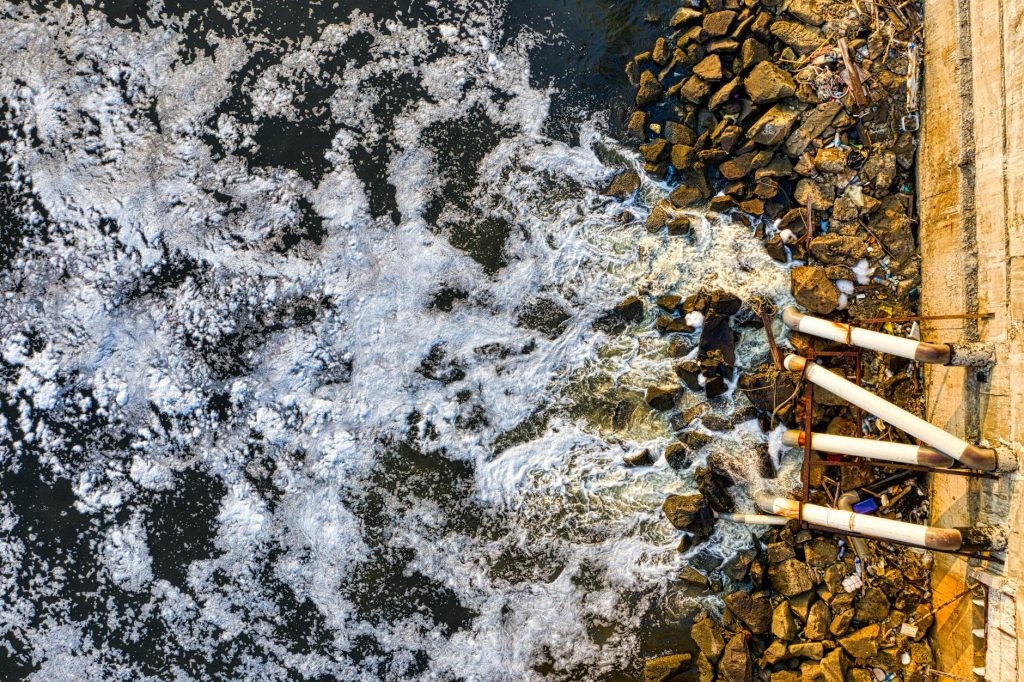
Characteristics of PCB Manufacturing Wastewater
1. Complex manufacturing processes
The manufacturing process for printed circuit boards (PCBs) is complex and involves multiple production stages, including inner-layer processing, electroplating, outer-layer processing, surface finishing and shaping, and final processing. These stages generate various types of wastewater with vastly different compositions.
2. Wastewater at Different Stages
Different stages of production generate wastewater with varying compositions, which increases the difficulty of wastewater treatment. This includes wastewater from the production of single-sided, double-sided, and multi-panel boards.
3. Different Types of Wastewater
PCB wastewater can be classified into wastewater containing heavy metals (such as Cu²⁺, Pb²⁺, Ni²⁺), fluoride-containing wastewater, complex-containing wastewater (including heavy metal-EDTA complexes and heavy metal-ammonia complexes), and acidic and alkaline wastewater (containing dissolved organic matter, inorganic acids and bases, CN⁻, etc.).
4. Generation of large amounts of waste liquid
The manufacturing of PCBs also generates large amounts of waste liquid, including film waste liquid, electroless copper waste liquid, and various other tank solutions and plating solutions.
Wastewater Treatment Technologies for Printed Circuit Boards (PCBs)
1. Physicochemical Methods
1.1 Coagulation Method
The coagulation process is suitable for treating high-concentration organic wastewater and wastewater containing heavy metals. The coagulation reaction removes colloidal particles from the wastewater and forms insoluble precipitates with the organic matter in the water. Coagulants include inorganic and organic coagulants.
1.2 Air Floatation Method
The dissolved air flotation (DAF) process involves introducing air into wastewater, causing pollutants in the wastewater to adhere to the air bubbles, which then rise to the surface to form foam. This method is suitable for removing high concentrations of organic matter.
1.3 Adsorption Method
The adsorption method uses porous solid adsorbents, such as activated carbon and humic acid, to adsorb pollutants onto the solid surface, thereby separating the pollutants.
1.4 Microelectrolysis Using Iron and Carbon
The iron-carbon microelectrolysis process uses cast iron chips and activated carbon or coke as electrolytic materials to remove pollutants—including recalcitrant and toxic substances—from wastewater through electrochemical reactions.
1.5 Catalytic Oxidation Method
The catalytic oxidation method uses metal catalysts, such as Pt, Pd, and Ni, to carry out oxidation reactions under specific conditions, using oxygen as the oxidizing agent to remove pollutants from wastewater.
2. Biological Methods and Combined Treatment Methods
Due to significant variations in the water quality and volume of PCB wastewater, traditional treatment methods cannot consistently ensure stable effluent quality, generate large amounts of sludge, cause secondary pollution, and are costly. Biological methods, on the other hand, are low-cost, highly effective, and do not cause secondary pollution. Biological methods primarily include biodegradation and combined biological-chemical treatment.
2.1 Biodegradation Method
Biological degradation primarily relies on sludge returned from wastewater treatment plants or natural microorganisms to treat PCB-contaminated wastewater. However, for high-concentration PCB-contaminated wastewater, the removal efficiency of biological methods is low, so they must be used in combination with chemical treatment methods.
2.2 Combined Treatment Method
Combined treatment methods integrate biological processes with other physicochemical methods to improve the treatment efficiency of PCB-contaminated wastewater. These include the coagulation-contact oxidation process and reverse osmosis-electrodialysis desalination systems, among others.
In summary, the treatment of wastewater from PCB manufacturing is a complex and important environmental issue. Different treatment methods can be selected based on the type and water quality characteristics of the wastewater to achieve efficient and environmentally friendly treatment results. At the same time, we must continue to explore new treatment technologies to minimize adverse environmental impacts.
When treating wastewater from PCB manufacturing, we must remain environmentally conscious and implement sustainable measures to reduce our impact on the planet. Through continuous innovation and improvement, we can better protect our environment and resources and achieve sustainable development.
Frequently Asked Questions
1. Is wastewater from PCB manufacturing harmful to the environment?
Yes, wastewater from PCB manufacturing contains harmful substances such as heavy metal ions, which can cause serious environmental harm if not properly treated.
2. Which method—biological or physicochemical—is more suitable for treating PCB wastewater?
When treating PCB wastewater, it is typically necessary to combine biological and physicochemical methods to achieve better treatment results.
3. What is the cost of treating wastewater from PCB manufacturing?
The cost of treating PCB-containing wastewater depends on the type of wastewater, its water quality characteristics, and the treatment method used. Biological methods are generally less expensive, but may require additional chemical treatment when handling high-concentration wastewater.
4. How does wastewater treatment affect sustainable development?
Proper wastewater treatment is an essential component of sustainable development; it helps protect the environment, reduce resource waste, and promote sustainable economic and social development.
5. How can we reduce the generation of wastewater from PCB manufacturing?
The generation of wastewater from PCB manufacturing can be reduced by optimizing production processes and controlling wastewater discharge. At the same time, measures such as wastewater recovery and reuse can be implemented to reduce the volume of wastewater discharged.
