

Gold Finger PCBs are a special type of printed circuit board typically used in applications that require high reliability and wear resistance, such as computer motherboards, graphics cards, and other electronic devices. This article will take an in-depth look at the definition of Gold Finger PCBs, their surface treatment methods, and design considerations.
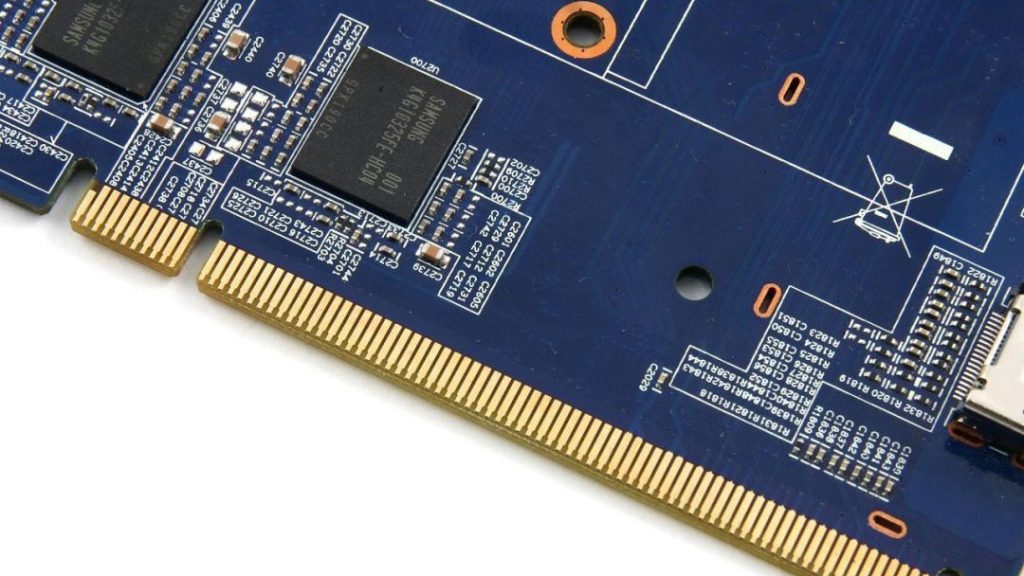
I. Definition of the "Golden Finger"
A gold finger, also known as an edge connector, is a device in which one end of a PCB is inserted into a connector slot. It uses the connector’s pins as the PCB’s external connection points to establish electrical contact between the pads or copper traces and the corresponding pins. To enhance their conductivity, resistance to oxidation, and wear resistance, gold fingers are typically treated with immersion gold plating or nickel-gold plating. They are named “gold fingers” because their shape closely resembles that of a finger.
II. Surface Treatment Methods for "Golden Finger" PCBs
The surface treatment of "Golden Finger" PCBs is critical to their performance and areas of application. Here are two common treatment methods:
1. Nickel-Gold Plating
Electroplated nickel-gold is a common surface treatment with a thickness ranging from 3 to 50 microinches. It offers excellent electrical conductivity, oxidation resistance, and wear resistance, making it widely used on PCBs with gold fingers that require frequent plugging and unplugging, or on PCBs subject to frequent mechanical friction. However, due to the high cost of gold, nickel-gold plating is typically used only for localized areas such as gold fingers. The surface of this finish appears silvery-white, but its solderability is slightly inferior.
2. Sinking Gold
Electrolytic gold plating is another common surface treatment method, typically with a thickness of 1 microinch and up to 3 microinches. Electroplated gold offers excellent electrical conductivity, surface flatness, and solderability, making it widely used in high-precision PCBs featuring keypads, bonded ICs, BGAs, and similar designs. For PCBs with gold fingers that do not require high wear resistance, a full-board electroplated gold process can be selected, which is significantly less expensive. The surface treated with electroplated gold has a golden yellow appearance.
III. Points to Consider When Designing a "Golden Finger"
When designing a "golden finger" PCB, there are several key points that require special attention:
1. Wear Resistance of the Gold Finger
For PCBs that require frequent plugging and unplugging, hard gold plating is typically used to increase the wear resistance of the gold fingers.
2. Chamfering the Gold Finger
Gold fingers typically require chamfering, usually at a 45-degree angle. Chamfering helps reduce potential hazards, as shown in the figure.
3. Solder Mask Window Processing
The pads for the "Golden Finger" require a full-area solder mask opening; no stencil cutout is needed.
4. Distance Between the Pad and the Gold Finger
The distance between pads and gold fingers must comply with design specifications; typically, pads—including via pads—must be at least 1 mm away from gold fingers.
5. Surface Treatment of Gold Fingers
The outer surface of the gold fingers should not be coated with copper.
6. Copper Shaving Process
All layers within the gold finger must undergo copper removal; the width of the copper removal is typically about 3 mm. This reduces the impedance difference between the gold finger and the impedance lines, while also providing ESD protection.
The following are several key considerations when designing gold-finger PCBs to ensure their reliability and performance.
IV. Precautions for Gold Finger Processing
If you plan to use "Golden Finger" PCBs, here are some points to keep in mind during the PCB manufacturing process at Jingpeng Electronics:
- The thickness range for sheets that can be beveled is 1.2 mm to 2.4 mm. Sheets outside this range cannot be beveled.
- The depth and angle of the bevel typically range from 20 to 45 degrees. The distance between the gold fingers and the edge of the board should be sufficient; a general recommendation is 0.6 mm to 1.5 mm to prevent damage to the gold fingers.
Jingpeng Electronics specializes in the professional manufacturing of gold-finger PCBs, ensuring high quality and reliability. Our manufacturing processes can meet a variety of design requirements, delivering exceptional performance for your projects.
Gold-finger PCBs play a crucial role in the modern electronics industry, and their reliability and performance depend on surface treatment methods and design details. By selecting the appropriate treatment methods and paying attention to key design considerations, you can ensure that gold-finger PCBs perform exceptionally well in a wide range of applications. If you need high-quality gold-finger PCB manufacturing services, please consider Jingpeng Electronics—we are committed to providing you with the best possible support.
Frequently Asked Questions
1. What is a "Golden Finger" PCB?
A "golden finger" PCB is a special type of printed circuit board typically used in electronic applications that require high reliability and wear resistance; its name comes from its finger-like shape.
2. What are the surface treatment methods for "Golden Finger" PCBs?
Common surface treatment methods for "golden finger" PCBs include electroplated nickel-gold and electroless gold plating, each of which has its own advantages and applications.
3. How can the wear resistance of the gold finger be improved?
To increase the wear resistance of gold fingers, it is typically necessary to apply a hard gold plating process to enhance their surface hardness.
4. What precautions should be taken when designing a "golden finger" PCB?
When designing a gold-finger PCB, it is important to pay attention to key considerations such as the chamfering of the gold fingers, solder mask openings, the distance between the pads and the gold fingers, and the surface treatment of the gold fingers.
5. How can we ensure the quality of the "Golden Finger" PCB?
We use advanced manufacturing processes and strict quality control to ensure that we provide high-quality and reliable products.
