

With advances in technology, some electronic products, such as cell phones and tablets, are becoming increasingly lightweight. Electronic components used in SMT manufacturing are also getting smaller and smaller, such as the 0201 component. Ensuring solder joint quality has become a critical issue in high-precision placement. As the bridge between components, the quality and reliability of solder joints determine the quality of electronic products; in other words, in the production process, the quality of SMT ultimately comes down to the quality of the solder joints.

The Importance of Solder Joint Quality
Throughout the equipment's service life, a good solder joint should not exhibit mechanical or electrical failures. It appears as follows:
- The surface is intact, smooth, and glossy;
- An appropriate amount of solder that completely covers the pads and the soldered portions of the leads, with the component at a moderate height;
- Good wettability; the edges of the solder joints should be thin, and the contact angle between the solder and the pad surface should be less than 30°, with a maximum of 60°.

SMT Manufacturing Visual Inspection Items
- Are any components missing?;
- Are the parts attached incorrectly?;
- Is there a short circuit?;
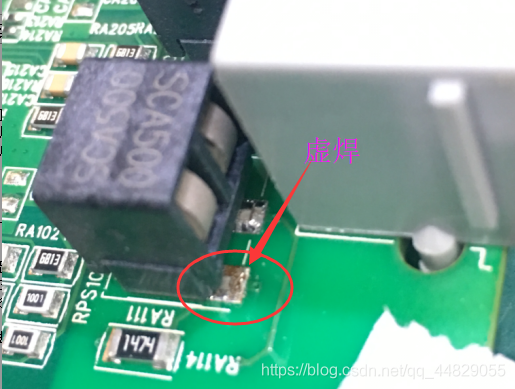
- Check for any cold solder joints.

Welding Assessment
Assessing weld quality is crucial. Here are two methods:
- Conduct testing using specialized equipment designed for online testers.
- Visual inspection or AOI inspection. When there is insufficient solder at a joint, solder penetration is poor; there may be cracks in the center of the joint, the solder may protrude, or the solder may be incompatible with the SMD. Immediately determine whether there are a significant number of cold solder joints. The method for determining this is to check whether there are many defects in the solder joints at the same location on the PCB. If the issue is limited to a single PCB, it may be caused by factors such as solder paste scratches or pin deformation; however, if the same location on multiple PCBs exhibits defects, it is likely due to defective components or issues with the spacers.
Causes and Solutions for Poor Solder Joints
- Design Defects in Spacers: Through-holes on pads are a major design flaw in PCBs during soldering. Unless absolutely necessary, do not use them. Through-holes can lead to solder loss and insufficient solder; pad spacing and area must also meet standards, and if they do not, the design should be corrected as soon as possible.
- PCB oxidation: This refers to the pads turning black and no longer glowing. If oxidation is present, you can use an eraser to remove the oxidized layer and restore the bright glow.
- Moisture in PCBs: If you suspect moisture, place the PCB in a drying oven to dry it.
- If the PCB is contaminated with oil stains, sweat stains, etc., clean it with anhydrous ethanol.
Quality and visual inspection in SMT manufacturing are critical, as they directly impact the quality and reliability of electronic products. By paying close attention to solder joint quality and visual inspection, product performance and long-term reliability can be ensured. During the manufacturing process, solder joint quality must be monitored at all times, and necessary measures must be taken to address potential issues to ensure that the final electronic products meet high standards.
Frequently Asked Questions (FAQs)
1. Why is solder joint quality important for electronic products?
The quality of solder joints directly affects the performance and reliability of electronic products. Good solder joints ensure that electronic components are securely connected, preventing mechanical or electrical failures.
2. How do you assess the quality of solder joints?
Solder joint quality can be assessed using in-line testing equipment or through visual inspection (AOI inspection). During visual inspection, attention should be paid to the surface condition of the solder joints, their wettability, and the presence of any abnormalities.
3. What is a cold solder joint?
A cold solder joint refers to a defective solder joint, typically characterized by insufficient solder, cracks, protrusions, or incompatibility with the component. Cold solder joints can result in loose connections between electronic components, affecting product performance and reliability.
4. How can cold solder joints be fixed?
Methods for resolving cold solder joint issues include modifying the spacer design, addressing oxidation, preventing moisture ingress, and cleaning contaminated PCBs. For complex situations, it is recommended to seek assistance from a technical professional.
5. How can we ensure the quality of SMT manufacturing?
The key to ensuring the quality of SMT manufacturing lies in monitoring solder joint quality, conducting visual inspections, maintaining production equipment in good condition, and training operators. Regular inspections and maintenance are essential for maintaining high-quality SMT manufacturing.
