As an editor working at a PCB manufacturer, I often hear these three English terms: PCB, PWB, and FPC. So, what do they stand for?
1. What is a PCB?
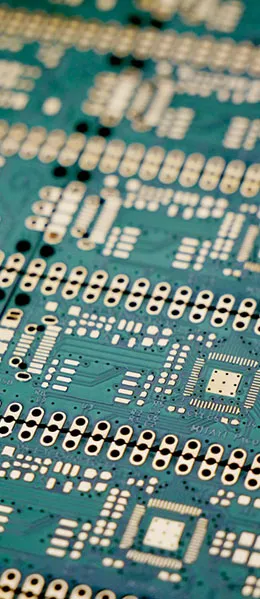
PCB is an abbreviation for "Printed Circuit Board," and its official translations include "printed circuit board," "printed circuit panel," or "printed wiring board." It is a common carrier for electronic components, typically made of insulating material, with a pattern of electronic circuits printed on its surface, as well as printed components that connect various electronic components. PCBs play a crucial role in modern electronic devices; they allow electronic components to be connected together to form complete circuits, thereby enabling the devices to function properly.
2. What is a PWB?
PWB is an abbreviation for “Printed Wire Board,” and its official translation is “printed circuit board.” This term originated in the United Kingdom and was an early name for circuit boards. At that time, circuit boards featured only the patterns of electronic circuits and did not include printed components, making them relatively primitive boards. Although the term “PCB” is commonly used today, traditionally, some British people and certain residents of Hong Kong still refer to circuit boards as PWBs.
3. What is FPC?
FPC stands for Flexible Printed Circuit, also known as a flexible board. Unlike traditional rigid PCBs, FPCs are made of flexible insulating materials and can be bent and folded. This makes FPCs particularly useful in applications that require bending or where space is limited. They are commonly used in portable electronic devices, such as smartphones and tablets, to connect various components and save space.
Frequently Asked Questions
1. What is the difference between a PCB and a PWB?
PCB stands for "printed circuit board" and typically includes both the printed circuit pattern and the mounted components. PWB stands for "printed wiring board," which is an older term and usually refers only to the printed circuit pattern.
2. How does FPC differ from traditional PCBs?
FPC stands for flexible printed circuit, which is made of flexible insulating materials and can be bent and folded. Traditional PCBs are rigid boards and cannot be bent.
3. In what applications are PCBs commonly used?
PCBs are widely used in various electronic devices, including computers, cell phones, televisions, and automobiles, to connect electronic components and build circuits.
4. What are the advantages of FPC?
The flexible nature of FPC makes it suitable for applications that require bending or compact spaces, allowing for reduced device size and greater design flexibility.
5. Is the term "PWB" still in use?
Although the term "PCB" is more commonly used today, the term "PWB" is still in use in some regions and specific contexts, particularly in the United Kingdom and Hong Kong.