

Once a circuit board has been assembled, it must undergo functional testing, commonly referred to as FVT (Function Verification Test) or FCT (Function Test). The purpose of this test is to detect defective circuit boards at an early stage, thereby preventing issues from being discovered only after they have been assembled into the final product, which saves a significant amount of labor and resources. This article will explore these two functional testing methods in depth, along with their advantages and disadvantages.
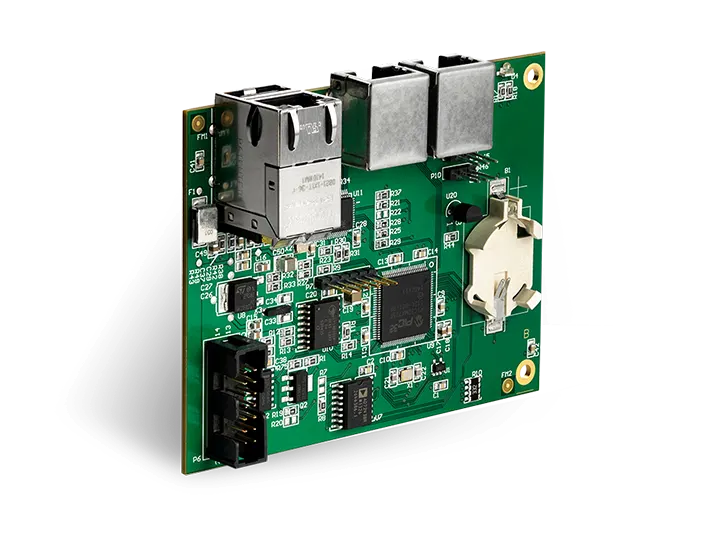
FVT (Function Verification Test): Function Verification Test
FVT testing is a critical step designed to verify that all functions of a circuit board are operating normally. This testing method is typically conducted before the circuit board is assembled into a finished product to ensure that the board has no obvious defects or issues. The following are the key characteristics of FVT testing:
1. Early Detection of Defective Circuit Boards
FVT testing helps detect potential defective circuit boards early on, including incorrect circuit connections, damaged components, or other manufacturing defects. This prevents defective circuit boards from entering the final assembly stage, thereby reducing the need for rework and minimizing waste of resources.
2. Conduct comprehensive functional testing based on product requirements
The goal of FVT testing is to conduct comprehensive functional testing to ensure that all functions of the circuit board are operating properly. This includes verifying power-up, button functionality, and whether the display is working correctly. The scope of the testing depends on the specific requirements of the product, but it typically focuses on verifying critical functions to ensure product quality.
3. Use the standard sample (GOLDEN SAMPLE)
Before conducting FVT testing, it is typically necessary to prepare a set of fully functional circuit boards to serve as reference samples (GOLDEN SAMPLE). For example, if a product contains three circuit boards—A, B, and C—then when testing Board A, Boards B and C are used as reference samples, and only Board A is replaced for testing. This method involves testing all circuit boards in turn to ensure they are functioning properly.
4. Use an extension cord
During FVT testing, it is often necessary to repeatedly plug and unplug circuit boards, but some connectors or ribbon cables cannot withstand repeated insertion and removal. Therefore, extension leads are typically used to facilitate assembly and testing while minimizing damage to standard prototypes. Extension leads are relatively inexpensive and easy to replace, making them a common choice.
5. It takes quite a bit of time
FVT testing typically takes a significant amount of time, especially when there are few units or the circuit board design has not yet been finalized. Therefore, this testing method is typically used during the engineering validation test (EVT) phase and prior to production.
FCT (Function Test): Functional Testing
FCT testing is another type of functional testing method that uses test points to verify the various functions of a circuit board. The following are the key features of FCT testing:
1. Performing functional testing using test cases
FCT testing uses test points reserved on the circuit board, and probes are then used to extract signals for comprehensive functional testing. These test points are typically designed into the circuit board to facilitate testing.
2. Mechanical Motion Testing
During FCT testing, the circuit board is placed on the test bench, and probes are mechanically brought into contact with the test points to simulate the connections in the finished product. This method allows for comprehensive testing of all the circuit board’s functions.
3. Additional Interfaces for Screen and Keypad Products
For products that include components such as screens and buttons, FCT testing routes the signals from these components so that commands can be sent to the circuit board and results can be viewed. If the product does not have a screen or buttons, it must be connected to a computer via a communication interface to operate the device and view the test results.
4. Use of Jigs
When manufacturing FCT test fixtures, it is typically necessary to disassemble the product’s components and mount them onto the fixture, then connect the fixture to the circuit board. The fixture allows the circuit board to be quickly loaded and unloaded while minimizing damage to standard prototypes.
5. Suitable for the large-scale production of stable products
FCT testing is typically used for stable products manufactured in large volumes because it is relatively expensive. However, one of its advantages is that, should the circuit board design change, only the fixture needs to be updated—not the entire test setup.
Selecting the Appropriate Functional Testing Method
Selecting the appropriate functional testing method depends on project requirements, product type, and production scale. FVT testing is suitable for engineering validation and small-batch production; it can detect issues early and reduce subsequent work. FCT testing, on the other hand, is better suited for large-scale production, offering the advantages of efficiency and stability. However, it is necessary to weigh the costs and benefits based on specific circumstances to determine the optimal testing method.
Regardless of the testing method chosen, functional testing is a critical step in ensuring the quality and reliability of circuit boards. It helps improve product performance and ensures that end users receive high-quality products.
Frequently Asked Questions
1. What is the difference between an FVT and an FCT?
FVT testing, or Functional Validation Testing, is designed to detect defective circuit boards early on and perform comprehensive functional testing. It is typically conducted before the circuit boards are assembled into finished products. FCT testing, or Functional Testing, involves testing functionality through test points and is usually performed on mechanical motion test benches. FCT testing is more suitable for mass production.
2. Why is it necessary to use a standard sample (GOLDEN SAMPLE)?
A reference board is used as a benchmark for functional testing to ensure that the functionality of the circuit board under test conforms to the standard. It helps improve the accuracy and repeatability of the test.
3. Which testing method is best suited for my project?
The appropriate testing method should be selected based on project requirements, product type, and production scale. For engineering validation or small-batch production, FVT testing may be more suitable. For mass production, FCT testing may be a more efficient option. The decision should be made based on the specific circumstances.
