

This article will introduce the main materials used in FPC packaging substrates, including copper foil, substrate materials, dry film, wet film, and metal materials, to help you better understand the composition and performance of FPC packaging substrates.
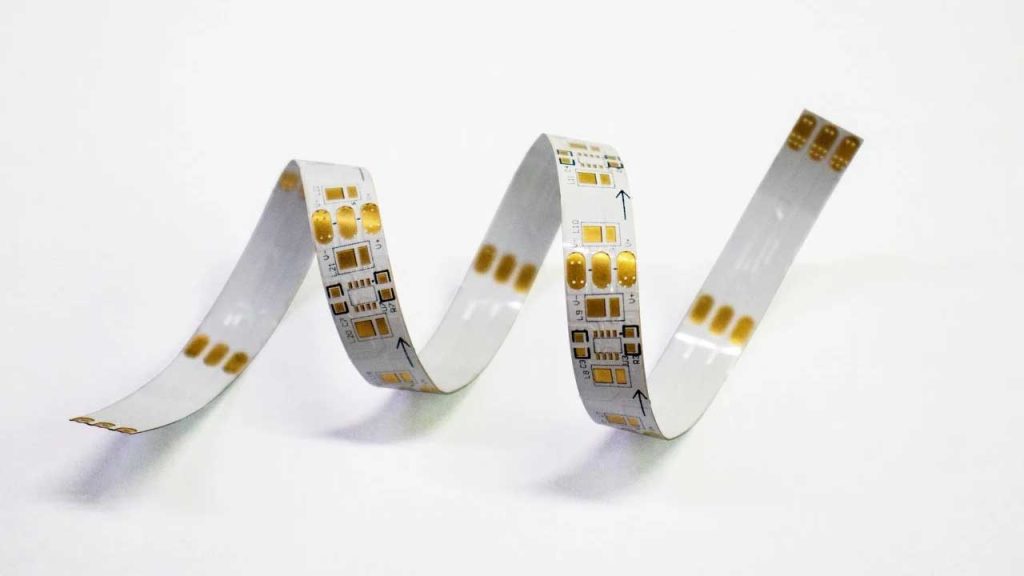
1. Copper foil
Copper foil is one of the key raw materials for FPC packaging substrates. Similar to traditional PCBs, the copper foil required for IC carrier substrates is electrolytic copper foil; however, it must be ultra-thin and uniform, with a minimum thickness of 1.5 micrometers and typically ranging from 2 to 18 micrometers.
In contrast, traditional PCBs typically use copper foil with a thickness of approximately 18 to 35 micrometers. Because ultra-thin copper foil is difficult to manufacture, it is more expensive. Copper foil is used in FPC packaging substrates to provide electrical conductivity, ensuring signal transmission and connections between electronic components.
2. Substrate Materials
The substrate materials used in FPC packaging can be divided into three major categories: rigid substrates, flexible film substrates, and co-fired ceramic substrates. Different types of substrate materials offer distinct advantages and characteristics for various applications.
- Rigid Substrate: Rigid substrates are typically made from BT (bismaleimide-triazine) materials, ABF (advanced packaging substrate) materials, and MIS (module-in-space) materials. These rigid substrates are used in FPC packaging for applications requiring high dimensional stability, high-frequency performance, heat resistance, and thermal conductivity.
- Flexible Film Substrates: Flexible film substrates are primarily made from PI (polyimide) and PE (polyester) resins. These materials are commonly used in flexible printed circuits, particularly in ribbon IC carrier boards with high-density wiring. They offer the advantages of heat resistance, fine lines, and thin profiles, making them suitable for applications in consumer electronics, automotive electronics, and other fields.
- Co-fired Ceramic Substrates: Materials used for co-fired ceramic substrates include aluminum oxide, aluminum nitride, silicon carbide, and other ceramic materials. These substrates are primarily used in high-performance electronic products for specific applications, such as analog and power supply ICs and digital currency. Co-fired ceramic substrates feature fine wiring, excellent electrical and thermal properties, and miniaturization.
3. Regarding Rigid Substrate Materials
3.1 BT Resin
The full name of BT resin is “bismaleimide triazine resin,” which was developed by Mitsubishi Gas Company of Japan. Although the patent for BT resin has expired, Mitsubishi Gas Company remains a world leader in the research, development, and application of BT resin.
BT resin is characterized by a high Tg (glass transition temperature), high heat resistance, high moisture resistance, a low dielectric constant (Dk), and a low dissipation factor (Df). As a result, BT substrates are widely used in applications such as network chips and programmable logic chips, where high reliability is essential. With the advancement of LED chips, BT substrates have also found widespread application in LED chip packaging.
3.2 ABF Materials
ABF is a material developed primarily by Intel and is mainly used in high-end carrier substrates such as imported flip chips. Compared to BT substrates, ABF is suitable for ICs with finer circuit patterns, more pins, and higher data transfer rates.
It is commonly used in the packaging of large, high-end chips such as CPUs, GPUs, and chipsets. As a layer-forming material, ABF can be directly bonded to a copper foil substrate and functions as part of the circuit.
3.3 MIS Substrate
MIS substrate packaging technology is a new technology that has been widely adopted in markets such as analog, power management ICs, and digital currency. Unlike traditional substrates, MIS incorporates one or more pre-packaged layers that are interconnected via electroplated copper to provide electrical connections during the packaging process.
MIS substrates feature fine-pitch wiring, excellent electrical and thermal performance, and a compact design, making them a viable alternative to certain traditional packaging methods.
4. Regarding Flexible Circuit Board Materials
4.1 PI and PE Resins
PI and PE resins are widely used in flexible PCBs and IC substrates, particularly ribbon-type IC substrates. Flexible film substrates are typically classified into three-layer adhesive-backed substrates and two-layer adhesive-free substrates.
Three-layer laminates were initially used in military electronic products, such as launch vehicles, cruise missiles, and satellites. Later, their use expanded to include chips in various civilian electronic products.
Adhesive-free boards are relatively thin and suitable for high-density wiring; they are heat-resistant and feature fine lines and a thin profile, making them widely used in consumer electronics, automotive electronics, and other fields. Flexible substrate materials represent one of the main directions for the future development of flexible packaging substrates.
Understanding the primary materials used in FPC packaging substrates can help PCB manufacturers, PCB designers, and PCBA manufacturers better select materials suitable for their projects to meet performance and reliability requirements.
As technology continues to evolve, innovations in the materials used for FPC packaging substrates will also continue to emerge to meet the needs of various application areas.
FPC packaging substrates are one of the major cost components in integrated circuit packaging and play a critical role in the performance and reliability of electronic products. Understanding the primary materials used in FPC packaging substrates—including copper foil, substrate materials, dry film, wet film, and metal materials—is essential for manufacturing high-quality packaging substrates.
Different substrate materials are suitable for different types of applications, so the choice for a given project must be based on performance and reliability requirements.
Frequently Asked Questions
What applications are FPC packaging substrates suitable for?
FPC packaging substrates are widely used in a variety of electronic products, including consumer electronics, communications equipment, automotive electronics, and medical devices. They are suitable for electronic packaging applications that require high performance and high reliability.
How do FPC packaging substrates differ from traditional PCBs?
FPC substrates are thinner and more flexible than traditional PCBs, making them suitable for applications involving bending and flexing. They are typically used in products that require lightweight, compact designs and high-density wiring.
How to Choose the Right FPC Packaging Substrate Material for Your Project?
The selection of materials should be based on the project’s performance and reliability requirements. Rigid substrates, flexible film substrates, and co-fired ceramic substrates each have different characteristics and should be selected according to the project’s requirements.
What are the future trends for FPC packaging substrates?
Future trends in FPC packaging substrates include finer lines, higher density, higher performance, and smaller sizes. As technology continues to advance, FPC packaging substrates will play an increasingly important role in various application areas.
