

In the PCB (Printed Circuit Board) manufacturing process, exposure is a critical step. Many PCB manufacturers use CCD semi-automatic exposure machines for this process, but Jingpeng Electronics has introduced LDI (Laser Direct Imaging) exposure machines, a new technology that offers numerous advantages. However, LDI exposure speeds are relatively slow. This article will provide a detailed analysis of the reasons behind the slow exposure speed of LDI machines and compare them with traditional CCD exposure machines.
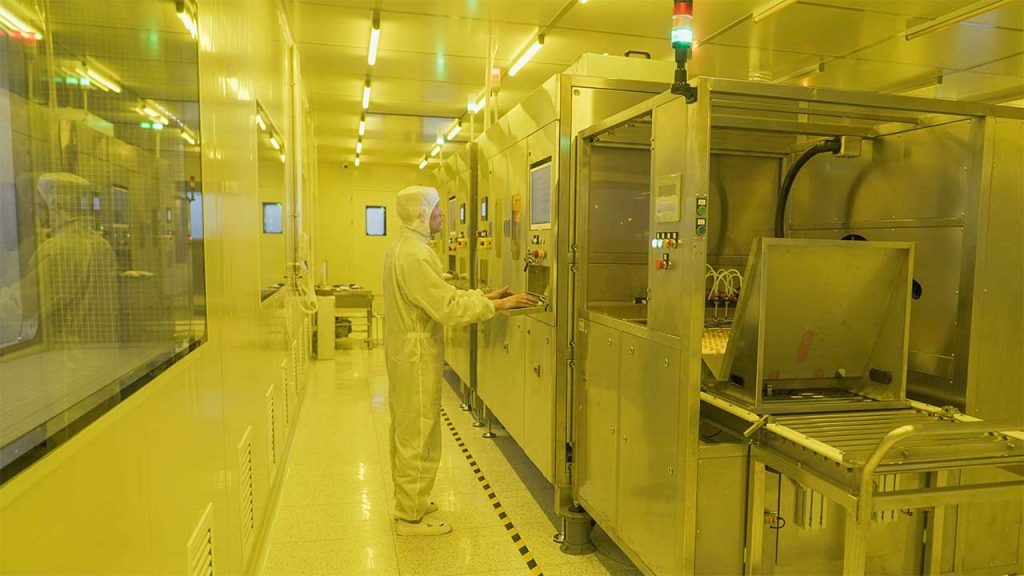
A Comparison of LDI and CCD Exposure Systems
Before we explore the reasons behind the slow exposure speed of LDI, let’s first compare the differences between LDI (Laser Direct Imaging) and traditional CCD exposure systems.
LDI (Laser Direct Imaging)
LDI is an advanced exposure technology that uses a laser to directly image circuit patterns on a PCB without the need for traditional photomasks. The advantages of LDI include:
- There is no need to produce film, which reduces production costs.
- This has improved the accuracy of exposure and reduced alignment errors.
- This has shortened sample turnaround times and improved production efficiency.
CCD Exposure Machine
Traditional semi-automatic CCD exposure machines use film to transfer circuit patterns and expose them onto PCBs. This method has been the primary process in PCB manufacturing for many years. However, it has several limitations, including:
- The need to produce and process film increases both costs and time.
- Alignment errors may affect the accuracy of the exposure.
- Production efficiency is relatively low.
Factors Affecting LDI Exposure Speed
To gain a deeper understanding of the causes of slow LDI exposure speeds, we need to consider the factors that affect exposure speed. These factors include:
- Energy Density: Photoresists must receive sufficient energy to be properly exposed. Highly sensitive photoresists require less energy and therefore have shorter exposure times. Energy density is related to the light source design of the exposure system.
- Data modulation rate: The modulation switching speed of the laser determines the number of light spots that can be drawn per second. Higher resolution requirements increase the exposure load.
- Mechanical Mechanism Speed: The speed at which the circuit board moves during the exposure process is also a key factor. In particular, the mechanisms for acceleration and deceleration directly affect production speed.
Analyzing the Causes of Slow LDI Exposure Speeds
The main reasons for the relatively slow exposure speed in LDI include the combined effects of the factors mentioned above. To achieve high-quality exposure, the photoresist requires sufficient energy, which takes a certain amount of time. In addition, the speed of the exposure mechanism also affects the efficiency of the entire process.
Although LDI has a relatively slow exposure speed, it offers unique advantages for manufacturing high-precision PCBs. LDI provides unmatched precision and accuracy, particularly when producing prototypes.
In addition, LDI does not require the creation of film, which can significantly reduce the cost of producing PCB prototypes. However, for mass production, speed may be a limiting factor, which is why some manufacturers still use traditional CCD exposure systems.
Frequently Asked Questions
1. Does the slow exposure speed of LDI mean it is not suitable for mass production?
Yes, LDI exposure speeds are relatively slow, so it is better suited for prototyping and small-batch production. For large-scale mass production, some manufacturers may still use traditional CCD exposure systems to improve efficiency.
2. Which is more precise: an LDI or a CCD exposure system?
LDI is generally more precise than CCD exposure systems. Because LDI uses direct imaging, it reduces alignment errors and provides higher exposure accuracy.
3. How do LDI exposure systems reduce costs?
LDI reduces the cost of film production because it does not require the use of film. In addition, it improves production efficiency and shortens turnaround time, thereby lowering overall costs.
LDI exposure technology offers many advantages in PCB manufacturing, but it is relatively slow and is particularly well-suited for prototyping and small-batch production.
Understanding the reasons behind LDI’s slow exposure speed can help manufacturers make better use of this technology to meet various production needs. If you need more information about PCB manufacturing or LDI technology, please feel free to contact me; I’ll be happy to provide you with support and assistance.
