

This article will discuss eight common PCB design pitfalls to help engineers better avoid these issues.
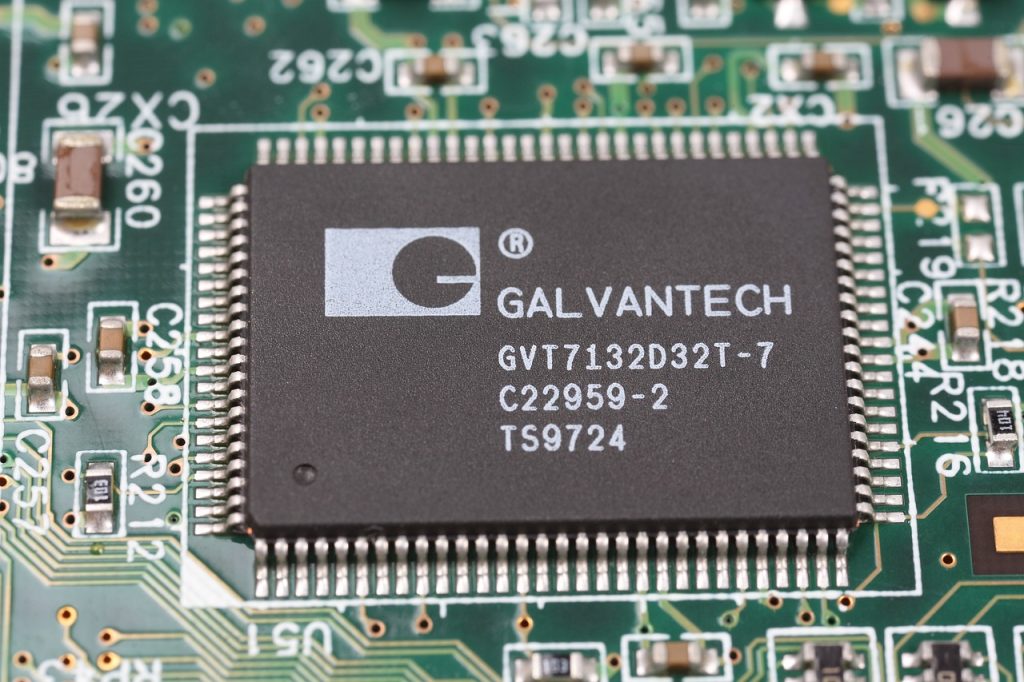
Misconception 1: Overreliance on Automatic Routing
Sometimes engineers may feel that, for circuit boards that do not require a high degree of precision, they can simply rely on automatic routing tools. However, automatic routing typically takes up more PCB area and results in more vias. In mass production, this leads to increased costs for suppliers, which in turn affects the yield rate.
Misconception 2: Indiscriminately adding pull-up and pull-down resistors
In circuit design, pull-up and pull-down resistors are used to stabilize signals. However, not all signals require pull-up or pull-down resistors. Using resistors for all signals—especially high-power signals—will result in unnecessary power consumption.
Misconception 3: Not Taking Unused I/O Ports into Account
Many CPUs and FPGA chips have a large number of unused I/O pins. If these pins are left floating, they may be subject to external interference and become input signals, causing system instability. The best practice is to configure unused pins as outputs to prevent unnecessary problems.
Misconception 4: Not Paying Attention to FPGA Power Consumption
The power consumption of an FPGA chip is directly proportional to the number of flip-flops used and their switching frequency. Therefore, the power consumption of the same FPGA model can vary significantly depending on the circuit in which it is used. Reducing the number of high-power-consumption flip-flops is key to reducing FPGA power consumption.
Misconception 5: Ignoring the Power Consumption of Chiplets
The power consumption of small chips may be difficult to determine, but it is typically determined by the current flowing through their pins. If the power consumption of a small chip is higher than expected, it may lead to a decline in system performance.
Misconception 6: Incorrect Control of Memory Chip Select Signals
Many memory chips consume significantly more power when the chip select signal is active than when it is inactive. Therefore, the CS (chip select) signal should be used to control the chip, and the width of the chip select pulse should be minimized as much as possible to reduce power consumption.
Misconception 7: Overemphasizing Signal Overshoot
Although most signals exhibit overshoot, not all signals require matching. For certain signals, such as TTL, LVDS, and 422, strict matching is not necessary as long as the overshoot remains within acceptable limits.
Misconception 8: Believing that reducing power consumption has nothing to do with software
In fact, reducing system power consumption is closely related to both hardware and software. Software can reduce power consumption by minimizing access to external memory and optimizing interrupt responses, among other methods; therefore, software engineers should also consider power optimization.
Electronic engineers should avoid these common pitfalls during the PCB design process to ensure that their designs are efficient, stable, and cost-effective. At the same time, not only hardware engineers but also software engineers should work together to reduce the power consumption of the entire system and achieve better performance and efficiency.
Frequently Asked Questions:
Question: How can we avoid the inefficiencies caused by automatic routing?
Answer: Manually optimizing the routing of critical signals and using automatic routing tools only for less critical signals can effectively reduce the number of vias and the PCB area required.
Question: Why do unused I/O ports need to be configured as outputs?
Answer: Setting unused I/O ports to output mode can prevent external interference from introducing noise and reduce power consumption.
Question: How can I reduce the power consumption of an FPGA?
Answer: Reducing the number of high-power-consumption flip-flops, selecting an appropriate FPGA model, and optimizing the design to reduce the flip-flop frequency can all help reduce the FPGA's power consumption.
Question: Why is it important to pay attention to the power consumption of chiplets?
Answer: Although chiplets have low power consumption, this can still add up to become a problem in large-scale applications. Understanding and optimizing chiplet power consumption helps improve overall system performance.
Question: Why is it important to consider the impact of software on power consumption?
Answer: Through proper programming and optimization, software can reduce the number of external memory accesses and other operations, thereby lowering system power consumption and improving efficiency.
