

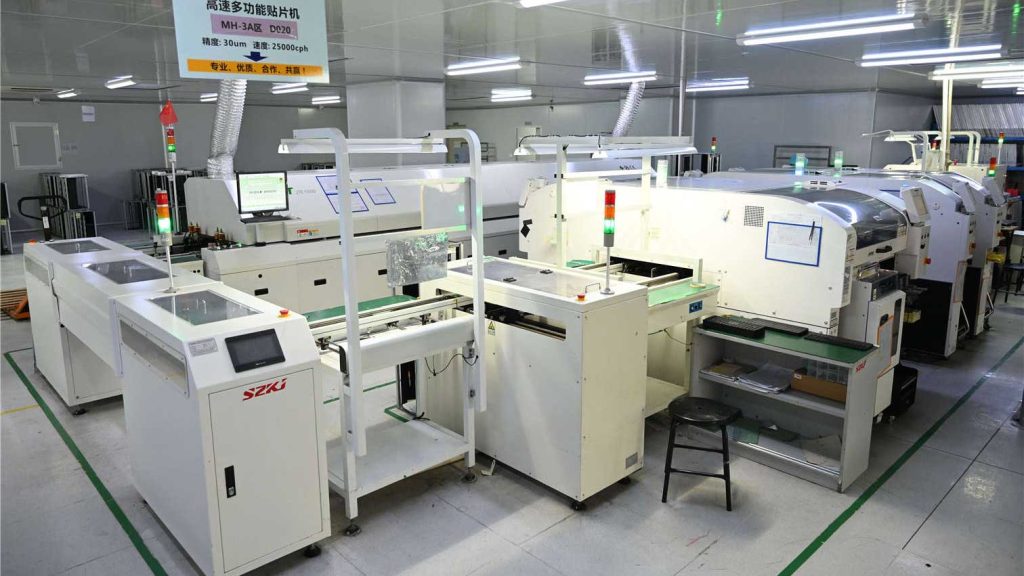
SMT (Surface Mount Technology) soldering requires a high degree of precision and attention to detail. To ensure the quality and safety of SMT soldering, here are some key precautions that are particularly important for SMT operators to follow.
1. Ensure that the components and the pads on the circuit board are solderable
Before performing SMT soldering, it is essential to ensure that the pads on the circuit board and the components to be soldered are suitable for soldering. This means that the surfaces of the pads and components should be clean and free of oxidation or corrosion. Checking that the pads and components are suitable for soldering is crucial to avoid problems with poor solder joint strength.
2. Anti-static Procedures
During the SMT soldering process, following anti-static procedures is extremely important. Operators should wear anti-static caps; in particular, women with long hair should tie their hair back and ensure it does not get tangled with wires. Following anti-static procedures helps prevent electrostatic discharge, thereby avoiding damage to sensitive electronic components.
3. Wear gloves
For certain operators—such as those who sweat easily—wearing gloves is important. Gloves protect the operator’s hands and also help prevent electric shock accidents.
4. Make sure the soldering iron is properly connected to a power source.
A soldering iron is one of the key tools for SMT soldering. Operators must ensure that the soldering iron’s power plug is properly connected to the outlet to prevent the plug from becoming loose, to avoid damage, and to minimize the risk of electric shock.
5. Use power outlet switches properly
If you need to use a soldering iron frequently each day, you should consider using a switch on the power outlet to turn the soldering iron on and off, or installing a power switch on the soldering iron’s power cord. This can reduce the number of times you have to plug and unplug the cord, thereby preventing the plug from becoming loose or causing poor contact, which could ultimately lead to an accident.
6. Avoid leaving the soldering iron submerged in flux for long periods of time
During SMT soldering, the soldering iron should not be immersed in flux for extended periods. Additionally, other highly corrosive chemicals should not be used as flux to prevent damage to components and solder joints.
7. Choose the right soldering iron
Sometimes, low-wattage soldering irons cannot provide enough heat, resulting in excessively long soldering times, which can easily damage electronic components. In such cases, you can choose a soldering iron with slightly higher wattage to ensure sufficient heat and reduce soldering time.
8. Using Rosin as a Flux
Choosing rosin as a flux can improve the wetting effect on electronic components and enhance their solderability. Rosin can be used directly in block form or mixed with a rosin-alcohol solution. It is important to ensure that the bottle is tightly sealed after using rosin in an alcohol solution, as alcohol is highly volatile. Alternatively, a small piece of cotton can be dipped in the rosin-alcohol solution, held between tweezers, and applied to the PCB or component leads.
9. Choose solder materials carefully
There is a type of solder paste (also known as "solder oil") available on the market that is corrosive. It is primarily used in industrial applications and is not suitable for soldering electronic products. Be sure to exercise caution when selecting soldering materials to ensure you choose the appropriate ones and avoid damaging electronic components.
10. Final Soldering of Integrated Circuits
Soldering of all electronic components should be performed last, especially when soldering integrated circuits. During soldering, operators must wear antistatic wrist straps and ensure that the soldering iron is properly grounded. In addition, a dedicated socket can be used, with the soldering socket inserted into the integrated circuit, to facilitate maintenance and replacement of frequently used or fragile chips.
11. Clean the workbench
After welding is complete, the operator must turn off the power and clean the workbench to ensure safety and tidiness.
12. Replace the soldering iron's power cord
After a soldering iron has been used frequently for some time, the power cord may become damaged. To prevent the cord from breaking at the base or internally, it is necessary to replace the power cord regularly.
The following are some recommendations and precautions regarding SMT soldering. These measures help ensure that the soldering process runs smoothly and improve the quality and safety of electronic products.
If you would like more information about PCBA (Printed Circuit Board Assembly), please visit our company’s website. We also offer a variety of circuit boards, including high-frequency boards and SMT boards. We look forward to seeing you again.
Frequently Asked Questions
1. What is SMT soldering?
SMT soldering is a surface-mount technology used to connect electronic components to circuit boards.
2. Why are anti-static procedures important?
Anti-static procedures help prevent electrostatic discharge and avoid damage to sensitive electronic components.
3. What is flux?
Flux is a material used to improve soldering results; it is typically used to enhance the wettability of solder joints.
4. Why is rosin chosen as a flux?
When used as a flux, rosin improves the wetting of components, thereby enhancing soldering quality.
5. Why is the integrated circuit soldered last?
Finally, soldering integrated circuits helps facilitate the maintenance and replacement of commonly used or easily damaged chips, thereby improving the maintainability of electronic products.
The above answers some common questions about SMT assembly and soldering. If you have any other questions or need more information, please feel free to contact us.
