

With the rapid development of the electronics industry, electronic products are becoming increasingly compact, and power density continues to rise. Against this backdrop, addressing heat dissipation has become a major challenge in electronics design. However, aluminum substrates have emerged as an effective solution.
Compared to traditional FR-4 circuit boards, aluminum substrates minimize thermal resistance, offer excellent thermal conductivity, and provide superior mechanical properties.
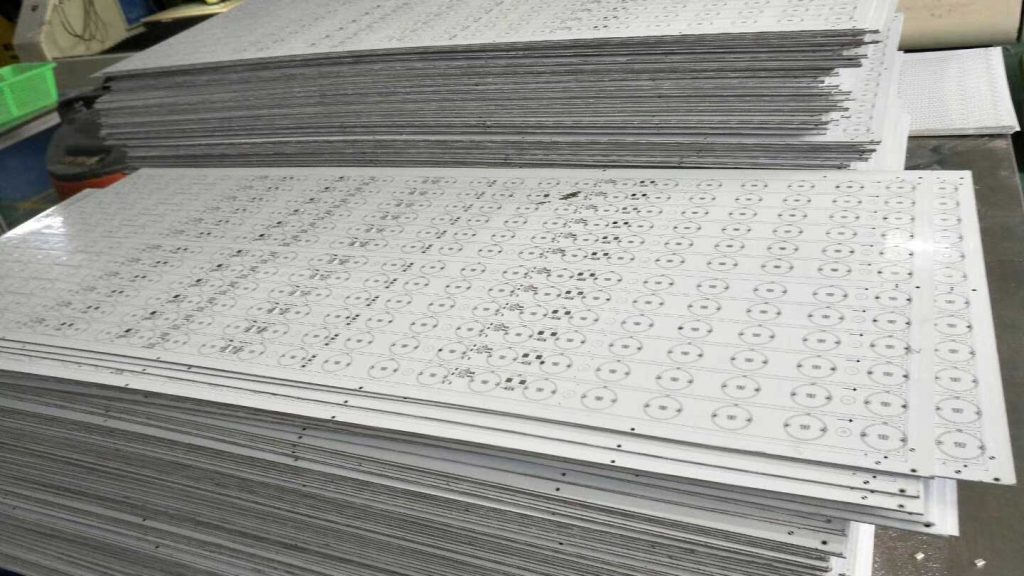
Structure of Aluminum Substrates
An aluminum substrate is a copper-clad laminate with excellent heat dissipation properties. Its unique three-layer structure consists of:
- Circuit Layer: Power devices are mounted on the circuit layer.
- Thermal insulation layer: Heat is conducted through the insulation layer to the next layer.
- Metal Substrate: Heat diffuses through the metal substrate and is then dissipated to the exterior of the module, enabling efficient heat dissipation from the device.
This design allows the aluminum substrate to perform exceptionally well in heat dissipation.
The scope of applications continues to expand
With continuous technological advancements, the range of applications for aluminum substrates continues to expand. The following are some examples of aluminum substrate applications:
LED Lighting
Aluminum substrates play a critical role in the LED lighting industry. High-power LED lighting requires exceptional heat dissipation, and only aluminum substrates can meet this demand. In every bustling city, streetlights hang high at night, providing bright and steady illumination—a feat made possible by high-thermal-conductivity LED aluminum substrates.
Power Supplies and Motor Drives
Power supplies and motor drive systems have extremely high thermal management requirements because they often need to handle high power densities. The excellent thermal conductivity, mechanical flatness, and consistency of aluminum substrates make them the preferred choice for these applications.
Communications and Computing
DC/DC converters are essential components in telecommunications, data communications, computing, and office automation equipment. Due to size and power density constraints, using aluminum substrates to manufacture these converters is a wise choice. The excellent thermal conductivity and mechanical properties of aluminum substrates ensure the efficient operation of the equipment.
Aluminum substrates have become an indispensable part of the electronics industry, particularly in addressing heat dissipation challenges associated with high-power and high-density electronic devices. They have a wide range of applications and play a crucial role in enhancing the performance and reliability of electronic products. In our daily lives, the presence of aluminum substrates can no longer be overlooked. If we pay close attention, we can see their significant role across various fields.
If you would like more information or have any questions, please feel free to contact us. We are here to provide you with support and assistance.
Frequently Asked Questions
1. What is an aluminum substrate?
An aluminum substrate is a copper-clad laminate with excellent heat dissipation properties, consisting of a circuit layer, a thermal insulation layer, and a metal base layer.
2. In which fields are aluminum substrates used?
Aluminum substrates are widely used in LED lighting, power supplies, motor drives, telecommunications, computers, and other fields, and are particularly suitable for applications requiring efficient heat dissipation.
3. Why do high-power electronic devices require aluminum substrates?
High-power electronic devices generate a significant amount of heat and require efficient heat dissipation to ensure proper operation. Aluminum substrates offer excellent thermal conductivity and can effectively dissipate heat.
4. How do aluminum substrates differ from traditional circuit boards?
Compared to traditional FR-4 circuit boards, aluminum substrates offer superior thermal and mechanical properties, making them suitable for the heat dissipation requirements of high-power and high-density electronic devices.
5. How do you choose the right aluminum substrate?
When selecting a suitable aluminum substrate, factors such as the application, power requirements, and dimensions should be taken into account; it is best to consult a professional for advice.
