

In PCB manufacturing, the choice of connection method has a significant impact on circuit performance, serviceability, and cost. This article provides a brief overview of two common PCB connection methods—soldering and plugging—to help you better understand their characteristics and applications.
I. Welding Methods
Soldering is a common method of interconnecting PCBs, and it has several notable advantages and disadvantages.
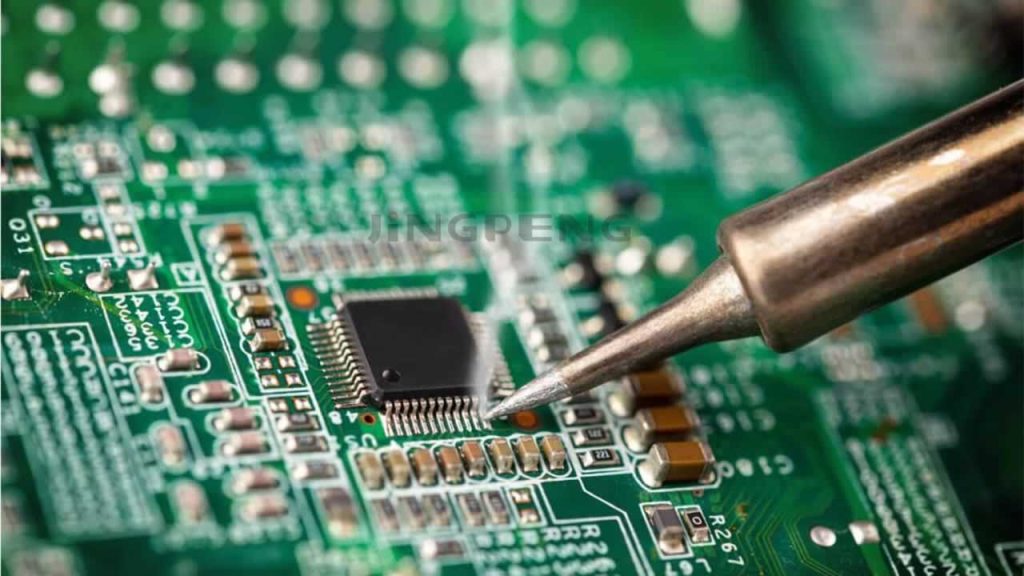
1. Soldering PCB Traces
This method is very simple and requires no connectors. All you need to do is use wires to solder the external connection points on the PCB directly to the external components or other parts. For example, in a radio, the speaker and battery compartment are typically connected to the circuit board in this way.
Advantages:
- Simple and easy to do.
- Lower cost.
- High reliability, preventing failures caused by poor contact.
Disadvantages:
- They are not easily interchangeable or repairable; if components need to be replaced, they must be re-soldered.
2. Soldering PCB Flexible Cables
In this method, the two PCBs are connected using a flat cable. This type of connection is not only reliable but also minimizes the risk of connection errors. Furthermore, there are few restrictions on the relative positioning of the two PCBs, making it particularly useful when connecting boards at different angles.
Advantages:
- High reliability.
- It's hard to make a mistake.
- There are no restrictions on relative positioning.
Disadvantages:
- As with the wire-soldering method, replacement and repair are still not convenient enough.
II. Plug-in Connection Methods
For more complex instruments and equipment, plug-in connectors are typically used. This method is similar to building with blocks; it improves the quality of mass-produced products, reduces system costs, and facilitates debugging and maintenance.
1. Printed Circuit Board Connectors
This is a common connection method, particularly suitable for complex instruments and equipment. In this method, a printed connector is fabricated from the edge of the PCB; the connector is designed to match a dedicated PCB socket in terms of dimensions, number of contacts, contact spacing, and the positions of the positioning holes.
Advantages:
- Mass-produced items are of high quality.
- This facilitates debugging and maintenance.
- This allows for troubleshooting in the shortest possible time and improves equipment utilization.
2. Standard Pin Connections
Standard pin connectors are used for external connections on printed circuit boards and are particularly common in small instruments. By connecting two printed circuit boards using standard pins—which are typically arranged parallel or perpendicular to each other—mass production can be easily achieved.
Advantages:
- Suitable for small instruments.
- Easy to mass-produce.
Disadvantages:
- For large, complex circuits, this approach may not be flexible enough.
Overall, the choice of interconnection method for PCBs depends on the specific application requirements. For simple circuits and small instruments, soldering may be the better option because it is simple and less expensive. For complex instruments and equipment that requires frequent maintenance, connector-based interconnections may be more suitable because they offer convenient maintenance and higher reliability. When selecting an interconnection method, it is essential to weigh various factors based on the specific circumstances to ensure that both the performance and serviceability of the electronic equipment are met.
Frequently Asked Questions
1. What is PCB interconnection?
PCB interconnections refer to the electrical connections between electronic components and electromechanical parts, which ensure that electronic devices function as specified in the circuit diagram.
2. Why choose welding?
This welding method is simple, low-cost, and highly reliable, making it suitable for components with few external leads.
3. What are the advantages of plug-in connections?
The plug-in connection method is suitable for complex instruments and equipment; it improves product quality, reduces costs, and facilitates commissioning and maintenance.
4. What are the characteristics of printed circuit board connectors?
Printed circuit board connectors are suitable for complex instruments and equipment, facilitating maintenance and the replacement of faulty components.
5. How do you choose the right interconnection method?
When selecting an interconnection method, you should weigh various factors based on the specific application requirements, including circuit complexity, device size, and maintenance needs.
