

As a professional working at a PCB manufacturer, I frequently encounter various symbols on PCBs. These symbols represent the part numbers of electronic components, and understanding them leads to a deeper understanding of the design and functionality of the PCB.
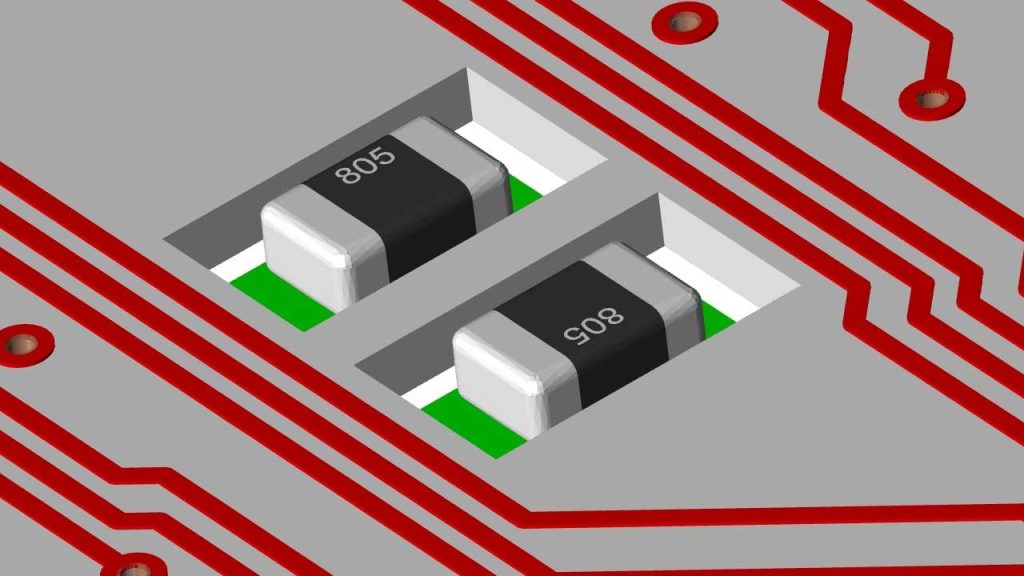
Below, we will introduce some common electronic component symbols used in PCB manufacturing facilities.
1. Resistance (R)
A resistor is a common component in electronic circuits; it is used to limit the flow of current and is typically denoted by the symbol "R." The resistance of a resistor is usually measured in ohms (Ω).
2. Capacitance (C)
A capacitor is denoted by the letter C; it is a component that stores electric charge. Capacitors can store and release electrical energy in a circuit and are essential for applications such as filtering and coupling.
3. Diode (D)
A diode is an electronic component that allows current to flow in one direction and blocks it in the other. It is typically denoted by the symbol "D."
4. Transistor (Q or VT)
A transistor is a semiconductor device used to amplify current, typically denoted by the symbols Q or VT. It is very useful for amplifying electronic signals.
5. Inductance (L)
An inductor is a component that stores electrical energy; it is typically denoted by the symbol L. Inductors play a key role in electronic filtering and energy storage.
6. Fuse (F)
A fuse is a device used for overload protection, typically denoted by the symbol "F." It protects other components in a circuit from the effects of overcurrent.
7. Transformer (T)
A transformer is denoted by the symbol "T" and is used to change the magnitude of an AC voltage. Transformers are widely used in power supply and signal transmission.
8. Integrated Circuit (U or IC)
Integrated circuits are typically represented by the symbol "U" or "IC." They are tiny chips containing multiple electronic components that are used to perform a variety of functions, ranging from computation to communication.
9. Switch (S)
A switch is denoted by the symbol "S" and is a component used to control the on/off state of a circuit. Switches can be mechanical or electronic and are used to control the flow of current.
10. Light-Emitting Diode (LED)
A light-emitting diode, denoted by the symbol "LED," is a semiconductor device capable of emitting light. LEDs are widely used in applications such as indicators, lighting, and displays.
11. Relay (K)
A relay is denoted by the symbol "K." It is an electromagnetic switch typically used to control circuits with high current or high voltage.
12. Common Ground (GND)
GND stands for ground, which is used to connect various parts of a circuit to ground to ensure the circuit's stability and safety.
13. Alternating Current (AC) and Direct Current (DC)
AC stands for alternating current, while DC stands for direct current. These two types of current have different applications and characteristics in electronic circuits.
14. Buzzer (LS)
A buzzer is denoted by the symbol LS; it is a component capable of producing sound and is commonly used in alarm and alert applications.
15. Quartz Crystal Oscillator (QCO) (X or Y)
A quartz crystal oscillator is denoted by the symbol X or Y. It is a component used to generate precise clock signals and is widely used in timing and synchronization applications.
16. Optocoupler (N)
An optocoupler, denoted by the symbol "N," is a component used to isolate circuits and is commonly employed in sensor and control applications.
If you'd like to learn more about printed circuit boards and electronic components, follow our blog channel—more great content awaits you.
Frequently Asked Questions
1. What does the "R" symbol on a circuit board stand for?
The symbol "R" stands for resistance, which is used to limit the flow of current.
2. What is the symbol for a capacitor?
The symbol for a capacitor is C; it is used to store electric charge and energy.
3. What is the symbol for a transistor?
A transistor is typically denoted by the symbol Q or VT, and it is used to amplify electronic signals.
4. What is the purpose of a fuse?
Fuses are used for overload protection to prevent overcurrent in a circuit.
