

In electronic circuits, there is a seemingly unremarkable component that is often encountered: the 0-ohm resistor. For beginners, the existence of this zero-ohm resistor can be confusing. After all, since a 0-ohm resistor has a resistance of zero—just like a wire—why would anyone go to the trouble of designing it? In this article, we’ll reveal the ingenious uses of the 0-ohm resistor and its role in circuits.
1. An Introduction to 0-Ohm Resistors
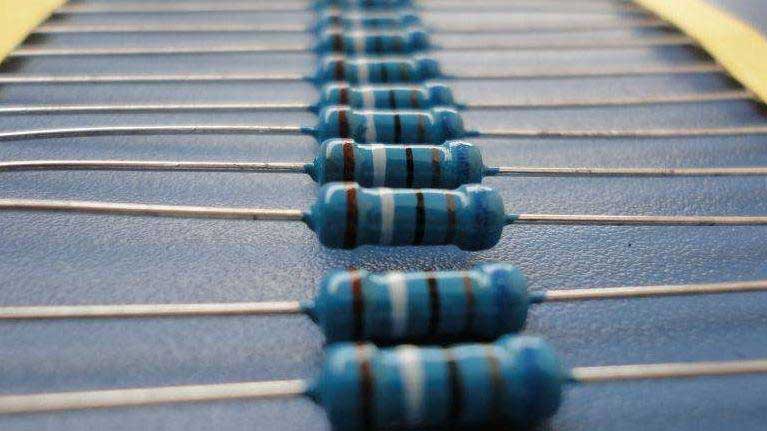
A 0-ohm resistor, also known as a shunt resistor, is a special-purpose resistor. Strictly speaking, the resistance of a 0-ohm resistor is not absolutely zero, but it is very close to zero. It typically resembles a standard wire in appearance but plays a unique role in a circuit.
2. Why is a 0-ohm resistor needed?
Question: Since the resistance of a 0-ohm resistor is close to zero, why is it needed?
Answer: Although a 0-ohm resistor has a resistance value close to zero, it serves many important purposes in circuit design, including but not limited to the following:
3. Applications of 0-Ohm Resistors in Circuit Design
3.1 Design for Ease of Debugging and Compatibility
A 0-ohm resistor serves no functional purpose in a circuit; its presence is solely for the convenience of debugging or design compatibility. Sometimes, designers need to leave empty slots in a circuit so that components or jumpers can be added during debugging or in subsequent design iterations. A 0-ohm resistor acts as a placeholder, occupying that slot and allowing the circuit to be modified as needed.
3.2 Used as a jumper
If a particular section of a circuit is not required in the design, you can simply omit the 0-ohm resistor. This acts as a jumper, isolating that part of the circuit from the rest. This approach is not only convenient but also does not affect the circuit's appearance.
3.3 Use in Cases of Parameter Uncertainty
Sometimes, during the early stages of circuit design, the parameters of certain components—such as the values of resistors or inductors—may not yet be determined. In such cases, 0-ohm resistors can be used as placeholders, and the specific values of the components can be determined after actual debugging.
3.4 Measuring Current Draw
If you need to measure the current consumption of a specific part of the circuit, you can remove the 0-ohm resistor and then connect an ammeter. This makes it easy to measure the current consumption of that specific part, which aids in power consumption analysis.
3.5 Emergency Measures During Wiring
When routing a circuit, you may sometimes encounter difficulties. In such cases, you can use a 0-ohm resistor to connect the circuit as a temporary solution, ensuring that the circuit is properly connected.
3.6 Special Applications Involving High-Frequency Signals
Under high-frequency conditions, a 0-ohm resistor can function as an inductor or a capacitor, depending on the circuit’s characteristics. It is primarily used to address electromagnetic compatibility (EMC) issues, such as connections between ground points or between the power supply and IC pins.
3.7 Single-Point Grounding
Single-point grounding is an important concept in circuit design; it refers to separating different types of ground connections to reduce mutual interference in a circuit. A 0-ohm resistor can be used to implement single-point grounding, ensuring that various grounding systems operate independently.
3.8 Function of Fuses
In some cases, a 0-ohm resistor can also function as a fuse. When the current exceeds its current-carrying capacity, the 0-ohm resistor may blow, thereby protecting other components in the circuit.
3.9 Circuit Configuration
Sometimes, in product design, it is desirable to avoid using jumpers or DIP switches because users might operate them incorrectly. To reduce maintenance costs, designers can use 0-ohm resistors in place of jumpers or DIP switches and solder them onto the circuit board. This prevents users from changing the settings at will.
3.10 Other Uses
In addition to the applications mentioned above, 0-ohm resistors can also be used in the following situations:
- Cross-wiring During Circuit Layout
- Debugging and Testing
- Temporary replacement for other surface-mount components
- As a temperature compensation device
4. Frequently Asked Questions
Q: What is the difference between a 0-ohm resistor and ordinary wire?
Answer: A 0-ohm resistor and ordinary wire look very similar; both appear as metal wires. The difference is that a 0-ohm resistor has a resistance close to zero, while a wire typically has a finite resistance, albeit very small. In addition, a 0-ohm resistor serves a specific purpose in circuit design, whereas wire is primarily used to connect circuits.
Q: How do I choose the right 0-ohm resistor?
A: Choosing the appropriate 0-ohm resistor depends on the current. Generally speaking, for a 1A current, you can use a 0603-sized 0-ohm resistor, while for a 2A current, you can use a 0805-sized 0-ohm resistor. Selecting the correct resistor size ensures the circuit’s performance and stability.
Overall, although the resistance of a 0-ohm resistor is close to zero, it can be used in a variety of situations, such as debugging, wiring, measuring current, and resolving EMC issues. Designers need to fully understand the applications of 0-ohm resistors to take full advantage of their benefits in electronic circuits.
