

One of the key components for connecting to a PCB circuit is the PCB terminal. This article will take an in-depth look at the different types of PCB terminals and their crucial roles in the field of electronics.
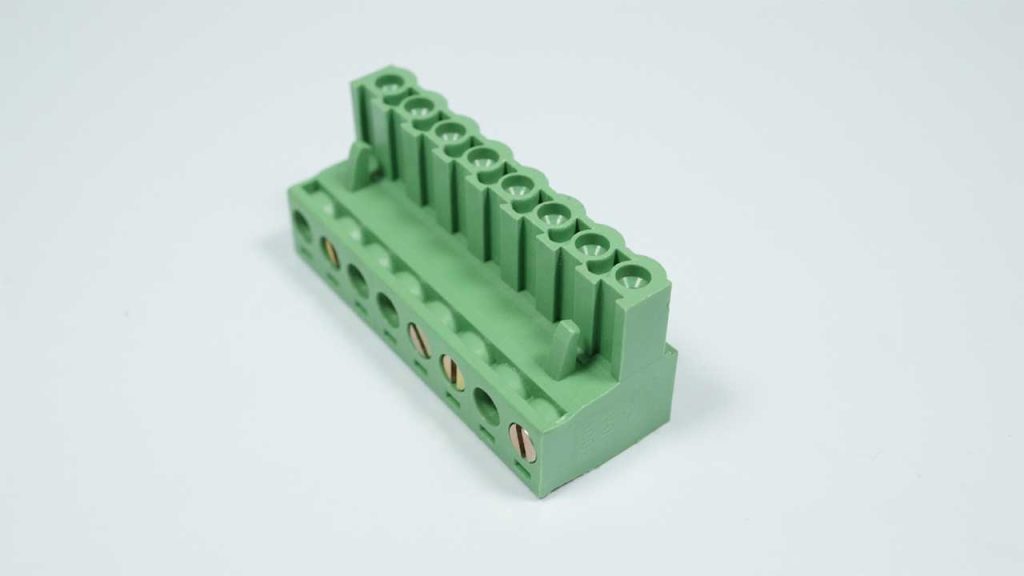
Introduction to PCB Terminals
PCB terminals, also known as PCB terminal blocks or PCB connectors, are essential components used for electrical connections. They allow electronic components, wires, or other connecting parts to be easily inserted into or connected to a PCB, thereby forming the circuits within electronic devices.
The Importance of PCB Terminals
As the level of industrial automation continues to rise and industrial control requirements continue to evolve, the use of PCB terminals has gradually increased. This is because PCB terminals play an indispensable role in electronic devices.
When repairing and maintaining electronic equipment, engineers and technicians typically begin by inspecting the interfaces—that is, the terminals. Therefore, the design and quality of the terminals are critical to the performance and reliability of electronic equipment.
Classification of PCB Terminals
1. Plug-in terminals
Plug-in terminals consist of two parts: one for clamping the cable and the other for insertion. These terminals can be categorized into custom-gauge and standard-gauge types based on wire gauge. Plug-in PCB terminals are among the most common and popular types on the market. They are suitable for a wide range of applications, from consumer electronics to industrial equipment.
2. Terminal blocks
Rail-type terminals provide safe, reliable, and efficient connections in high-current and high-voltage environments. They are particularly well-suited for applications that handle high-power currents, such as power equipment and industrial machinery.
3. Rail-Mounted Terminals
Rail-mounted terminals feature wire crimping and a unique self-locking threaded design, ensuring reliable and secure connections. These terminals typically have an attractive appearance and elegant design, making them suitable for applications that require both aesthetic appeal and high performance.
As a critical component of electronic devices, PCB terminals are essential for circuit connections. Their design and selection require careful consideration based on the requirements of specific applications.
Different types of terminals are suitable for different applications, including plug-in terminals, fence-type terminals, and rail-type terminals. Selecting and using PCB terminals correctly ensures the high performance and reliability of electronic devices.
5 Common Questions (FAQs)
What are PCB terminals?
PCB terminals are components used for electrical connections, allowing electronic components and wires to be connected to a printed circuit board.
Why Are PCB Terminals So Important?
PCB terminals play a critical role in electronic devices; they directly affect circuit connections and performance.
What are the different types of PCB terminals?
PCB terminals include plug-in terminals, fence-type terminals, and rail-type terminals, each of which is suitable for different applications.
What applications are plug-in terminals suitable for?
Plug-in terminals are suitable for a wide range of applications, from consumer electronics to industrial equipment.
What is the difference between fence-type terminals and rail-type terminals?
Rail-type terminals are suitable for high-power current applications, while track-type terminals typically feature an aesthetically pleasing design and are suitable for applications that require both appearance and performance.
