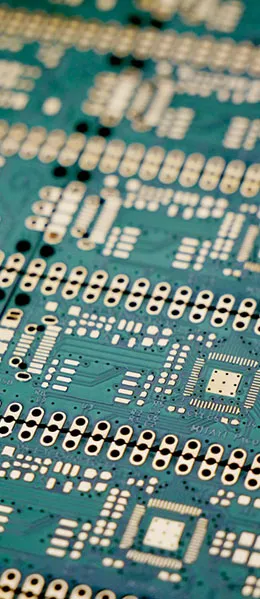
PCB short circuits are one of the most common challenges encountered during the manufacturing and maintenance of electronic devices. In this article, Jingpeng Electronics will take an in-depth look at the root causes of PCB short circuits and how to effectively prevent them.
1. Causes of PCB Short Circuits
Generally speaking, there are two main causes of short circuits in PCBs:
a. Service life
The first scenario relates to the service life of PCBs. Over time, PCBs may become damaged due to physical wear and tear, environmental factors, or prolonged use, including short circuits.
b. Problems during the manufacturing process
The second scenario involves the PCB manufacturing process. Minor errors during production, such as soldering issues or inadequate inspection, can lead to potential short circuits on the circuit board. Although these errors may seem insignificant, they pose a significant threat to the reliability and performance of the entire PCB and may even result in the product being scrapped.
2. How to Inspect and Prevent Short Circuits on Circuit Boards

Now that we understand the root causes of short circuits in PCBs, let’s take a look at how to inspect for and prevent these issues:
1. A short circuit was detected.
When a short circuit is suspected on a PCB, a step-by-step approach can be used to locate and resolve the issue. First, cut the connections on the PCB, then power on each section one by one to test them, thereby gradually ruling out possible short circuits.
2. Take care when soldering small components
Exercise extra caution when soldering small components, especially when working with a large number of them, such as power supply filter capacitors. Careless soldering can cause a short circuit between the power supply and ground. It is best to check the components for short circuits before soldering.
3. Develop good welding habits
When performing manual welding, make it a habit to follow these best practices:
- Before soldering, visually inspect the PCB and use a multimeter to check for short circuits in the critical circuits.
- After soldering each chip, use a multimeter to check for a short circuit between the power supply and ground.
- When soldering, avoid swinging the soldering iron around to prevent solder from splattering onto the chip leads, especially for surface-mount components.
4. Use a short-circuit locator
Modern technology makes it easier to resolve short-circuit issues. Short-circuit location analyzers, such as the CB2000 Short-Circuit Tracer, the QT50 Short-Circuit Tracer, and the ToneOhm950 Multilayer PCB Short-Circuit Detector, can be used to locate short circuits more quickly.
5. Consider BGA chips during the design process
For PCBs with BGA chips, the power supplies for each chip should be isolated during the design phase and connected using ferrite beads or 0-ohm resistors. This way, if a short circuit occurs between the power supply and ground, the ferrite bead can be disconnected to make it easier to pinpoint the problem.
Frequently Asked Questions
1. What is a short circuit on a PCB?
A short circuit on a PCB refers to an abnormal electrical connection between two or more circuit connections on the board, causing current to bypass the intended path, which may damage the equipment or pose a safety risk.
2. How does the lifespan of a PCB affect short-circuit issues?
As the service life of PCBs increases, physical wear and environmental factors may lead to more frequent short circuits on the boards.
3. Why is it important to inspect components before soldering?
Inspecting components before soldering ensures that they are free of defects, such as short circuits or damage, thereby preventing these issues from being introduced into the circuit board.
4. Why is it important to develop good welding habits?
Good welding practices ensure high-quality welds and reduce the occurrence of welding errors and short-circuit problems.
5. What is a BGA chip?
A BGA (Ball Grid Array) chip is a type of integrated circuit packaging technology in which the solder balls are arranged on the bottom of the chip to connect it to the PCB. BGA chips are widely used in high-density integrated circuits.