

This article will cover nine common practices for circuit board inspection at PCB manufacturers to ensure the reliability and safety of electronic devices.
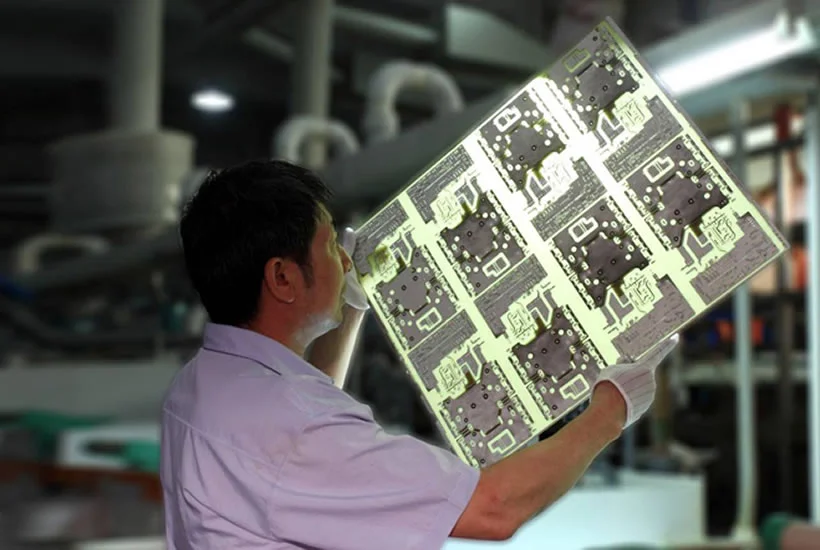
1. Detection of Electricity on Circuit Boards
When testing PCBs, never use grounded test equipment to touch live TV sets, audio systems, VCRs, or other devices connected to the power supply. Doing so may cause a power supply short circuit, damage integrated circuits, or even lead to more serious problems. Before touching any equipment, be sure to check whether the power supply is live.
2. Ensure the soldering iron is properly insulated
Never use a soldering iron while it is plugged in during the soldering process. Make sure the soldering iron is unplugged, and it is best to ground the soldering iron’s casing. Be especially careful when working with MOS circuits; you may want to use a low-voltage soldering iron, such as one rated at 6–8 V, to ensure safety.
3. Understand how integrated circuits work
Before testing and repairing an integrated circuit, it is essential to first understand its function, internal circuitry, electrical parameters, pin functions, and operating principles—including normal voltages and waveforms. This will make the analysis and inspection process go more smoothly.
4. Avoid short circuits between pins
When measuring voltage or using an oscilloscope to examine waveforms, be sure to prevent the test leads or probes from slipping and causing a short circuit between the pins of the integrated circuit. Even a momentary short circuit can damage the integrated circuit; take special care when testing CMOS integrated circuits in flat-packages.
5. Use a high-resistance tester
When measuring the DC voltage across the pins of an integrated circuit, use a multimeter with an internal resistance greater than 20 kΩ/V to avoid measurement errors.
6. Pay attention to heat dissipation in power integrated circuits
Power integrated circuits require effective heat dissipation during operation and must not be operated at high power levels without a heat sink.
7. Proper Wiring
If you need to connect external components to replace damaged parts inside an integrated circuit, choose small components and ensure that the wiring is properly laid out to avoid unnecessary parasitic coupling. Pay special attention to the grounding connections between the audio power amplifier integrated circuit and the preamplifier circuit.
8. Ensure Welding Quality
During the soldering process, be sure to ensure a secure connection and avoid solder buildup and porosity, which can lead to cold solder joints. Soldering time should generally not exceed 3 seconds, and the soldering iron power should be around 25W for internal-heating models. Carefully inspect the soldered integrated circuit; it is best to use an ohmmeter to check for short circuits between the pins before connecting the power supply.
9. Do not assume that an integrated circuit is damaged without proper verification.
Do not assume too quickly that an integrated circuit is damaged. Because integrated circuits are directly coupled to one another, a problem in one circuit may cause voltage fluctuations in multiple circuits, which is not necessarily a sign of damage to the integrated circuit. Some soft faults do not cause voltage fluctuations.
Frequently Asked Questions
Question 1: Do PCBs require special testing equipment?
Answer: PCB testing typically requires standard testing equipment; however, when handling special equipment such as televisions and audio systems, extra caution must be exercised to ensure the PCB is not live.
Question 2: Why is it important to understand how integrated circuits work?
Answer: Understanding how it works helps you better analyze and inspect integrated circuits, making it easier to identify problems.
Question 3: How can we ensure welding quality?
Answer: When soldering, ensure a secure joint and avoid cold solder joints and solder buildup; the soldering time should not exceed 3 seconds.
Question 4: What is a soft fault?
Answer: A soft fault refers to a situation where there is a problem with an integrated circuit but it does not cause a change in voltage; therefore, it requires careful inspection and analysis.
Question 5: Why do power integrated circuits require effective heat dissipation?
Answer: Power integrated circuits generate a significant amount of heat when operating at high power levels; effective heat dissipation can prevent damage caused by overheating.
