

In today’s rapidly evolving field of electronic technology, flexible printed circuits (FPCs) are gaining prominence thanks to their unique advantages, becoming indispensable key components in numerous electronic devices. From trend-setting foldable smartphones to highly precise medical devices, FPCs are ubiquitous, bringing unprecedented design flexibility and performance enhancements to a wide range of products. This article will delve into the applications of FPCs across various fields and provide a comprehensive analysis of their core advantages, helping you gain a deeper understanding of this revolutionary electronic technology.
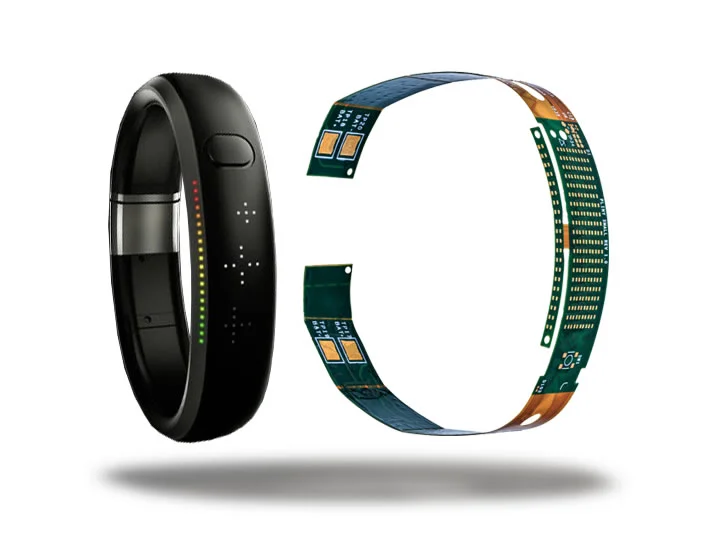
I. Basic Understanding of FPC: The Key to the World of Flexible Electronics
FPC, which stands for Flexible Printed Circuit, is also known as a flexible printed circuit board or "flex." It uses flexible materials such as polyimide (PI) or polyester film (PET) as the substrate, and by etching conductive circuits onto it, it forms a circuit connection system that can be freely bent, folded, and rolled. This unique structure gives FPCs many characteristics that traditional rigid PCBs do not possess.
(1) Core Components and Functions of FPCs
- Substrate: As the foundation of FPCs, PI-based substrates have become the material of choice for high-end FPCs due to their exceptional temperature resistance (capable of withstanding extreme temperatures ranging from –269°C to 280°C) and excellent insulation properties. It not only determines the degree of flexibility of the FPC but also ensures its stable operation in various harsh environments. For example, in aerospace equipment, FPCs with PI substrates can reliably transmit signals in the face of the extreme cold and intense radiation of space, ensuring the normal operation of the equipment.
- Conductive Layer: The conductive layer, composed of ultra-thin copper foil with a thickness typically ranging from 0.005 to 0.03 mm, is key to enabling efficient circuit connections in FPCs. Its high conductivity and the high-density wiring it enables provide strong support for the miniaturization and high performance of electronic devices. Taking a smartphone’s motherboard as an example, the conductive layer of an FPC enables complex circuit layouts within an extremely small space, meeting the connection requirements of various functional modules.
- Cover Film: The cover film acts as a “protective layer” for the FPC, adhering tightly to the conductive layer to effectively enhance the FPC’s wear and corrosion resistance, thereby significantly extending its service life. In industrial environments, where equipment is constantly exposed to dust, moisture, and other corrosive elements, the cover film ensures that the FPC’s internal circuits remain undamaged, thereby maintaining stable equipment operation.
- Reinforcement Plate: In specific areas of the FPC, such as connector joints, the addition of a stiffening plate serves to increase rigidity and enhance mechanical strength. While ensuring the overall flexibility of the FPC, it meets the stability and reliability requirements of specific areas, enabling the FPC to perform exceptionally well in complex assembly and usage scenarios.
(2) Significant Differences Between FPCs and Rigid PCBs
|
Dimensions of Comparison
|
FPC
|
Rigid PCBs (such as FR-4 boards)
|
|
Morphological Characteristics
|
It can be freely bent, folded, and rolled, with a minimum bending radius of 0.1 mm, allowing it to easily conform to complex curves and fit into tight spaces.
|
The shape is fixed and cannot be bent; it is suitable only for flat-surface installations.
|
|
Weight
|
Compared to rigid PCBs of the same area, it weighs 40% – 60% less, making it possible to reduce the weight of the equipment.
|
Because the substrate material has a high density and is relatively heavy, it is not suitable for products that require a slim and lightweight design.
|
|
Wiring Density
|
Features ultra-high wiring density, with line widths and line spacings as fine as 0.02 mm × 0.02 mm, enabling the integration of more components
|
The standard trace width and spacing are 0.1 mm × 0.1 mm, and the relatively low trace density limits component integration.
|
|
Installation Compatibility
|
Can be customized for installation based on the internal structure of the equipment, ensuring a perfect fit in irregular spaces
|
The installation method is relatively fixed and places high demands on the shape and dimensions of the installation space.
|
From the above comparison, it is clear that FPC offers inherent advantages in meeting the demands of modern electronic devices for miniaturization, lightweight design, and high performance, which has laid a solid foundation for its widespread application across numerous fields.
II. The Six Core Advantages of FPC: Transforming the Design and Performance of Electronic Devices
(1) Design Advantages: A Flexible Pioneer That Overcomes Spatial Limitations
The “flexibility” of FPC has revolutionized the field of electronic design, granting electronic devices unprecedented freedom in space utilization. Its exceptional performance—capable of 180° folding and 360° rolling—enables a minimum bending radius of an astonishing 0.1 mm, equivalent to the diameter of a single strand of hair. This characteristic is fully demonstrated in a wide range of products.
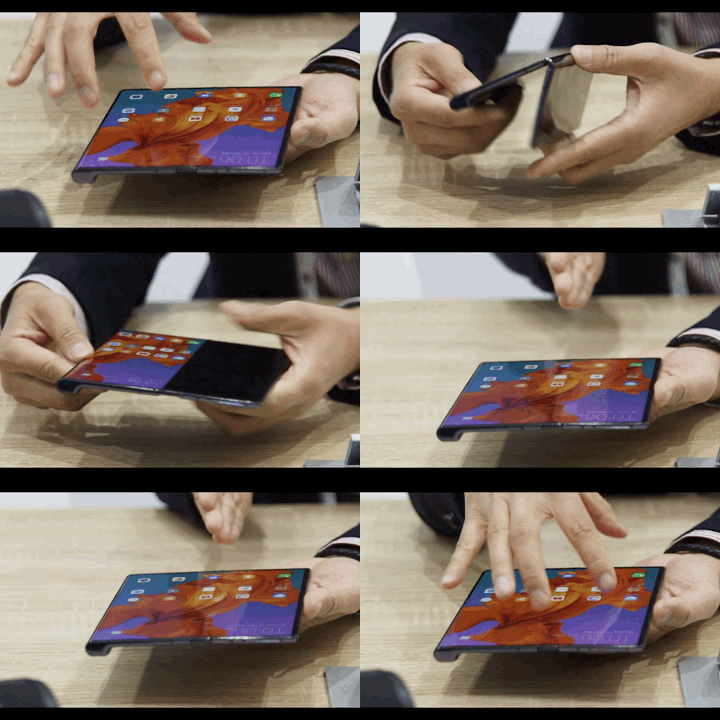
In the field of foldable smartphones, FPCs play a crucial role. Take the Samsung Galaxy Z Fold series as an example: the FPC used in the phone’s hinge must not only withstand frequent bending as the screen opens and closes but also ensure stable signal transmission. Through meticulous design and rigorous testing, this FPC can withstand hundreds of thousands of folding cycles, ensuring the phone’s reliability over the long term. Similarly, in wearable devices such as smart bracelets, FPCs conform closely to curved bodies and connect various functional modules—such as heart rate sensors, displays, and batteries—within confined spaces, greatly enhancing the product’s comfort and aesthetic appeal.
(2) The Advantages of Lightweight and Thin Designs: Paving the Way for the Era of Miniaturized Devices
In the consumer electronics market, where the pursuit of extreme thinness and lightness is paramount, the thin and lightweight characteristics of FPCs have become a “secret weapon” for many manufacturers. They can be as thin as 0.05 mm—roughly the thickness of a sheet of A4 paper—and weigh only 50% as much as a rigid PCB of the same area. This advantage is fully realized in products where size and weight are critical considerations, such as wireless headphones and minimally invasive medical devices.
The internal space in wireless earbuds is extremely limited. The ultra-thin design of FPC allows it to integrate circuits—such as microphones, batteries, and chips—into a very small space, enabling the earbuds to be both compact and lightweight. Take Apple’s AirPods as an example: the FPC used inside not only optimizes the spatial layout but also reduces the overall weight, enhancing wearing comfort. In the medical field, such as in minimally invasive devices like capsule endoscopes, the use of FPCs enables these devices to achieve “miniaturized” designs while maintaining high performance. The FPC circuit board inside a capsule endoscope significantly reduces the device’s size while ensuring functions such as image capture and signal transmission, thereby minimizing trauma to the human body and providing patients with a better medical experience.
(3) Advantages of High-Density Wiring: The Key to Improving Circuit Integration
As electronic devices become increasingly complex, the demand for higher circuit integration continues to grow. The flexible substrate of FPCs enables the creation of multilayer structures; common 4–8-layer FPCs can accommodate more circuit connections within a limited space. At the same time, their minimum line width and spacing can reach 0.02 mm × 0.02 mm, representing a 2- to 3-fold increase in wiring density compared to rigid PCBs. This enables FPCs to support the integration of more components, significantly enhancing the performance of electronic devices.
In the RF modules of smartphone motherboards, the high-density wiring advantages of FPCs are fully demonstrated. Within an area the size of a fingernail, FPCs can integrate dozens of solder joints to enable multi-channel signal transmission, ensuring that smartphones maintain a stable network connection in complex communication environments. Similarly, in drone flight control systems, FPCs use high-density wiring to tightly connect numerous components—such as sensors and processors—thereby reducing the size of the mainboard and enhancing the integration and reliability of the flight control system, providing a strong foundation for precise drone flight.
(4) Reliability Advantages: A Rugged Backbone for Harsh Environments
In certain specialized fields, such as automotive electronics and industrial control, electronic devices must operate reliably under harsh environmental conditions. Thanks to their outstanding reliability, FPCs have become the ideal choice for these fields. FPCs with PI substrates feature a wide temperature tolerance range, enabling them to operate normally under extreme temperatures ranging from –269°C to 280°C, while also withstanding thermal shock, ensuring that equipment remains reliable even in environments with drastic temperature fluctuations. In addition, FPCs offer exceptional resistance to vibration and fatigue, can withstand more than 100,000 bending cycles, and maintain stable insulation even in humid environments.
Inside a car’s engine compartment, sensor FPCs must withstand temperature fluctuations ranging from –40°C to 150°C, as well as intense vibrations caused by the running engine. However, thanks to the use of high-quality FPCs, these sensors are able to reliably collect data and transmit signals, providing critical support for the vehicle’s normal operation. In the field of industrial robotics, FPCs at the joints must withstand high-frequency vibrations and frequent bending motions. Their excellent fatigue resistance enables robots to maintain precise motion control even in prolonged, high-intensity working environments, ensuring efficient and stable production.
(5) Assembly Advantages: A Valuable Tool for Streamlining Production Processes
The design flexibility of FPCs allows them to be “custom-shaped” to fit the structure of the device, a feature that offers significant convenience during the production and assembly process. Compared to traditional rigid PCBs, FPCs can reduce the use of connectors, wires, and other connecting components by 30%–50%, effectively minimizing assembly errors and improving production efficiency. At the same time, FPCs support automated surface-mount technology (SMT), further enhancing the level of production automation and product quality.
In laptop manufacturing, the screen flex cable uses an integrated FPC design, replacing the traditional method of connecting multiple wires. This not only reduces the number of assembly steps but also lowers the risk of failures caused by improper connections. In the backlight modules of smart TVs, FPCs can be directly bonded to the LED chips, eliminating the need for separate mounting brackets. This simplifies the production process, improves production efficiency, and reduces product costs.
(6) Cost Advantage: An Economical Choice for Long-Term, High-Volume Use
Although the cost per square meter of FPC may be higher than that of rigid PCBs, FPC offers significant cost advantages when considering the overall production and service life of the equipment. First, the lightweight, thin, and customizable nature of FPC reduces the space it occupies inside the equipment, indirectly lowering the cost of components such as the housing. Second, the reduced use of connecting components lowers material procurement costs. Furthermore, the simplified assembly process reduces labor costs. Particularly in the context of long-term mass production (≥100,000 units), the total cost of FPCs can be reduced by 15% – 20%.
Take a certain consumer electronics manufacturer as an example: by replacing rigid PCBs with FPCs in the mass production of smartphones, the company can save 2 million yuan annually on component connection costs alone. As FPC manufacturing processes continue to mature and economies of scale take effect, their cost advantages will become even more pronounced, bringing economic benefits to more companies.
III. Realizing the Advantages of FPC: An In-Depth Analysis of Typical Application Scenarios
(1) Consumer Electronics Sector: The Core Battleground for FPC’s Competitive Edge
- Cell Phone
-
- 折叠屏铰链排线:如前文所述,折叠屏手机的铰链排线是 FPC 形态优势的典型应用。华为 Mate X 系列同样通过精心设计的 FPC 铰链排线,实现了屏幕的顺滑开合与稳定的信号传输,为用户带来了卓越的折叠屏使用体验。
-
- 摄像头模组线路:随着手机摄像头像素的不断提升与功能的日益丰富,摄像头模组对线路板的要求也越来越高。FPC 的轻薄与高密度布线优势,使其能够在狭小的摄像头模组空间内,实现多摄像头、传感器等元件的高效连接。例如小米 13 Ultra 的摄像头模组,采用 FPC 实现了复杂的电路布局,支持了其强大的影像拍摄功能。
-
- 无线充电线圈线路:FPC 的柔性贴合优势在无线充电线圈线路中得到了充分体现。它能够紧密贴合手机内部的无线充电模块,优化充电效率,同时减少空间占用。vivo X 系列手机采用的 FPC 无线充电线圈线路,在保障充电性能的同时,提升了手机内部空间的利用率。
- 智能穿戴
-
- 智能手表表带线路:智能手表表带需要具备良好的柔韧性与耐用性,以适应日常佩戴中的各种弯曲动作。FPC 的弯曲贴合优势使其成为智能手表表带线路的首选。苹果 Watch Series 的表带线路采用 FPC,不仅实现了表带与表盘的无缝连接,还保障了心率监测、运动传感器等功能的稳定运行。
-
- 智能眼镜内部线路:智能眼镜对微型化与高密度布线的要求极高,FPC 的轻薄与高密度布线特性完美契合了这一需求。例如,谷歌眼镜的内部线路采用 FPC,在极小的空间内集成了多种功能模块,实现了智能眼镜的轻便设计与强大功能。
- 家电
-
- 超薄电视背光板:超薄电视对背光板的轻薄与装配便利性提出了挑战,FPC 的轻薄与装配优势使其成为理想选择。三星的超薄电视系列采用 FPC 背光板,实现了电视的超薄设计,同时提升了背光均匀性与显示效果。
-
- 扫地机器人传感器线路:扫地机器人在工作过程中会面临各种震动与复杂环境,FPC 的抗震动优势确保了其传感器线路的稳定运行。科沃斯扫地机器人的传感器线路采用 FPC,保障了机器人在清扫过程中能够精准地感知周围环境,实现高效清洁。
(二)汽车电子领域:依托可靠性与形态优势拓展
- 车载显示
-
- 中控曲面屏排线:随着汽车内饰设计的不断创新,中控曲面屏逐渐成为主流。FPC 的弯曲贴合优势使其能够完美适配中控曲面屏的安装需求。特斯拉 Model S 的中控曲面屏排线采用 FPC,实现了屏幕的流畅显示与稳定连接,提升了车内的科技感与美观度。
-
- 仪表盘柔性线路:仪表盘需要在各种温度环境下稳定工作,FPC 的耐温优势使其成为仪表盘线路的可靠选择。宝马汽车的仪表盘柔性线路采用 FPC,确保了仪表盘在不同气候条件下的准确显示与稳定运行。
- 传感器
-
- 发动机温度传感器线路:发动机舱内的高温环境对传感器线路的耐温性能要求极高,FPC 的耐高低温优势使其能够胜任这一任务。大众汽车的发动机温度传感器线路采用 FPC,在高温、震动的发动机舱内稳定工作,为发动机的正常运行提供了关键数据支持。
-
- 毫米波雷达内部线路:毫米波雷达对线路的高密度布线与抗震动性能要求严格,FPC 的优势恰好满足了这些需求。奥迪汽车的毫米波雷达内部线路采用 FPC,保障了雷达在复杂路况下的精准探测与信号传输。
- 线束替代
用 FPC 替代传统汽车线束已成为汽车行业的发展趋势。FPC 能够减少空间占用 30%,同时提升连接的可靠性与稳定性。例如,比亚迪的新能源汽车部分线束采用 FPC,不仅优化了车内空间布局,还提高了整车的电气性能与安全性。
(三)医疗电子领域:凭借微型化与可靠性突破
- 微创设备
-
- 胶囊内镜内部线路:胶囊内镜需要在极小的体积内实现图像采集、信号传输等多种功能,FPC 的微型化与耐酸碱优势使其成为理想选择。安翰科技的胶囊内镜内部线路采用 FPC,实现了设备的微型化设计,同时保障了在人体胃肠道环境中的稳定运行。
-
- 心脏起搏器线路:心脏起搏器对轻薄与长期可靠性要求极高,FPC 的轻薄与可靠性优势满足了这一需求。美敦力的心脏起搏器线路采用 FPC,在保障设备性能的同时,减小了体积,提高了患者的佩戴舒适度与生活质量。
- 诊断设备
-
- 血糖仪检测模块线路:血糖仪检测模块对微型化与高密度布线有较高要求,FPC 的特性使其能够在有限的空间内实现精准的检测功能。罗氏血糖仪的检测模块线路采用 FPC,保障了血糖仪的准确性与便携性。
-
- 超声探头线路:超声探头需要具备良好的柔性贴合性能,以适应不同部位的检测需求。FPC 的柔性贴合优势使其成为超声探头线路的首选。飞利浦的超声探头线路采用 FPC,提升了超声检测的精准度与患者的舒适度。
(四)工业与航空领域:发挥极端环境适应性
- 工业机器人
工业机器人关节处的控制线路需要承受高频震动与频繁的弯曲动作,FPC 的抗疲劳与抗震动优势使其成为关键部件。发那科工业机器人的关节控制线路采用 FPC,保障了机器人在长时间、高强度工作下的精准动作控制,提高了生产效率与产品质量。
- Aerospace
在航空航天领域,卫星内部线路需要在极端温度环境下保持稳定运行,同时满足轻量化的要求。FPC 的耐极端温度(-200℃ – 200℃)与轻量化优势使其成为卫星线路的理想选择。我国的北斗卫星内部线路采用 FPC,确保了卫星在太空环境中的可靠通信与数据传输。
四、选型建议:最大化发挥 FPC 优势的关键
(一)优势匹配原则:精准选择契合需求的 FPC 类型
- 若需弯曲折叠:对于需要频繁弯曲折叠的应用场景,如折叠屏手机铰链排线、智能手表表带线路等,应优先选择 PI 基板的 FPC。PI 基板具有出色的弯曲寿命,能够承受数十万次的折叠循环,确保产品在长期使用过程中的可靠性。而 PET 基板的 FPC 仅适用于低次数弯曲场景,若用于高频弯曲应用,容易出现线路断裂等问题。
- 若需微型化:当追求设备的微型化设计时,应选择超薄 FPC(厚度≤0.1mm),并搭配高密度布线(线宽 / 线距≤0.05mm)。例如在无线耳机、医疗微创设备等对体积要求极高的产品中,这种组合能够在极小的空间内实现复杂的电路布局,满足设备的功能需求。
- 若需耐极端环境:在汽车发动机舱、航空航天等极端环境应用中,应选用耐温 PI 基板,并搭配镀金导电层的 FPC。镀金导电层能够有效提升 FPC 的抗腐蚀能力,确保在恶劣环境下的稳定运行。例如在汽车发动机舱内,高温、潮湿以及腐蚀性气体的环境下,镀金导电层的 FPC 能够可靠地传输信号,保障传感器等设备的正常工作。
(二)选型避坑:避免优势 “失效” 的关键要点
- 避坑 1:忽视弯曲半径:在设计 FPC 的弯曲应用时,必须严格遵循弯曲半径要求。若强行将弯曲半径小于最小弯曲半径,极有可能导致线路断裂,影响产品
的使用寿命与性能。建议在设计时,严格按照 FPC 厚度的 5-10 倍确定弯曲半径,例如厚度为 0.1mm 的 FPC,最小弯曲半径应控制在 0.5-1mm 之间,避免因过度弯曲导致线路损伤。2. 避坑 2:过度追求轻薄:虽然 FPC 的轻薄特性是其核心优势之一,但过度追求轻薄(如厚度≤0.05mm)会导致 FPC 的机械强度下降,在装配过程中易出现变形、断裂等问题,影响生产效率与产品质量。针对这一情况,可在 FPC 的关键部位(如连接器、焊点处)增加补强板,补强板材质可选择 FR-4 或钢片,通过局部增强硬度,在保证整体轻薄的同时,提升 FPC 的装配稳定性与耐用性。3. 避坑 3:忽视环境适应性:不同应用场景的环境条件差异较大,若在潮湿、高温、腐蚀性等恶劣环境中使用无防护措施的 FPC,会导致 FPC 的绝缘性能下降、导电层氧化,进而引发电路故障。因此,在环境较为恶劣的场景(如工业车间、汽车发动机舱、医疗消毒环境)中,应选择带防水、防腐蚀覆盖膜的 FPC,覆盖膜材质可选用改性 PI 或聚四氟乙烯,确保 FPC 在复杂环境下仍能稳定运行。
(三)供应商选择:确保 FPC 优势落地的重要保障
- 看资质认证:优质的 FPC 供应商应具备完善的质量管理体系认证,如 ISO9001(通用质量管理体系)、IATF16949(汽车行业质量管理体系)、ISO13485(医疗行业质量管理体系)等。这些认证是供应商生产能力与产品质量的重要体现,例如具备 IATF16949 认证的供应商,其生产的汽车级 FPC 在耐温、抗震动、可靠性等方面更能满足行业标准,可有效避免因产品质量问题导致的汽车电子故障。
- 看工艺实力:FPC 的生产工艺直接影响其性能与精度,在选择供应商时,需重点关注其是否具备先进的生产工艺与设备。优先选择拥有激光钻孔(孔径≤0.1mm)、自动化层压、高精度蚀刻(线宽精度 ±0.005mm)等工艺能力的厂家,这些工艺可确保 FPC 的高密度布线精度与层间连接可靠性,尤其适用于消费电子、医疗电子等对精度要求极高的领域。例如,具备激光钻孔工艺的供应商,能够制作微型盲孔 FPC,满足智能手机摄像头模组等微型化部件的需求。
- 看测试能力:完善的测试体系是保障 FPC 质量的关键,供应商应具备全面的测试能力,包括弯曲寿命测试(≥10 万次)、耐温测试(-40℃-150℃循环)、绝缘电阻测试(≥10¹²Ω)、信号传输测试(如阻抗匹配、信号衰减)等。在采购前,可要求供应商提供相关测试报告,验证 FPC 的性能是否符合需求。例如,在采购折叠屏手机铰链 FPC 时,需确认供应商是否能提供 10 万次以上的弯曲寿命测试报告,确保 FPC 在手机使用寿命内不会因弯曲疲劳导致故障。
五、行业趋势:2024 年 FPC 优势的升级与拓展方向
(一)材料创新:强化 FPC 核心优势
- 柔性 + 散热材料:随着电子设备功率密度的不断提升,散热问题成为制约 FPC 应用的重要因素。2024 年,导热型 PI 基板的研发与应用成为行业热点,通过在 PI 基材中添加石墨烯、氮化铝等导热填料,可将 PI 基板的导热系数提升至 5W/m・K 以上(传统 PI 基板导热系数约 0.1-0.3W/m・K),大幅提升 FPC 的散热性能。这种导热型 FPC 可广泛应用于高功率 LED、汽车功率模块、5G 基站射频单元等场景,解决传统 FPC 散热不足的短板。
- 透明柔性材料:透明 FPC 的研发打破了传统 FPC 的视觉限制,通过采用透明导电层(如银纳米线、ITO 薄膜)与透明 PI 基板,可制作出透光率≥90% 的透明 FPC。这种 FPC 可应用于透明显示设备(如透明 OLED 屏幕)、智能车窗、可穿戴设备的透明传感器等领域,为电子设备的外观设计与功能拓展提供了新可能。例如,透明 FPC 应用于智能车窗时,可实现车窗的触控操作与信息显示,提升汽车的智能化体验。
(二)应用拓展:从消费电子向多领域渗透
- 柔性光伏领域:FPC 的轻量化、可弯曲特性使其成为柔性太阳能板的理想基板,2024 年,柔性光伏市场的快速发展将带动 FPC 需求增长。柔性太阳能板可贴合在屋顶、汽车车顶、帐篷等不规则表面,相比传统刚性太阳能板,其安装灵活性更高、运输成本更低。FPC 在柔性太阳能板中的应用,主要用于连接太阳能电池片与输出端,其耐候性与可靠性可确保太阳能板在户外环境下长期稳定工作。
- 可穿戴医疗领域:随着健康监测需求的提升,可穿戴医疗设备(如智能贴肤传感器、便携式心电监测仪)对 FPC 的需求日益增长。2024 年,生物相容性 FPC 成为研发重点,通过采用医用级 PI 基板与无毒覆盖膜,可制作出与人体皮肤贴合性好、无刺激的 FPC,适用于长期贴肤监测设备。例如,生物相容性 FPC 应用于智能贴肤传感器时,可实现对人体心率、血氧、体温等生理数据的实时监测,数据通过 FPC 传输至终端设备,为医疗诊断提供精准依据。
(三)工艺升级:提升 FPC 性价比
- 自动化生产普及:2024 年,FPC 行业将进一步推进自动化生产,从基板裁剪、线路蚀刻、层压、钻孔到测试,实现全流程自动化。自动化生产线可将生产效率提升 30% 以上,同时降低人工成本与人为误差,使 FPC 的单位成本降低 10%-15%。例如,全自动层压设备可实现 FPC 层间对齐精度 ±0.01mm,减少层间气泡与分离问题,提升产品良率,同时降低生产成本,让 FPC 在更多中低端应用场景中具备价格优势。
- 低成本材料替代:为降低 FPC 的生产成本,行业正积极研发低成本柔性材料,例如采用改性 PET 基板替代部分中低端场景的 PI 基板。改性 PET 基板的成本仅为 PI 基板的 50%-70%,虽然在耐温性(最高耐温 120℃)与耐候性方面略逊于 PI 基板,但可满足消费电子中的中低端产品(如玩具、普通家电控制板)需求。这种低成本 FPC 的推广,将进一步扩大 FPC 的应用范围,推动柔性电子技术的普及。
六、常见问题解答(FAQ):解决 FPC 应用中的实际疑问
(一)FPC 的弯曲寿命能满足长期使用需求吗?
FPC 的弯曲寿命主要取决于基板材质与设计参数,采用 PI 基板的 FPC 弯曲寿命通常可达 10 万次以上,部分高端产品甚至可达到 50 万次。在实际应用中,电子设备的使用频率与弯曲强度会影响 FPC 的实际寿命,例如折叠屏手机铰链 FPC 的设计寿命通常≥5 年(按每天折叠 100 次计算,5 年约 18 万次),可满足手机的正常使用寿命。若在设计时遵循弯曲半径要求(如 PI 基板 FPC 弯曲半径≥厚度的 5 倍),并避免过度弯曲,FPC 的实际寿命可进一步延长。(二)FPC 散热性能差,如何在高功率场景中应用?
针对 FPC 散热不足的问题,可通过以下方式解决:一是选用导热型 FPC(如导热 PI 基板、铜箔加厚设计),提升 FPC 自身的散热能力;二是在 FPC 表面贴装散热片或散热膜(如石墨散热膜、铜箔散热片),通过热传导将热量传递至外部;三是优化设备结构设计,预留散热通道,避免 FPC 与高发热元件直接接触。例如,在高功率 LED 照明设备中,采用导热 PI 基板 FPC,并在 FPC 下方安装铝制散热支架,可有效将 LED 产生的热量散发出去,确保设备稳定运行。(三)小批量生产 FPC,如何控制成本?
小批量生产(≤1000 片)FPC 时,可通过以下方式降低成本:一是选择标准化 FPC 基材与尺寸,避免定制化开模(定制化开模费用通常需数千元),例如采用 100mm×100mm、200mm×200mm 等标准尺寸基板;二是与供应商协商分摊开模费,若后续有批量采购计划,可要求供应商在后续订单中抵扣部分开模费用;三是简化设计,减少复杂工艺的使用,优先采用通孔设计与单层 / 双层结构,在满足功能需求的前提下降低工艺成本。通过这些方式,小批量生产 FPC 的成本可降低 20%-30%,满足研发、样品测试等小批量需求。
